
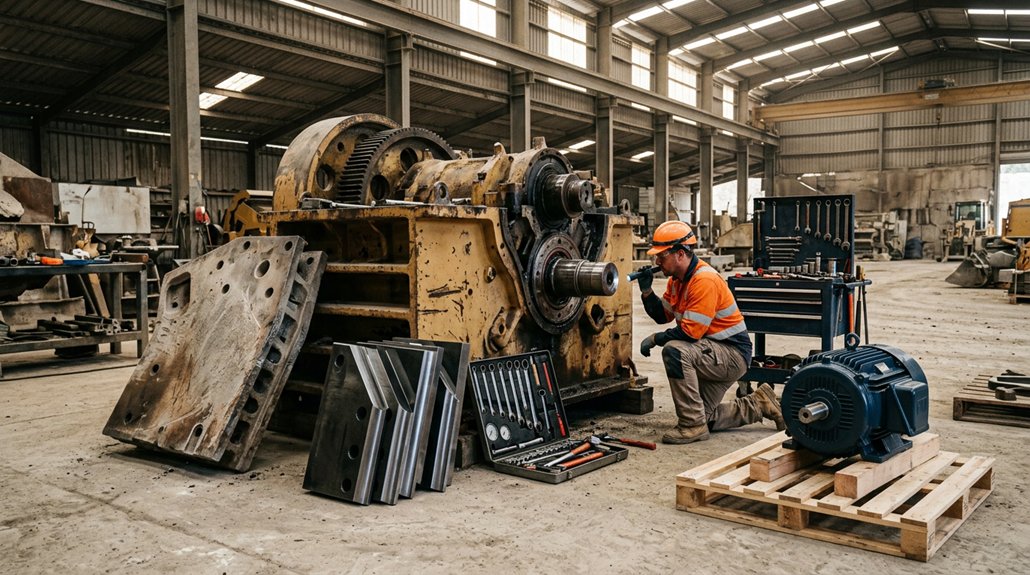
Should You Rebuild a Crusher or Replace it?
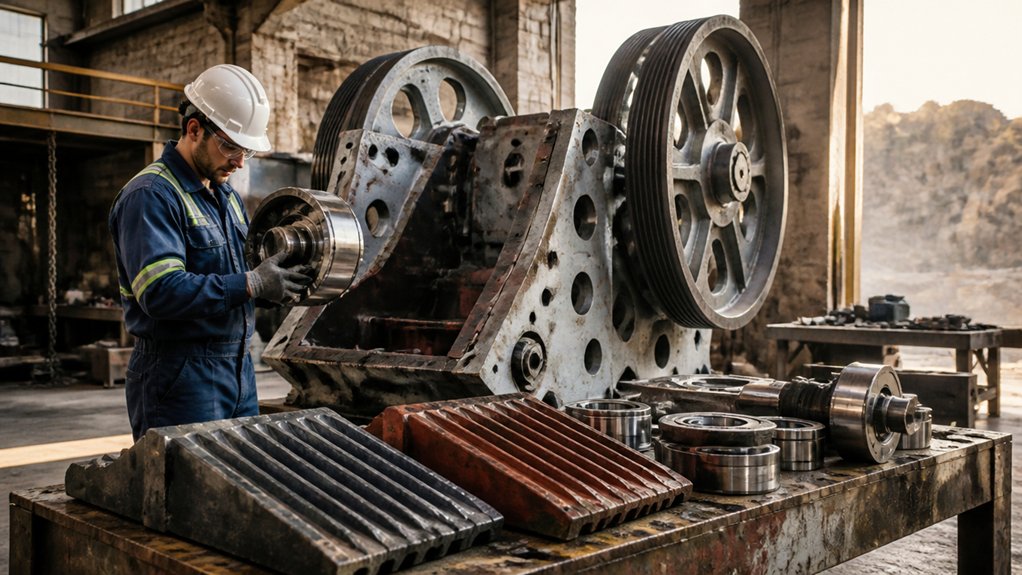
Compare the rebuild and replacement options against the production you need—not just the initial price. Include equipment, installation, commissioning, downtime, and lost output in each estimate. Then compare expected service life and total cost per operating hour.
Look at the maintenance history. More frequent repairs, rising work orders, and shorter intervals between shutdowns can make a rebuild less economical and reduce availability. Check parts availability as well. Long lead times can extend downtime, and obsolete components may make replacement the more practical choice.
Use your production targets, budget, and expected service life to set an acceptable payback period. Choose the option that provides reliable capacity at the lower lifecycle cost.
Before inspecting or servicing a crusher, follow site lockout and isolation procedures, verify that stored energy is controlled, and use the required personal protective equipment.
Which Crusher Problems Can a Rebuild Fix?
A rebuild can correct wear-related problems such as reduced capacity, inconsistent product size, excessive vibration, or rising power draw—if the frame and major components are still serviceable. Replace worn liners, bearings, seals, and other wear parts, then check clearances, alignment, and lubrication.
Before and after the rebuild, record throughput, product gradation, vibration, and motor current under comparable operating conditions. Those readings help confirm whether the work improved performance.
If inspections point to recurring bottlenecks, consider practical upgrades such as different liner profiles, revised settings, or updated controls. A rebuild may also address leaks and localized damage, but repairs must restore the required tolerances and operating conditions without compromising structural integrity or safe operation.
Before inspecting or working on a crusher, isolate and lock out all energy sources, verify the equipment is safe to access, and follow site procedures and the manufacturer’s instructions.
When Should You Replace Your Crusher?
Replace the crusher when its frame or major components are structurally damaged, critical parts are no longer available, or it still can’t meet capacity and product-size requirements after a properly planned rebuild. Replacement may also make sense when repeated failures keep disrupting maintenance, extending unplanned downtime, or reducing plant efficiency despite corrective work.
Before deciding, track throughput, availability, energy use, and product gradation across normal operating shifts. If results stay below production targets after reasonable adjustments, the crusher may no longer suit the job. First rule out other causes, such as changes in feed material, incorrect settings, or gaps in operator training.
Compare the cost and likely reliability of a rebuild with replacement, using your site’s operating conditions and maintenance history.
For any inspection or maintenance work, follow site lockout and isolation procedures, and verify the equipment is safe before anyone approaches moving or stored-energy components.
How Do Rebuild Costs Compare With a New Crusher?
A rebuild usually costs less upfront than buying a new crusher, but compare the full lifecycle cost—not just the purchase price. Include labor, parts, freight, installation, downtime, and expected service life.
A rebuild can make good use of your existing frame and foundation, reducing capital costs and commissioning work. A new crusher may deliver higher throughput, use less energy, or improve reliability enough to justify the added cost.
Estimate the cost per ton for each option using realistic operating hours, production targets, and downtime assumptions. Check the condition of major components and confirm that replacement parts remain available before committing to a rebuild.
Follow lockout/tagout procedures and the manufacturer’s instructions before any inspection or maintenance. If failures are recurring or critical components are obsolete, replacement may be the lower-cost choice over the long term.
Conclusion
Before deciding, compare the crusher’s condition, the repair scope, and the downtime required for a rebuild against the cost and delivery lead time of a replacement. A rebuild is often practical when the frame and major components are sound and wear can be corrected. Replacement is usually the better choice when structural damage, recurring failures, or obsolete components put reliability at risk. Base the decision on a documented inspection and a lifecycle-cost estimate, including downtime and likely future repairs—not purchase price alone. The U.S. Department of Energy estimates that predictive maintenance can reduce maintenance costs by 25% to 30%, highlighting the value of condition data in planning. Safety reminder: Follow site lockout/tagout procedures and use qualified personnel when inspecting or working on a crusher.