
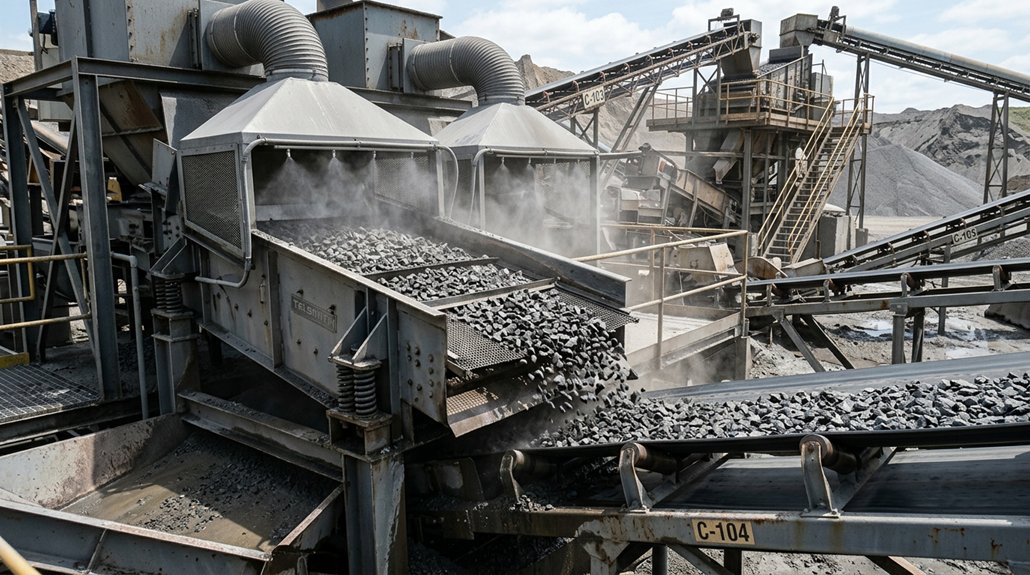
A small change in crusher settings can affect fines production across an entire run. Before adjusting the plant, find out where the fines are being made. Take representative samples at key points in the process, then check crusher settings, feed conditions, screen performance, and material flow. Change one variable at a time and compare the results so you know what made a difference. The source may be farther upstream—or downstream—than you expect.
Follow site lockout and isolation procedures before inspecting or maintaining equipment. Never reach into a crusher, feeder, or screen while it is running.
Find and Measure Where Fines Form
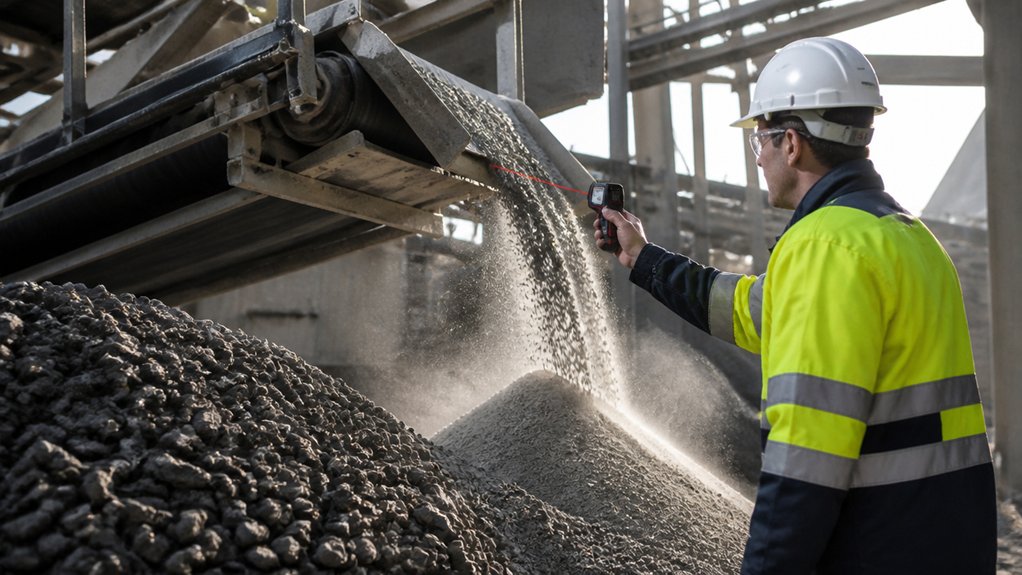
To reduce fines, first identify where they enter the process. Collect representative samples from the feed, after each crushing and screening stage, and from the final product belt. Use the same sample mass and collection interval at each point, and record the process stage, shift, and operating conditions so the results are comparable.
Sieve each sample using the same method and size cutoffs, then record the percentage below your fines threshold. Log tonnage and moisture with each result; changes in either can affect the comparison. Take care to collect across the material stream rather than from one spot, where coarse or fine particles may be overrepresented.
Plot the results by process stage and compare them over time. A consistent rise between two sampling points helps narrow down where fines are being generated or carried through.
Before taking samples, follow site procedures and keep clear of moving belts and equipment. Never reach into a live material stream or bypass a guard; stop and isolate equipment when required.
Adjust Crusher Settings to Reduce Fines
Once sampling shows where fines begin to rise, adjust that crusher in small, controlled steps. On a cone crusher, try opening the closed-side setting to reduce compression. On an impact crusher, reduce rotor speed or adjust apron clearance to limit breakage.
Change one setting at a time, then compare fines percentage, product gradation, and throughput with your baseline. Feed hardness matters: harder material may need a different setting to meet the target gradation without excessive reduction. Keep every adjustment within the manufacturer’s operating limits.
Check wear parts as well. Worn cone liners or impactor blow bars can change the effective settings and increase fines, even when the controls haven’t moved.
Before inspecting or servicing the crusher, follow the site’s lockout and isolation procedures and verify that the equipment is safe to access.
Optimize Feed and Screening to Limit Fines
Even with crusher settings dialed in, poor feed control can create excess fines. Keep the feed rate steady and spread material evenly across the screen. Surges can overload the decks, while thin spots leave screen area unused and reduce separation efficiency.
Match the screen openings and deck area to the product you need, and avoid overloading the screen bed so particles have room to separate.
Moisture can make fines stick to larger stones or blind the screen openings. Control water addition and maintain effective drainage to keep material moving.
When checking screen media, look for stretched openings, tears, and loose or damaged panels that can affect separation or let oversize material pass. Follow lockout procedures and verify the equipment is isolated before inspecting or servicing it.
Adjust feeder speed and screen setup to maintain an even flow, protect product gradation, and limit unnecessary particle breakdown.
Measure Fines and Refine Your Process
Track fines at consistent points in the circuit, such as crusher discharge and finished-product stockpiles. Use representative samples and the same test method each time. Record results by product, shift, and operating condition so you can spot trends instead of reacting to a single reading.
If fines increase, check feed gradation, screen performance, and crusher settings before changing production targets. Record material moisture, crusher wear, and tonnage; each can affect how the material breaks and change the fines fraction.
Follow site lockout procedures and verify equipment is isolated before inspecting or adjusting machinery.
Change one operating variable at a time, then resample under comparable conditions. Use the results to confirm that the change reduces fines without compromising gradation, throughput, or product specifications.
Conclusion
Reducing fines starts with finding where they form. Take samples at each process stage, record the results, and use them to target the right changes. Check crusher settings, feed consistency, screen condition, and moisture; each can affect breakage and separation. Make one adjustment at a time, then compare fines, throughput, and product quality before making another.
Before inspecting or maintaining equipment, follow site lockout and isolation procedures and confirm the plant is safe to access. Keep monitoring the process and maintaining screens and other wear parts. That measured approach helps control fines while keeping production on course and aggregate within specification.