
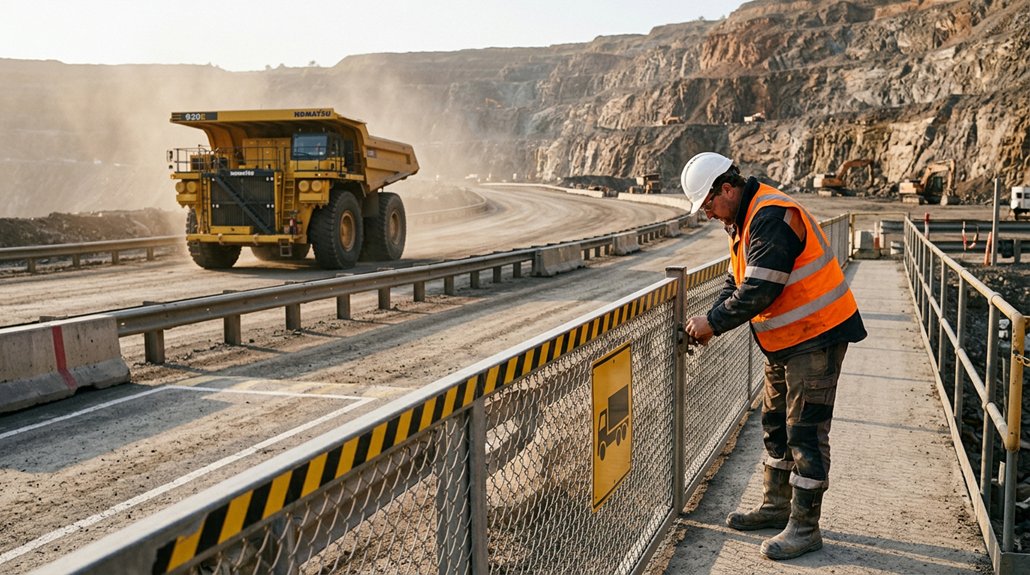
Begin Each Shift With a Quarry Site Safety Briefing

Before each shift, hold a safety briefing with everyone who’ll be working on site. Cover the day’s tasks, work areas, equipment movements, and any changes since the last shift. Confirm who’s responsible for each activity, how workers will report hazards, and who can stop the job if conditions change.
Discuss the risks specific to your site, such as unstable ground, falling rock, mobile equipment routes, and restricted areas. Ask workers what hazards they’ve noticed, then confirm the controls and emergency procedures are clear. Make sure contractors and visitors receive instructions relevant to the areas they’ll enter.
Give people time to ask questions. Correct misunderstandings before work starts, and record the key points and any actions that need follow-up. A focused briefing helps the crew spot changing conditions early and avoid preventable incidents.
Wear PPE That Matches Quarry Hazards
Select PPE for the hazards on the job. Wear impact-rated eye protection, hearing protection, and a hard hat where required.
Check each item before use for damage, wear, and proper fit. Don’t use defective or expired PPE; replace it before work starts.
Keep clear of operating equipment while checking or replacing gear.
Select Hazard-Specific PPE
Match PPE to the hazards in the task. No single setup protects against every quarry risk. Assess exposure to flying rock, dust, noise, chemicals, and moving equipment before work starts.
Use impact-rated eye protection where fragments may strike, a respirator suited to the airborne contaminant, and hearing protection selected for the measured noise level.
Wear a hard hat, high-visibility clothing, gloves, and safety footwear suited to the work area and equipment.
Check the fit and condition of each item, and make sure it works with the rest of your gear.
Follow training on proper use and limitations; change protection when the task or conditions change.
If the hazards or required PPE are unclear, stop and ask your supervisor before starting.
Inspect and Replace Gear
How often should you inspect PPE? Check it before every shift and again after an impact, contamination, or unusual exposure. In a crushing or screening operation, dust, vibration, and moving equipment can damage gear quickly.
Look for cracks, tears, worn straps, loose fasteners, damaged lenses, and expired components. Check that respirators seal properly and that their filters are suitable for the dust or fumes present. Never use defective or poorly fitted PPE.
Follow the manufacturer’s inspection and replacement intervals; appearance alone isn’t a reliable guide. Clean and store each item as directed, and record checks when site procedures require it.
Maintenance can help keep PPE serviceable, but it can’t restore gear that has been compromised. Remove damaged equipment from service, report it, and replace it before anyone returns to hazardous work.
Safety reminder: Inspect PPE in a safe area, away from moving machinery and other hazards. If you’re unsure whether an item is fit for use, take it out of service and ask your supervisor.
Check Quarry Equipment Before Each Use
Before each use, check the brakes, guards, tires, hydraulic lines, and other critical components. Look for damage, loose parts, leaks, or anything that could affect safe operation.
Don’t run equipment with a known defect. Report the problem and keep the machine out of service until a qualified person has inspected it and cleared it for use.
Follow site lockout procedures before anyone carries out maintenance or repairs.
Inspect Key Components
Inspect quarry equipment before every use. A missed defect can lead to equipment failure, unplanned downtime, or injury. Follow your site’s inspection procedures and use the same checklist each time so checks are consistent across shifts.
Check tires or tracks for wear, damage, and correct tension. Test the brakes and steering, and make sure guards and emergency stops are secure and accessible. Look over hydraulic hoses, fittings, and cylinders for leaks, cracks, or abrasion.
Confirm that lights, alarms, and visibility aids work. Check for loose fasteners, damaged cables, and fluid levels outside the ranges specified by the manufacturer.
Keep clear of moving parts. Lower attachments and isolate the equipment before inspecting areas where unexpected movement could cause injury. Use the manufacturer’s checklist, and don’t operate the machine until the inspection is complete and any safety-critical defects have been addressed.
Report Equipment Defects
If you find a defect during an inspection, report it promptly through your site’s established process. Identify the equipment by its location and asset number, then describe the fault, any warning signs, and the conditions when it occurred. For example, note whether a conveyor was running, under load, or starting up when the problem appeared.
Do not operate equipment if the defect could make it unsafe. Isolate it or attach a warning tag if site procedures require, and notify your supervisor and affected crews so no one puts it back into service by mistake.
Record the report clearly to support maintenance, repair, and follow-up inspection.
Safety reminder: Don’t inspect, isolate, or repair equipment unless you’re authorized and follow site lockout and isolation procedures. Return equipment to service only after an authorized person has assessed the defect and approved its use.
Stay Clear of Quarry Vehicles and Machinery
Quarry vehicles and machinery create serious hazards through blind spots, long stopping distances, and powerful moving parts. Keep a safe distance and stay outside marked exclusion zones. Never approach a moving vehicle or cross its route until the operator has stopped and acknowledged you.
Do not assume the operator can see you. Make eye contact and follow site communication procedures before entering an operating area; if you can’t confirm the operator has seen you, stay clear.
Obey signals, alarms, barriers, and designated pedestrian routes. Never climb onto equipment, reach near moving components, or walk beneath a raised load.
If you’re unsure whether an area is safe, stop and ask your supervisor. Follow site rules every time, even when equipment appears to be idle.
Spot Unstable Ground, Falling Rock, and Dust
Watch for loose or cracked ground, fresh rockfall, and dust that cuts visibility. These are clear signs of unstable conditions or hazards you may not be able to see. Keep away from slopes, benches, and stockpiles showing cracks, bulges, or slumping. Never walk beneath an overhang or active face where falling rock could reach you.
Check the ground before crossing, especially after blasting, heavy rain, or freeze-thaw cycles. These conditions can weaken the surface without obvious warning. Use designated routes, and keep nearby workers and equipment in sight.
Wear the required eye and respiratory protection when dust is present. If dust is dense enough to hide your footing, an edge, or moving equipment, stay out until visibility improves.
Report Quarry Hazards and Follow Emergency Procedures
Report hazards such as unstable ground, damaged equipment, blocked access routes, or unsafe work practices to your supervisor immediately. Give the exact location, describe the conditions, and explain any immediate danger. This helps the crew assess the risk and keep people clear.
Don’t approach the hazard or attempt repairs unless you’re authorized and trained.
If an incident occurs, follow your site’s emergency procedures. Raise the alarm, contact the designated responder, and state your location and the nature of the emergency.
Use the marked evacuation route to reach the assembly point, staying clear of operating equipment and unstable ground.
Don’t re-enter the area until authorized personnel confirm it’s safe.
Conclusion
You can’t eliminate every quarry hazard, but you can reduce risk with consistent operating practices. Start each shift with a briefing on the work plan, site conditions, traffic routes, and known hazards. Wear PPE suited to the task, and keep clear of moving equipment and blind spots.
Before use, inspect equipment for visible damage, leaks, loose guards, and other defects. Do not operate equipment with a safety-critical fault; report it and follow site lockout procedures before anyone attempts maintenance. Keep clear of unstable ground and areas exposed to falling rock. Control dust using the site’s approved methods, and report changing conditions promptly.
If conditions change or a hazard is unclear, stop work, make the area safe, and reassess before continuing. Follow the site emergency plan and make sure the crew knows how to raise an alarm. Safe production depends on people noticing hazards and acting on them every shift.