
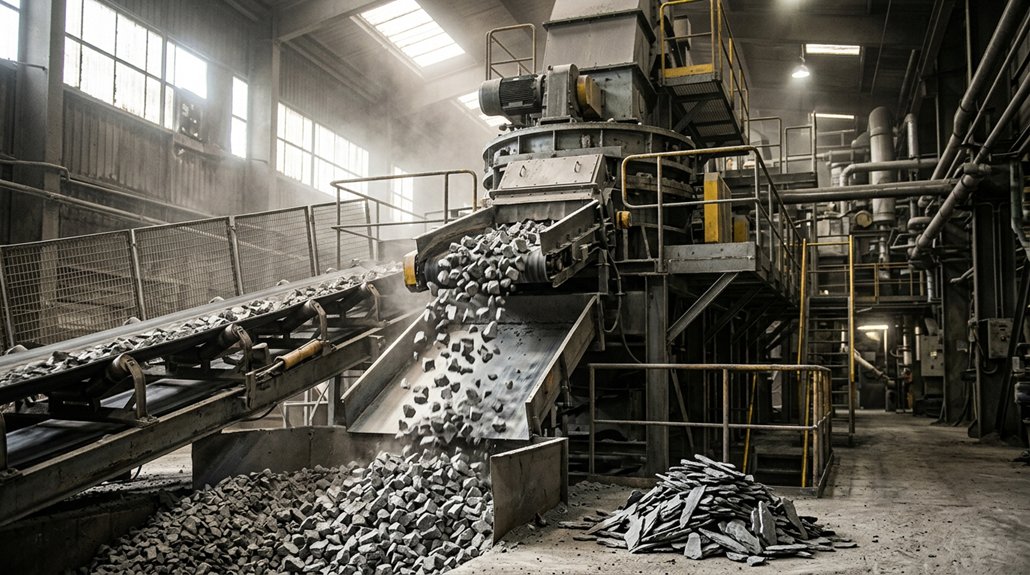
If aggregate is failing shape or cubicity requirements, first find where elongated or flaky particles are being created. Check the crusher type and condition, chamber wear, feed distribution, moisture, and material flow before changing settings. Then make controlled adjustments to the closed-side setting or feed rate, changing one factor at a time so you can see what affects the product. Take consistent samples and test them after each change. Follow site lockout procedures before inspecting or maintaining equipment, and never reach into a crusher or conveyor while it is running. The right adjustment depends on where the problem starts, so trace the material through the plant before making changes.
Diagnose What’s Reducing Aggregate Cubicity
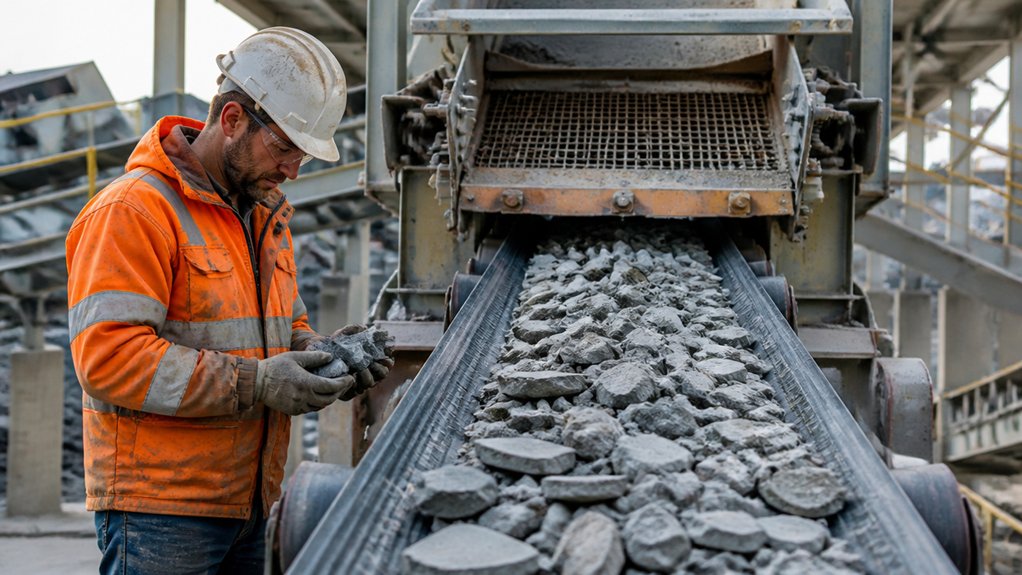
Before changing crusher settings, find out what’s reducing cubicity. Sample finished product across shifts and compare flakiness, elongation, and gradation with the job specifications. Use the same sampling method each time so you can tell whether a change is real or just sampling variation.
Trace irregular particles back through the circuit. Check whether feed size and consistency have changed, whether screens are damaged or blinded, and whether recirculating load is affecting the crusher’s feed. Record moisture during sampling; wet material can cling to screens, reduce open area, and disrupt separation.
Inspect liners and other wear parts for wear, damage, or uneven profiles that may have changed the crushing chamber or clearances. Follow site lockout and isolation procedures before inspection, and never reach into equipment that could start or move.
Compare your findings with maintenance records and operating settings. Note where and when the problem appears, then use that evidence to choose a corrective action rather than changing several settings at once.
Choose Crushers That Produce Cubic Aggregate
Once you’ve identified where particle shape is being lost, choose a crusher that suits both the feed and the product you need. A vertical-shaft impact crusher can improve cubical shape by breaking elongated particles through rock-on-rock or rock-on-metal impact.
A cone crusher can also produce well-shaped aggregate when the chamber, settings, and operating conditions suit the feed.
Base the choice on feed size, required throughput, target gradation, and material hardness. Hard or abrasive rock can increase wear and operating costs, so account for that when comparing options.
Check maintenance needs, including liner and rotor change intervals, parts availability, and safe access for service. Follow lockout procedures and the manufacturer’s safety instructions before any inspection or maintenance.
Choose a crusher that delivers consistent shape without exceeding the plant’s capacity or budget.
Set Crusher Settings and Control Material Flow
Set the crusher’s closed-side setting to control product size, then adjust the feed rate and distribution to keep material moving evenly through the chamber. Match the setting to the feed gradation and the crusher’s operating limits. Don’t tighten the setting to compensate for poor flow; that can increase load without fixing the cause.
Use crusher calibration to check the actual gap under operating conditions. Wear and hydraulic response can make the measured setting differ from the control setting.
Keep the chamber consistently full, but don’t overload it, and center the feed to limit uneven liner wear.
Inspect conveyors and chutes for buildup or segregation, which can cause uneven loading and inconsistent crushing. Clear blockages and restore uniform feed before they affect performance.
Before inspecting or clearing equipment, follow site lockout procedures and verify that all moving parts have stopped.
Measure Particle Shape and Adjust Production
Measure particle shape regularly using the same sampling method and a recognized test, such as a flakiness index test or image analysis. Track results by feed source, crusher stage, and product size. This helps you pinpoint where particle shape changes and whether the cause is in the feed, crushing, or screening.
Compare results with your project specification. If you’re producing too many elongated or flaky particles, make controlled adjustments to crusher settings, feed rate, or screening. Check aggregate texture and angularity, too; both affect interlock and compaction. Change one operating factor at a time where practical, so you can tell what made the difference.
After each adjustment, collect a fresh, representative sample and retest it using the same method and conditions. Record the settings and results to confirm improvement, spot drift, and keep product quality consistent across production runs.
Follow site lockout procedures before inspecting or adjusting equipment, and keep clear of moving machinery.
Conclusion
Improve aggregate shape and cubicity by treating them as process-control results, not just crusher features. Check feed distribution, feed size and moisture, chamber wear, and crusher settings. Then sample the product consistently and change one variable at a time so you can see what affects particle shape.
If a setting change produces more elongated or angular particles, use that result to guide your next adjustment. Keep tracking crusher performance and product shape against your project requirements. Before inspecting or servicing equipment, follow lockout procedures and verify that all moving parts have stopped.