
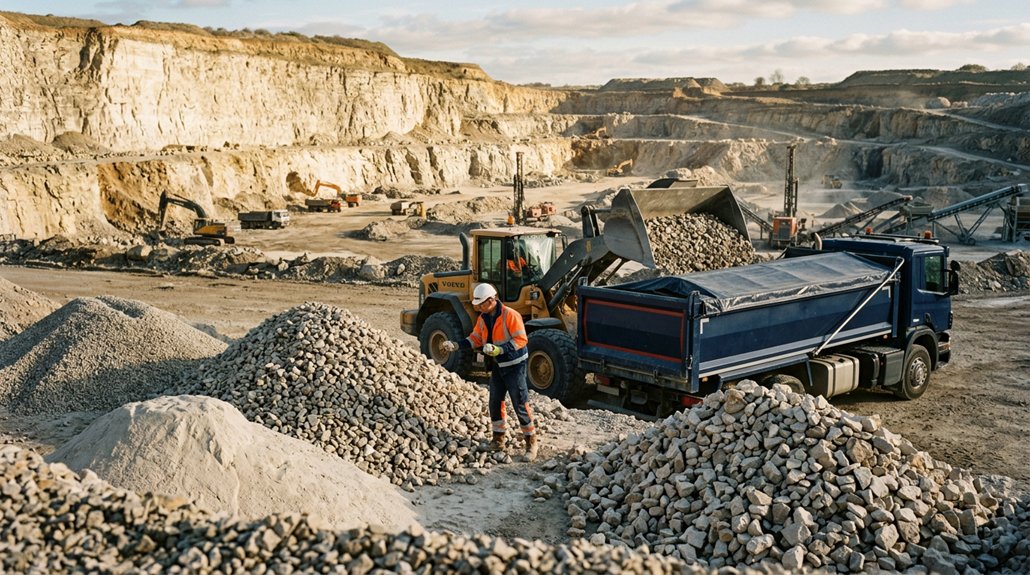
You can reduce quarry waste by sorting fines, offcuts, and reclaimed stone by size, condition, and material type, then matching each stream to a practical use. Construction, roadwork, and landscaping can provide outlets, but buyers usually need consistent grading, dependable supply, and clear information about the material. Track processing, handling, and delivery costs alongside sales so you can see whether an outlet is actually worthwhile.
Start by identifying which by-products your operation can supply consistently. Check the material’s quantity, quality, and variability before approaching buyers. When inspecting stockpiles or equipment, follow site procedures and keep clear of moving machinery.
Identify and Sort Your Quarry By-Products
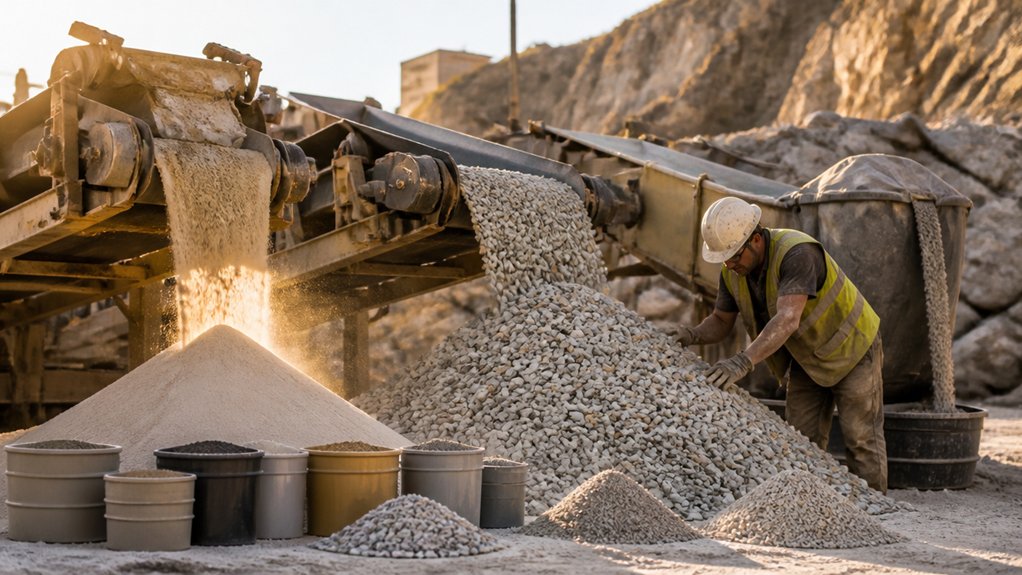
Before you try to reduce waste or find buyers, identify and sort each quarry by-product by material type, particle size, and quality. Set a consistent inspection routine at the crushing, screening, and cutting stations so operators record the same information on every shift.
For each material stream, log the source bench, rock type, moisture, particle-size distribution, contamination, and estimated volume. Use calibrated scales and sieves where appropriate, and back up measurements with visual checks. Label stockpiles clearly, and keep materials that could contaminate one another separate.
Record the results in a shared inventory so you can compare quantities and quality over time. This baseline helps you assess environmental impact, meet site requirements, and choose suitable recycling techniques.
Repeat the checks after equipment changes, significant weather exposure, or changes in feed geology. Follow site safety procedures during inspections, and isolate equipment before inspecting or clearing any area where moving parts could pose a hazard.
Match Fines, Offcuts, and Reclaimed Stone to Uses
Once you’ve recorded each by-product’s properties, match it to a use that suits its size, quality, and consistency. Screen fines to separate particle sizes, then check mineral composition and contaminants before adding suitable grades to aggregate blends, road base, or manufactured products.
Keep offcuts with sound edges for paving, walling, steps, or cut-to-size components. Send irregular pieces to gabion fill or landscaping where their shape is acceptable.
Before reusing reclaimed stone in restoration or new construction, check for weathering, contamination, and structural damage. Keep incompatible materials separate so they don’t compromise the finished product.
These steps can reduce disposal costs and environmental impact while keeping usable stone in service. Follow site procedures and isolate equipment before inspection or maintenance; never reach into a screen, crusher, or conveyor while it’s running.
Find Buyers for Quarry By-Products
Start by defining each by-product clearly. Record its gradation, composition, quality, and the volume you can supply consistently. Include recent test results, representative photos, and any known limits or variations in a concise product sheet. Buyers need to know what the material is and whether it will work in their process—not just that it’s available.
Approach concrete producers, asphalt plants, road contractors, landscapers, and aggregate distributors that use compatible materials. Check local requirements and end-use specifications before pitching a product; a material that suits one application may not meet another’s grading or quality requirements. Contact procurement teams directly and use construction-material trade events to build working relationships.
Explain the practical value: your by-product may replace some virgin aggregate, reduce handling or disposal costs, or help a buyer meet environmental goals. Be specific about the proposed use, and support claims with test results and a supply plan. Document applicable permits, material classifications, and transport requirements so buyers can assess compliance before committing.
Track inquiries and follow up promptly. Quote delivered pricing where possible, making clear what’s included in the haul and any handling requirements. Start with a trial load or agreed evaluation process when the buyer needs to confirm performance. Consistent quality, dependable supply, and clear communication are what turn an initial inquiry into repeat business.
—David Renshaw, with more than 25 years in crushing and screening.
Check Buyers’ Quality and Supply Requirements
Check each buyer’s requirements before offering a quarry by-product. Acceptance depends on more than the material type. Confirm the required gradation, particle shape, moisture content, fines percentage and contaminant limits, and make sure you understand the buyer’s test methods.
Ask how often the material must be sampled, which laboratory reports are required and what delivery tolerances apply.
Check that your crushing, screening and stockpiling processes can meet those requirements consistently—not just on a good production run.
Review applicable certification standards and documentation, including any required declarations about environmental impact or material origin.
Confirm minimum lot sizes, shipment schedules, loading arrangements and seasonal demand before committing tonnage.
Compare the buyer’s requirements with your available production capacity and storage conditions. Identify constraints early, including the risk that stockpiles may become mixed or contaminated during handling.
Track Savings and Build Reliable Buyer Partnerships
After a buyer confirms that a by-product meets its requirements, track the full cost and return for each material stream. Record loading, screening, storage, testing, and transportation costs against sales revenue. Then compare the net return with the disposal costs you avoided. Include extra handling or rework so the numbers reflect what the plant actually spends.
Track tonnage, material quality, delivery accuracy, rejected loads, payment timing, and buyer feedback. Use that information to identify which streams are worth producing and where changes to screening or production planning could improve consistency. Keep records tied to specific loads where practical; averages can hide problems with individual deliveries.
Agree on material specifications, expected volumes, sampling and acceptance procedures, and a clear process for resolving disputes. Review these terms with each buyer, especially when feed conditions or processing methods change. Share relevant performance data to support recycling improvements and document environmental benefits without overstating them.
Revisit the arrangement regularly. Market demand, haul distance, handling requirements, and operating costs can all change the value of a sale. If you inspect equipment or make adjustments as part of a process change, follow site procedures, isolate equipment where required, and keep clear of moving parts.
Conclusion
Treat every quarry by-product as a potential resource, but confirm there’s a practical use and a reliable buyer before changing how you handle it. Separate fines, offcuts, and reclaimed stone by type and condition, then match each material to an application that can accept it. Ask buyers about quality, grading, contamination, and delivery requirements, and check that your plant can produce a consistent supply without disrupting saleable production.
Track handling and processing costs alongside sales, avoided disposal, and product performance. Use those results to decide whether a market is worth pursuing and to improve the process. Keep safety in view when sorting or handling reclaimed material: follow site procedures, use suitable equipment, and keep people clear of moving machinery. With sound planning, quarry by-products can return to productive use and reduce waste across the operation.