
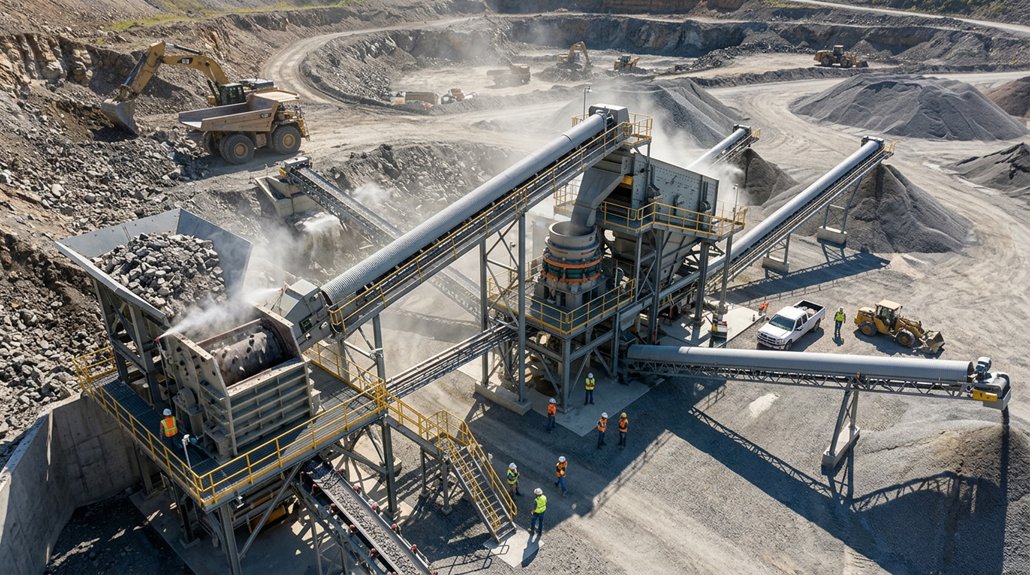
A crushing plant layout that maximizes throughput starts with the material, not the equipment list. Define the feed characteristics, required product sizes, and production targets. Then select and arrange the crusher, screens, conveyors, and surge storage so material flows steadily, with minimal unnecessary recirculation. Allow for site constraints, practical maintenance access, and future expansion. Poor early layout decisions can create bottlenecks that are difficult and costly to correct. Start by assessing the feed and the process the plant needs to deliver.
Define Feed, Product, and Throughput Requirements

Before selecting equipment or setting the plant layout, define what the crushing circuit must accept and produce. Record the feed source, rock type, hardness, abrasiveness, moisture, and size distribution. Include changes caused by seasons, different working faces, or operating conditions; a feed that varies can affect capacity, wear, and product consistency.
Set out the required product sizes and gradations, along with limits for fines, oversize, and other quality requirements. Confirm how each product will be used or transferred downstream, so the circuit is designed around actual process needs rather than assumptions.
Also define the operating schedule and the period the plant needs to support.
Keep these requirements in a clear, usable record. They provide a practical basis for layout and equipment decisions and for checking whether the plant is delivering the required results.
Before inspecting or sampling feed, follow site procedures and use the required personal protective equipment; keep clear of moving equipment and unstable material.
Match Crusher Capacity to Feed and Product Goals
Match each crusher’s rated capacity to the circuit’s feed rate and product-size targets. Nameplate capacity is only a starting point. Actual production varies with rock hardness, feed gradation, moisture, reduction ratio, and operating settings.
Check vendor performance curves against the conditions you expect to run—not just ideal feed. Allow enough capacity for normal peaks, but avoid oversizing, which can make the circuit harder to control.
Confirm that the primary crusher can accept the largest rocks in the feed and deliver a steady, suitable feed to the next stage. Size secondary and tertiary crushers to achieve the required reduction and final gradation.
Before committing to a setup, compare expected production with your target and verify that the selected settings can meet the product specifications with a practical operating margin.
If you inspect or adjust equipment, follow site lockout procedures and keep clear of moving parts.
Position Screens and Conveyors to Prevent Bottlenecks
Once crusher capacity matches your production and product goals, lay out screens and conveyors to keep material moving without creating bottlenecks. Place each screen near its feed point and size it for peak flow, not just average production. If material backs up at the screen, check feed distribution and discharge capacity as well as screen size.
Use direct conveyor transfers where practical. Avoid unnecessary turns and long drops, which can cause spillage, damage material, and increase wear. Match belt width and speed to the crusher’s output, and use properly designed chutes to spread material evenly across the screen.
Leave enough access around transfer points for routine checks and service. Before inspecting or maintaining equipment, shut it down, isolate energy sources, and follow site lockout procedures.
Finally, coordinate screen openings with return-belt capacity. If the screen sends more oversize back than the crusher can handle, the recirculating load can overwhelm the circuit and reduce production.
Adapt the Crushing Plant Layout to Site Conditions
A crushing plant layout should fit the ground, access routes, and environmental limits—not force the site to fit a drawing. A layout that follows the terrain can reduce unnecessary earthworks and keep material moving efficiently.
Start by checking ground stability, drainage, and flood risk before choosing equipment locations. Put crushers, screens, and stockpiles on firm, well-drained ground. Use natural slopes to support material flow where practical, but avoid grades that could make equipment access, truck travel, or material handling unsafe.
Plan haul roads around existing entrances, turning areas, and the route to the feed point. Confirm that trucks can enter, turn, and leave without crossing pedestrian areas or creating traffic conflicts. Check soil conditions, prevailing winds, noise limits, and nearby waterways before fixing the layout. These factors can affect where you place equipment, roads, stockpiles, and drainage controls.
Walk the site with the design team and the people who’ll operate the plant. A practical review can catch access or drainage problems that are easy to miss on a plan. Before inspecting equipment or drainage areas, follow site procedures, use the required personal protective equipment, and keep clear of moving machinery.
Balancing production needs with local regulations and site conditions helps avoid rework and costly changes during construction.
Plan Maintenance Access and Equipment Changes
After laying out the plant, plan access for routine service and major repairs. Provide safe walkways and work platforms, with enough room to inspect, lubricate, and replace components without interfering with adjacent equipment.
Before finalizing the layout, check how crews will remove motors, screens, and crusher liners. Position cranes, hoists, and lifting points to suit those lifts, and keep maintenance-vehicle routes clear. Allow a practical area to stage tools and replacement parts.
Check that doors, guards, and access panels can open fully without blocking walkways or lift paths. Design foundations, connections, and utility interfaces so equipment can be changed later without unnecessary rework.
Confirm that the planned access works with the actual equipment and lifting method—not just the drawings.
Before any inspection or maintenance, isolate and lock out the equipment, verify it’s safe to work on, and follow site procedures for working at height and handling suspended loads.
Good access planning reduces delays, limits interference with production, and helps crews work safely.
Size Stockpiles and Surge Capacity
Size stockpiles and surge capacity to handle the difference between crusher output and downstream demand. Don’t size storage on average production alone. Consider how long each process takes to recover from a stoppage and how much material downstream equipment needs while the crusher is down.
A surge bin near the crusher can keep the plant running through brief interruptions. A larger stockpile can cover longer stoppages or changes in demand between shifts. Match storage volume to the material flow, available space, and the capacity of the reclaim system.
A stockpile is only useful if loaders, feeders, and conveyors can recover and deliver material at the rate the plant needs.
Position bins and piles to allow a direct, reliable transfer. Poor layout can create bottlenecks, extra handling, and delays. Plan for segregation, drainage, dust control, and safe access so material remains usable and operators can manage it efficiently.
When inspecting or maintaining bins, feeders, reclaim equipment, or stockpiles, follow site procedures and keep clear of suspended loads, moving equipment, and unstable material.
Test Throughput and Plan for Expansion
Test the layout at normal operating rates and during peak demand to identify bottlenecks before they restrict production. Track feed rates, product sizes, equipment utilization, and material buildup at every transfer point. Compare the results with your throughput targets, then adjust feeder settings, conveyor speeds, or stockpile capacity as needed.
Repeat trials with different ore types and moisture levels. Changes in material can affect flow, crusher performance, and product size, so confirm the plant handles the range you expect to process. Before inspecting equipment or clearing buildup, follow site lockout procedures and verify that machinery is isolated.
Plan for expansion by reserving space for additional equipment, conveyors, utilities, and access routes. Confirm that foundations and structures can support future loads, and allow room for safe maintenance access. These provisions can help increase capacity without disrupting current operations or rebuilding critical plant areas.
Conclusion
Design a crushing plant around the feed you actually receive and the product sizes you need to ship. Match each crusher to the material’s hardness, abrasiveness, and feed size, then check that screens and conveyors can handle the full flow. Poorly matched equipment can create bottlenecks, increase recirculation, and cut throughput.
Lay out the plant to keep material moving with as few unnecessary transfers as possible. Allow enough surge capacity to handle normal feed interruptions, and account for site access, traffic, dust, and drainage. Provide safe access for inspection and maintenance; isolate and lock out equipment before anyone works on it.
Before settling on the layout, test the process assumptions against realistic feed conditions and operating schedules. Leave room for equipment changes and future expansion, but avoid adding capacity that the rest of the circuit cannot use. A balanced plant is more reliable than a fast crusher feeding a bottleneck.