
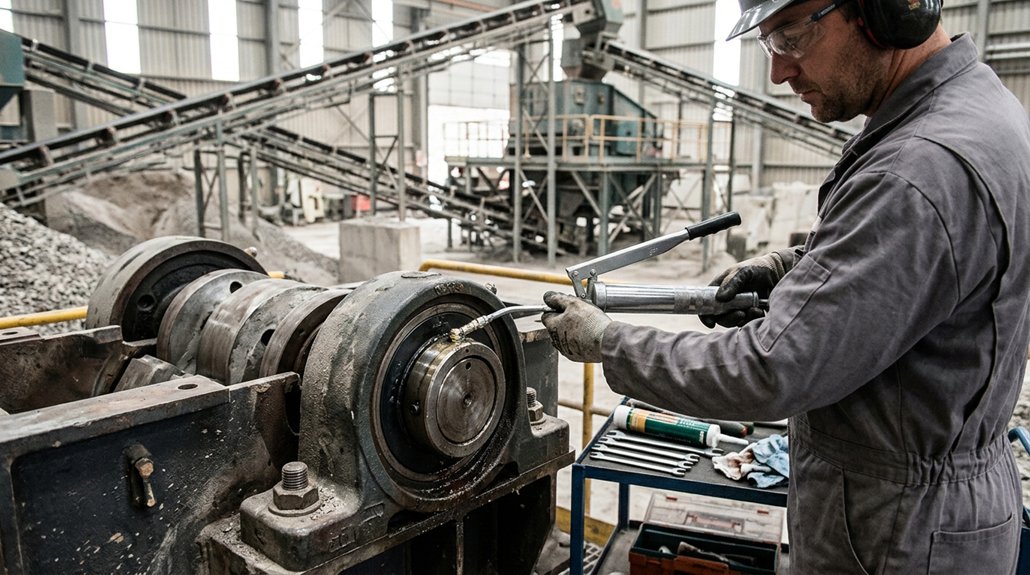
Follow Your Crusher Manufacturer’s Lubrication Specs

Use the lubrication specifications for your exact crusher model and operating conditions—not a generic schedule. Follow the service manual and approved maintenance bulletins for intervals, lubricant quantities, pressure limits, and inspection steps.
Conditions such as dust, moisture, and operating hours can affect maintenance needs, so check with the manufacturer before changing the prescribed schedule.
Record each lubrication task, the readings taken, and any unusual noise, heat, or leakage. These records help you spot developing problems and make maintenance decisions traceable.
Before servicing or inspecting the crusher, follow site lockout procedures, isolate the equipment as required, and confirm guards are secure before returning it to operation.
Consistent compliance supports lubrication efficiency and cost management by protecting components and helping prevent avoidable repairs and downtime.
Choose the Right Lubricant for Your Crusher
Follow the crusher manufacturer’s specifications and use a lubricant approved for your exact model and operating conditions. Match the viscosity and performance rating to the bearings, gears, and temperatures the machine sees. The wrong grade can weaken the lubricating film and speed up wear.
Before switching products, check compatibility with any oil or grease left in the system. Some additive combinations can reduce protection or form deposits. If you’re unsure, ask the lubricant supplier or equipment manufacturer before making the change.
Account for dust, moisture, washdown, and the risk of lubricant reaching waterways. Choose a product suited to those conditions, and review its safety data sheet before handling, storing, or disposing of it.
Before inspecting or changing lubricant, follow the site’s lockout procedures and make sure the equipment is safe to work on.
Set Crusher Lubrication Intervals for Operating Conditions
Set lubrication intervals to match the crusher’s actual operating conditions, not just the calendar. Heavy loads, long run times, high temperatures, dust, and moisture can all shorten lubricant life. Track operating hours and use the equipment maker’s service recommendations as your starting point. Shorten intervals when conditions get tougher, and review them again when the duty changes.
Watch for unusual temperature increases, which can point to lubrication problems or developing bearing or gear damage. Check lubricant viscosity against the equipment maker’s specifications, particularly after seasonal temperature changes or extended operation. Keep a service log so you can spot trends and confirm that the intervals suit the site.
Before inspecting or servicing the crusher, follow lockout procedures and verify that it’s safely isolated. Reassess lubrication intervals after repairs, process changes, or abnormal operating events.
Apply the Right Amount of Lubricant
Use the lubricant type and amount specified by the crusher manufacturer. Don’t estimate based on habit: too much lubricant can increase bearing temperatures, damage seals, and create a safety hazard.
Measure each application and check lubricant levels using the approved procedure.
Before lubricating or inspecting the crusher, follow site lockout and isolation procedures and keep clear of moving parts.
Follow Manufacturer Guidelines
Although extra lubricant may seem like added protection, too much can cause overheating, leaks, or seal damage. Follow the crusher manufacturer’s instructions for lubricant type, grade, quantity, and service interval. Check the manual and equipment labels before servicing; requirements can differ between machines, even within the same plant.
Use the specified delivery method, and check that fittings and lines are clean and undamaged. Record each service so you can track lubricant use and spot changes that may indicate a fault.
Before maintenance or inspection, wear the required protective equipment and isolate the machine when the procedure calls for it. Follow site rules for lubricant disposal, and make sure your training covers the manufacturer’s requirements.
Avoid Overlubrication
Applying the specified amount matters as much as choosing the right lubricant. Too much grease can raise bearing temperatures, force lubricant past seals, increase churning losses, and attract abrasive debris. Over time, these conditions can contribute to premature bearing failure.
Follow the equipment manual for the quantity and lubrication interval. Use a calibrated grease gun or metered system, and confirm that lubricant is reaching the correct points. Check the manual for any purge instructions; don’t assume that adding more grease provides extra protection.
Before accessing lubrication points, stop the crusher, isolate all energy sources, and follow site lockout procedures. Clean up spills promptly, and dispose of excess lubricant according to site rules and local regulations. Never wash grease into drains.
Keep Crusher Lubricants Clean and Contamination-Free
Even small amounts of dirt or water can speed up wear, so protect crusher lubricants from storage through application. Keep containers sealed when not in use, and use clean, dedicated pumps, hoses, and transfer tools. Don’t leave lubricant exposed to dust, moisture, or washdown spray.
Store lubricant in a dry, orderly area, away from temperature extremes. Keep containers closed, clearly labeled, and off the floor. Before opening a reservoir, clean the outside to keep debris from falling inside. Use filtered transfer equipment and follow the lubricant supplier’s handling instructions.
When servicing connections or inspecting a reservoir, wear suitable gloves and eye protection. Relieve system pressure before opening the system. Check that transfer equipment is clean before use; contaminated tools can undo good storage practices.
Spot Lubrication Problems Before They Cause Downtime
Watch for rising temperatures, unusual noise, leaks, or pressure changes. These can point to a lubrication problem before it damages a bearing or stops production.
Check lines, fittings, filters, and lubrication points on a regular schedule, and compare what you find with normal operating conditions.
Follow lockout procedures before inspecting or servicing equipment, and never reach into moving machinery.
Small changes are worth checking promptly; leaving them until the next shutdown can lead to avoidable damage and downtime.
Recognize Early Warning Signs
A lubrication problem often shows up before a bearing fails. Watch for rising bearing temperatures, unusual noise, increased vibration, or a sudden change in lubricant use. These signs can point to contamination, a leak, or inconsistent lubricant delivery—all of which can speed up wear.
Compare readings and operating conditions with your established baseline, and report changes promptly. Don’t write off a small change as normal. If a bearing gets hot or you hear grinding, stop the crusher when it’s safe and follow your site’s shutdown procedure.
Never reach near moving equipment. Before inspecting or servicing anything, isolate it and follow your site’s lockout and safety procedures. Catching a problem early can protect workers, limit equipment damage, and help prevent unplanned downtime.
Inspect Lubrication Systems
Regular inspections can catch lubrication problems before they damage bearings or cause downtime. Before inspecting crushing equipment, follow your site’s lockout/tagout procedure and verify that all moving parts have stopped. Never check a running system by reaching near belts, shafts, or other moving components.
Inspect reservoirs, lines, fittings, filters, and seals for leaks, damage, contamination, or signs of restricted flow. Check lubricant levels and system pressure against the equipment manufacturer’s specifications. Don’t judge lubricant condition by appearance alone; follow the site’s sampling and testing procedures where applicable.
Record readings and note changes over time. A falling pressure, unusual level change, or recurring leak can point to a developing problem. Include these checks in the maintenance schedule, and correct defects before restarting equipment.
Collect used oil and contaminated materials in approved containers, following site disposal procedures and environmental requirements. Keep waste streams separate.
Conclusion
Treat crusher lubrication as a reliability and safety task, not a routine to rush. Follow the equipment manufacturer’s instructions for lubricant type, quantity, and service intervals. Adjust the maintenance schedule to suit actual operating conditions, such as dust, moisture, temperature, and duty cycle.
Keep lubricant and storage containers clean to reduce the risk of contamination. During routine checks, look for leaks, unusual heat or noise, and changes in oil pressure. These signs can point to developing problems, but don’t rely on inspection alone: follow the equipment’s maintenance procedures and record what you find.
Before inspecting or servicing lubrication components, shut down and isolate the equipment, relieve stored pressure where required, and follow site lockout procedures. Consistent checks can help catch problems early, reduce unplanned downtime, and protect the crew.