
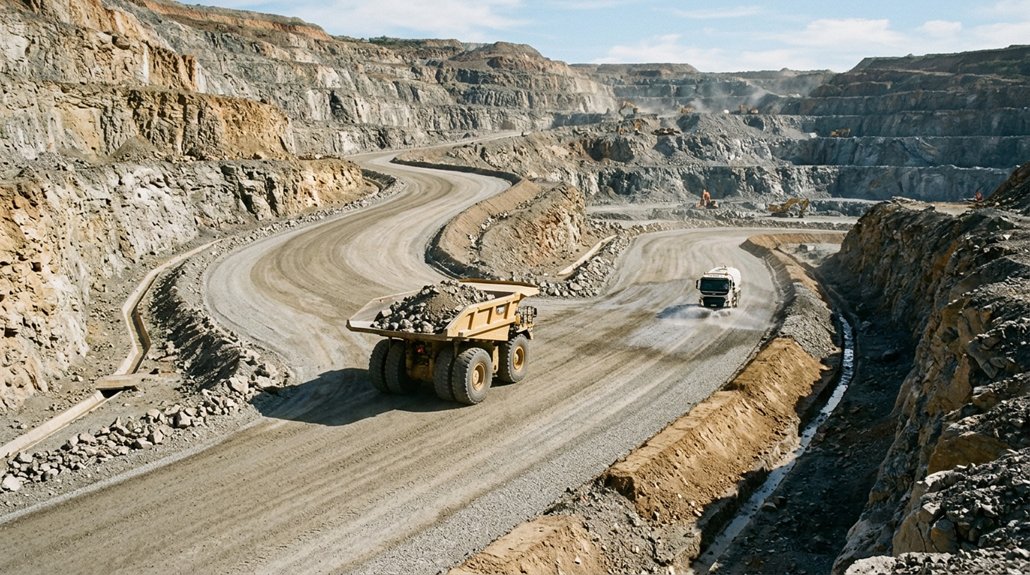
Plan Quarry Haul Road Routes Around Traffic
Map how people and equipment will move through the quarry before setting road grades or surfacing. Include loaded and empty truck routes, loading points, dump areas, service zones, and pedestrian access.
Look for places where traffic converges, visibility is limited, or trucks must reverse.
Separate haul trucks from light vehicles and pedestrians wherever practical. Use one-way circuits when they reduce opposing traffic, and place crossings where drivers have clear sightlines.
Coordinate routes with the extraction sequence so a changing face doesn’t force trucks through an active work area.
Mark approved routes and communicate changes before each shift. Review traffic flow after production changes, near misses, or congestion, and keep emergency access open throughout operations.
When inspecting routes or traffic controls, stay clear of moving equipment and follow the site’s traffic-management procedures.
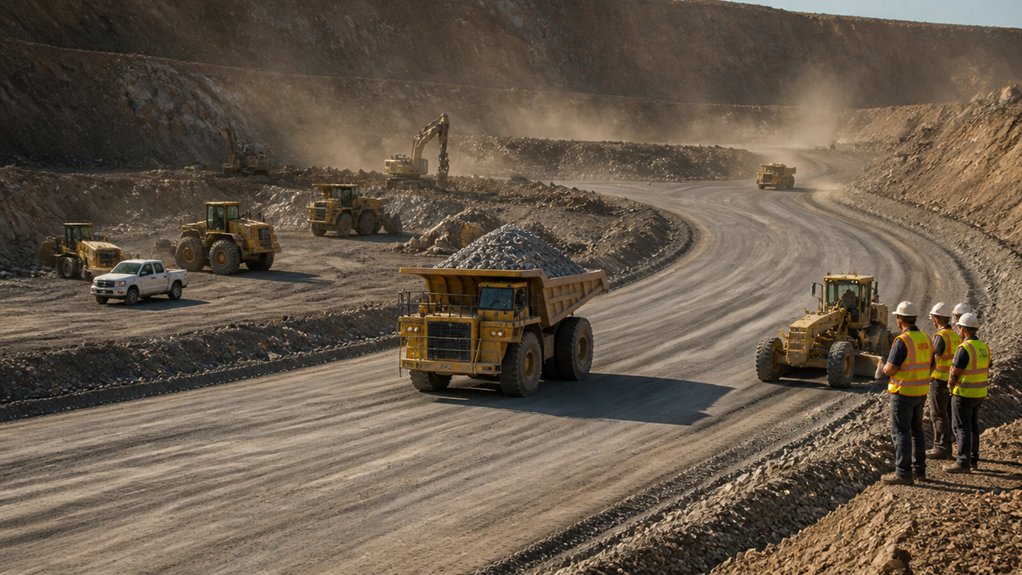
Choose Safe Haul Road Widths, Grades, and Curves
Set haul road widths to accommodate your largest vehicles, with enough room for safe passing and clearance from berms, edges, and other hazards.
Keep grades within limits that allow loaded trucks to brake and maintain traction in wet or loose conditions.
Size curves for vehicle length, turning radius, operating speed, and load stability.
Check road conditions regularly; keep people clear of traffic during inspections and maintenance.
Set Widths for Safe Passing
How wide should a haul road be for safe passing?
Set haul-road width around the largest vehicle’s full operating envelope—not just its body width. Allow for mirrors, the load, steering movement, and the clearance needed between vehicles and road edges. Follow the design standard that applies at your site; there’s no single width that suits every fleet or route.
Keep vehicle spacing consistent, and mark passing zones only where drivers have clear sightlines and enough lateral clearance. If a road can’t safely handle opposing traffic, use controlled one-way movement or designated pullouts. Don’t leave passing decisions to drivers.
Inspect road edges and barriers regularly. Before inspecting or maintaining them, follow site procedures and use appropriate traffic controls and personal protective equipment.
If changing conditions reduce usable width or safe clearance, update the signs or traffic controls before continuing normal operations.
Manage Grades and Curve Radii
Set haul-road grades and curves for the largest truck in the fleet, considering its loaded weight, braking and traction limits, stability, and turning path. Check the truck’s specifications alongside road-surface conditions and seasonal weather. A grade that works on dry, firm ground may become difficult to control when wet, icy, or loose.
Avoid steep ramps that increase stopping distance or cause wheel slip, and use gradual transitions between grades to reduce load shifts and help drivers maintain control.
Set curve radii so the largest loaded truck can stay within the road edge and clear of opposing traffic. Widen curves where the truck’s turning path requires it, especially on steep sections, and maintain adequate sight distance. Don’t rely on drivers to make up for a tight curve by slowing abruptly or cutting across the road.
Inspect grades and curves regularly for erosion, rutting, loose material, and drainage problems. Correct defects before they affect traction, vehicle control, or road stability.
Before inspection or maintenance, control traffic and follow site procedures for working around mobile equipment.
Build Stable, Well-Drained Haul Road Surfaces
A stable, well-drained haul road helps trucks maintain traction and reduces rutting, potholes, and loss of control. Start with a compacted, load-bearing foundation suited to the local ground conditions. Check the subgrade before placing aggregate; remove or stabilize soft spots, then use well-graded material and compact each layer to the project requirements.
Shape the road with a crown or crossfall that sheds water without creating abrupt transitions that can affect vehicle stability. Provide suitable drainage, including side ditches or culverts where needed, and position it to move runoff away without causing erosion or ponding.
After rain or heavy traffic, inspect the road for soft areas, standing water, rutting, and aggregate loss. Before inspection or maintenance, control traffic and follow site safety procedures. Grade the surface, replace lost aggregate, and repair failures before they affect vehicle control or road capacity.
Set Up Traffic Controls for Safer Haul Roads
Even a well-built haul road needs clear traffic controls to reduce collisions, intersection conflicts, and unsafe interactions between trucks and light vehicles. Set speed limits to suit vehicle type, visibility, road surface, grades, and traffic conditions. Post signs where drivers have time to see them and respond before intersections, bends, and other decision points.
Establish clear right-of-way rules, marked passing zones, and one-way routes where practical. At busy intersections, coordinate traffic signals so loaded trucks can move predictably without encouraging drivers to exceed safe speeds.
Keep pedestrian routes separate from haul lanes wherever possible. Clearly mark crossings, and use barriers or signals where exposure warrants them.
Train workers and contractors on crossing procedures, radio protocols, and site-specific traffic rules. Review the controls as traffic patterns or road conditions change, and make sure drivers know who’s right of way at each intersection.
Inspect Haul Roads and Fix Hazards Promptly
Inspect haul roads on a regular schedule and after severe weather or unusually heavy traffic. Look for potholes, loose material, ruts, drainage problems, and damaged berms—conditions that can reduce traction, affect steering, or make it harder for operators to keep vehicles on the road.
Mark or isolate hazards, then arrange repairs before reopening the affected route.
During inspections and repairs, keep people clear of moving equipment and follow site traffic-control and lockout procedures where applicable.
Conduct Regular Inspections
Regular inspections help you find hazards before they cause a collision, damage equipment, or delay production. Set the inspection frequency to match traffic, weather, road conditions, and site risk.
At a minimum, check haul roads at the start of each shift, after severe weather, and whenever an operator reports a concern.
Walk or drive the route at a safe speed. Check the running surface, road edges, grades, drainage, berms, signs, and intersections. Use the same checklist each time so crews can compare findings across shifts and spot developing problems.
Record each issue with its location and observed condition, then share the findings with supervisors and equipment operators. Include haul roads in your periodic safety audit.
Safety reminder: Stay clear of moving equipment, follow site traffic controls, and use the required personal protective equipment during inspections.
Repair Hazards Promptly
When an inspection finds a hazard, arrange repairs promptly. Keep vehicles and workers out of the affected area until it’s safe. Mark the hazard clearly, notify dispatch, and reroute traffic using an approved route. Tell drivers and crews what the problem is, where it is, and what controls they must follow.
Assign qualified personnel to repair potholes, unstable road edges, drainage failures, or damaged berms. Before reopening the road, inspect the repair and confirm it’s safe for traffic.
If the hazard presents an immediate risk, follow your emergency response procedures, stop traffic, and coordinate with site supervisors. Record the hazard, repair, and inspection results so you can identify recurring problems.
Safety reminder: Keep people and equipment clear during repairs. Use the site’s required traffic controls and personal protective equipment, and don’t reopen the area until a qualified person has verified the repair.
Maintain Haul Roads to Reduce Dust and Wear
Consistent haul-road maintenance reduces airborne dust, tire and component wear, and the risk of losing control. Inspect routes regularly for loose fines, corrugation, potholes, and drainage problems. Check after storms and busy shifts, when damage can develop quickly.
Grade the road to restore a firm, even surface, then compact it so loaded traffic is less likely to displace the material. Use calibrated water sprays or approved dust treatments as needed. Too much water can soften the road, create ruts, and reduce traction.
Keep ditches and cross-drains clear so runoff doesn’t erode the running surface.
To limit wear, manage vehicle speeds and traffic patterns, and remove sharp rock from the running surface. Schedule repairs before small defects become hazards.
Safety reminder: Follow site traffic controls, isolate equipment where required, and keep workers clear of moving vehicles and grading equipment during inspections and maintenance.
Conclusion
A haul road is part of the quarry’s safety system, not just a route between the face and the plant. Plan traffic flow to reduce conflicts, set widths and grades that suit the equipment, and build a stable surface that drains instead of holding water. Use clear signs, berms, and separation measures to keep vehicles and workers apart.
Inspect the road routinely, especially after heavy rain, blasting, or a change in traffic. Check for soft spots, edge breaks, standing water, loose material, and dust that could reduce traction or visibility. Keep people clear of moving equipment during inspections and maintenance; use site traffic controls and follow lockout or isolation procedures where required. Correct hazards promptly, and manage grading, drainage, and dust before road conditions damage equipment or disrupt production.
A consistent road-maintenance routine helps reduce collision and rollover risks, limit wear, and keep quarry traffic moving. Treat the road with the same care as the fleet. —David Renshaw, with more than 25 years in crushing and screening