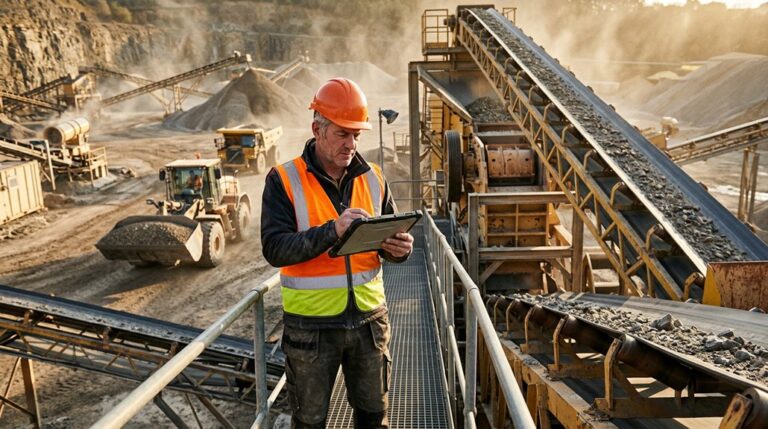
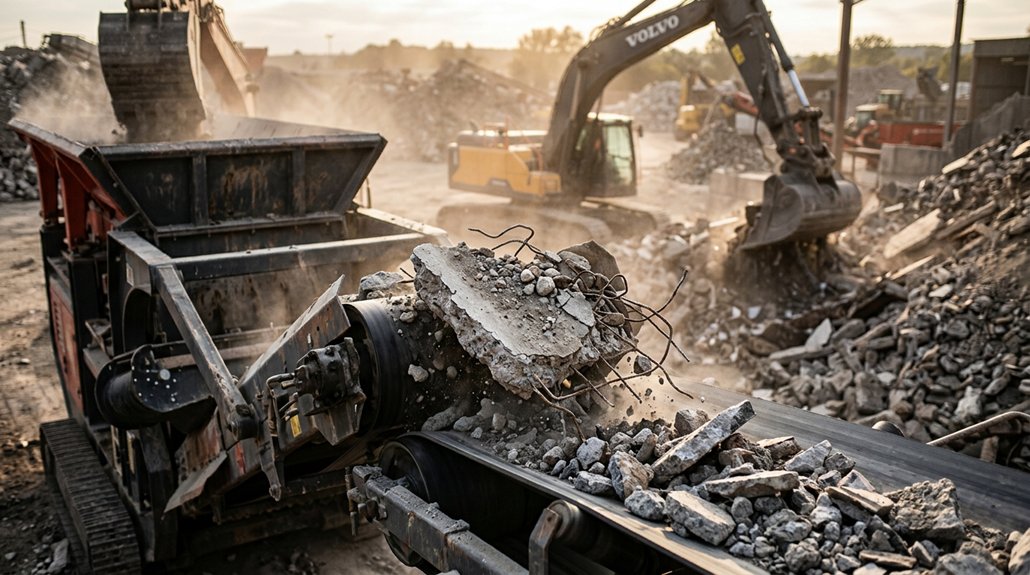
Recycled concrete and demolition waste can become dependable aggregate, but the process starts before the crusher. Keep concrete, masonry, asphalt, and stone sorted as they arrive. Remove wood, plastic, metal, soil, and other contaminants; mixed feed can affect product quality and wear equipment.
Crush and screen the material to suit its intended use, such as road subbase, drainage, or landscaping. Check the finished aggregate for particle size and consistency against the project requirements. Feed quality, moisture, and the condition of the incoming material all affect how the plant runs, so adjust the process to match the pile rather than relying on one setup for every load.
Before inspecting or clearing equipment, isolate it and follow site lockout procedures.
What Goes Into Recycled Aggregates?
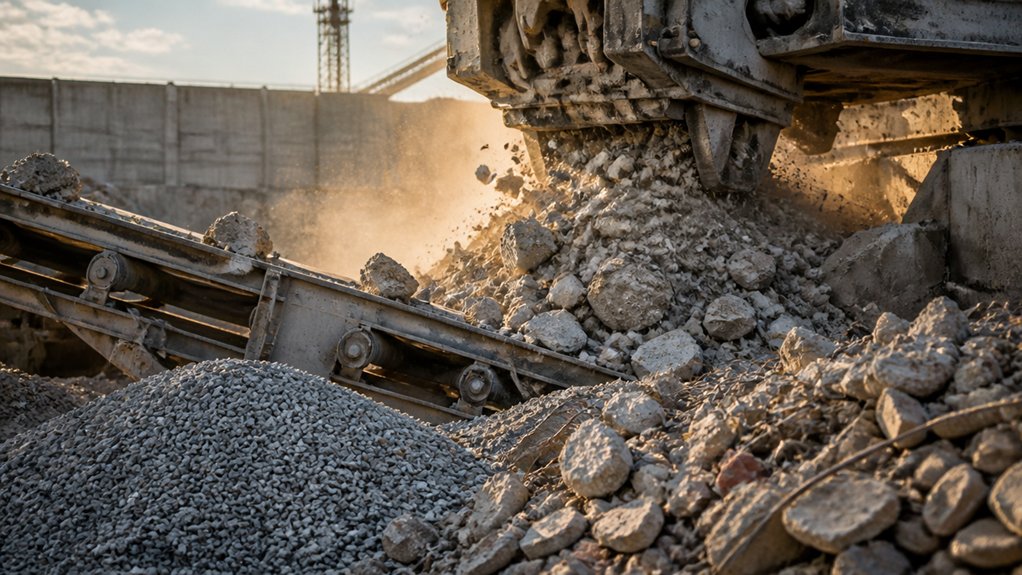
Recycled aggregates are produced from processed construction and demolition debris. Common feed materials include crushed concrete, masonry, asphalt, and reclaimed natural stone. Depending on the source and intended use, the material may also contain brick, roof tile, or glass.
The feed mix affects how the aggregate performs. Concrete and stone typically provide a strong, durable product; brick can increase water absorption. Asphalt-derived aggregate may suit some applications, but confirm that its composition meets the project requirements.
Check incoming loads for wood, gypsum, soil, metal, and other contaminants. These can affect processing, product quality, and end use.
Before processing, identify the feed materials and separate unsuitable debris. Then check the finished product’s gradation, durability, and impurity levels against the applicable project requirements and quality standards.
Matching the feed and processing setup to the intended use helps control product consistency and environmental impact.
How Does Demolition Waste Become Recycled Aggregate?
Demolition waste becomes recycled aggregate through a controlled process of sorting, crushing, metal removal, and screening. Start by separating concrete and masonry from wood, plastic, soil, and other contaminants. Clean feed helps protect the plant and produces a more consistent end product.
Choose a crusher to suit the feed size, material condition, and required product. Remove reinforcing steel with magnets, then use manual or mechanical sorting to take out remaining impurities.
Screen the crushed material into the required size ranges, and check the finished aggregate for grading and consistency before dispatch. Test it against the requirements for its intended use.
Keep inspection and maintenance within the site’s safety procedures. Isolate and lock out equipment before clearing blockages or working on the plant.
Done well, this process diverts material from landfill and reduces demand for virgin stone, while conserving resources and limiting the impacts of extraction.
Where Can Recycled Aggregates Be Used?
Once processed and tested, recycled aggregates can be used in road subbases, drainage layers, pipe bedding, and general fill. On construction projects, suitable grades may also work for temporary access roads, working platforms, and selected concrete mixes when project specifications allow.
Before placement, check particle size, strength, contamination, and compaction requirements. Recycled aggregate isn’t suitable for every structural application, so match the material to the expected load, exposure, and installation method.
For landscaping, it can be used for paths, garden borders, and ground cover; choose a consistent grading and appearance, and confirm that drainage performance meets the job requirements. Follow local specifications and the supplier’s technical data.
How Do Recycled Aggregates Conserve Resources?
Recycled aggregates conserve resources by replacing some virgin stone and sand, which reduces the need for quarrying. Processing suitable concrete and masonry also keeps usable material out of landfills. When the source is close to the job, shorter haul distances can reduce fuel use and transport emissions.
The benefits depend on what comes into the plant and how it’s processed. Remove unsuitable material, control grading, and test for contaminants and performance before using recycled aggregate in a mix or base layer.
Check local requirements and confirm that the supplier can provide consistent material. Reusing material may also reduce disposal costs and the amount of virgin aggregate you need to buy.
Conclusion
Recycled aggregates turn concrete, masonry, asphalt, and stone from demolition projects into usable construction materials. At the plant, remove contaminants, separate material by type, and crush and screen it to meet the required grading. The finished aggregate can be used in applications such as road subbases, drainage layers, and landscaping, provided it meets the project’s requirements.
Check grading, strength, and contamination levels before accepting or placing the material. Keep feed consistent and adjust the crushing and screening process when the incoming material changes. This helps produce a reliable product, reduce demand for quarried stone, and divert usable material from landfills.
Before inspecting or maintaining plant equipment, isolate it and follow site safety procedures.