
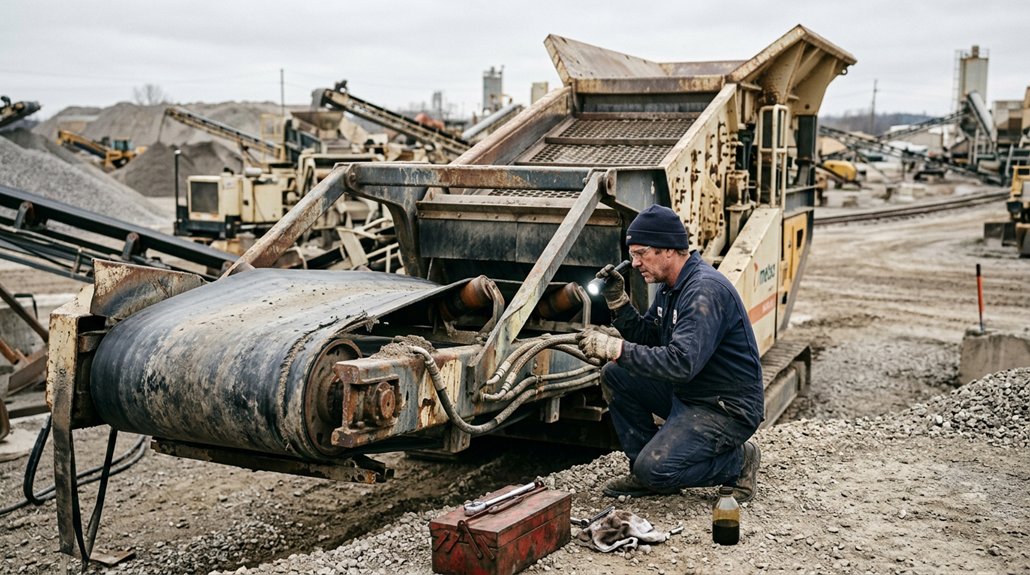
Inspect Used Crusher Wear Parts, Structure, and Leaks
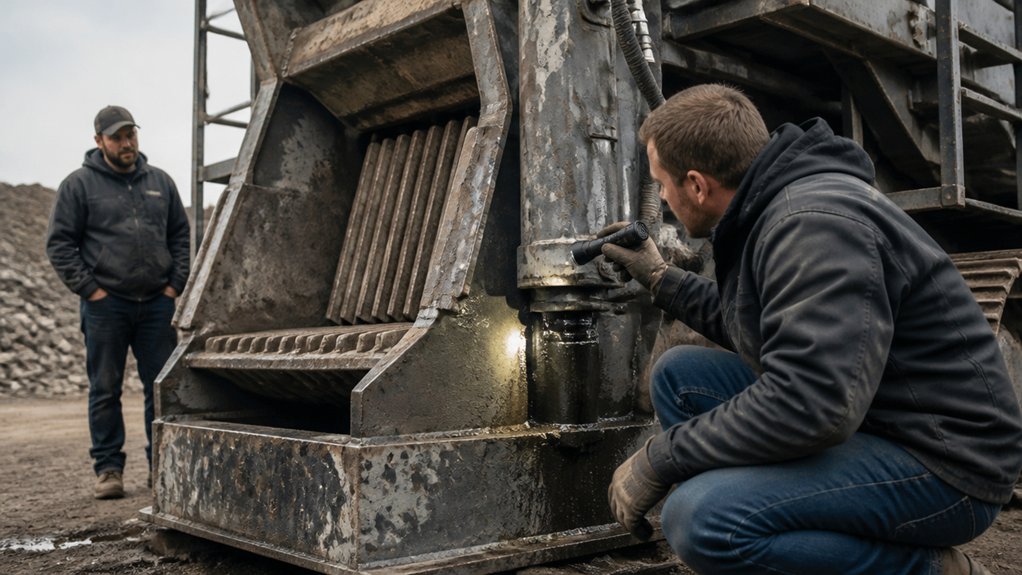
Before buying a used crusher, inspect its wear parts, structure, and hydraulic system with the machine shut down, isolated, and locked out. Check jaw plates, liners, mantles, and blow bars for uneven wear, cracks, thinning, and loose fasteners. Measure remaining material and compare it with the manufacturer’s service limits; a visual check alone won’t tell you how much useful life is left.
Inspect the main frame, welds, and mounting points for cracks, distortion, or signs of recent repairs. Look under cylinders and around hoses, fittings, and the reservoir for oil leaks, abrasion, bulges, or seepage. Don’t reach into pinch points or remove guards.
Have a qualified technician assess any suspected damage before the crusher is operated. Safety reminder: keep the machine locked out during inspection, and follow site procedures before restoring power.
Verify Maintenance Records and Safety Features
Review the crusher’s maintenance records for service intervals, replaced components, recurring faults, and outstanding repairs. Cross-check the entries against the machine’s serial number, hour-meter readings, and invoices. Investigate gaps or inconsistencies rather than relying on verbal assurances.
Confirm that the lubrication system received the specified oil and that filters were changed at the required intervals. Poor lubrication can accelerate bearing wear and lead to costly downtime.
Check that guards, emergency stops, interlocks, and access platforms are present and working. Inspect warning labels, and make sure the lockout procedures and operator instructions match the machine.
Ask who carried out each repair and whether a qualified technician documented the work. Before payment, get any missing safety devices or unclear maintenance history resolved in writing, and allow for corrective work that has been verified.
Safety reminder: Don’t inspect or test moving equipment with guards removed. Isolate and lock out the crusher before maintenance or hands-on checks, and verify that stored energy has been released.
Test Crusher Performance Under Load
Once the records and safety systems check out, run the crusher under load to see how it performs in operating conditions. Have the seller operate the machine while you watch from a safe, designated position. Never reach into the crusher or approach moving components.
Feed representative material at a steady rate. Watch for surging, blockages, uneven discharge, and excessive vibration. Check whether the crusher maintains a consistent output, and look for signs of strain or overheating around the bearings, belts, and hydraulic components.
Listen for grinding, knocking, or changes in noise that could indicate wear.
After the test, inspect accessible wear surfaces for cracks, deformation, or unusually rapid abrasion. Shut the machine down and follow the site’s lockout/tagout procedure before any close inspection; never remove guards or inspect moving parts while the crusher is running.
Document concerns before negotiating.
Match Crusher Capacity and Cost to Your Needs
Choose a crusher that meets your required throughput without paying for capacity you won’t use. Estimate output using your actual feed size, material hardness, moisture, and target product size—not the seller’s best-case rating. Then compare that estimate with your expected operating hours and duty cycle.
During inspection, review production records and check the condition of the liners and drive. Worn liners or a weak drive can cut usable output. Follow site lockout and isolation procedures before inspecting or servicing the machine; never reach into a crusher that could start or move.
Include power, transport, installation, maintenance, and likely repairs in your cost analysis. Confirm that the site can safely support the machine’s weight and provide suitable access, guarding, and service clearances. A lower purchase price can cost more if the crusher can’t meet demand or requires unsafe modifications.
Conclusion
Before you pay, inspect the wear parts, frame, and structural connections for damage, uneven wear, or signs of poor repairs. Check for fluid leaks and confirm that guards and emergency stops are in place and functional. Keep clear of moving parts, follow the site’s lockout/tagout procedures, and never inspect or service the crusher while it is running.
Review service records and ask about recent repairs, parts replaced, and recurring problems. If practical, run the crusher under load and check whether its output suits your material and production targets. Compare likely repair needs, transport, and operating costs—not just the asking price. If the machine’s condition or history is unclear, pause and arrange an independent assessment. Buy only when its condition, capacity, and total cost make sense for your operation.