
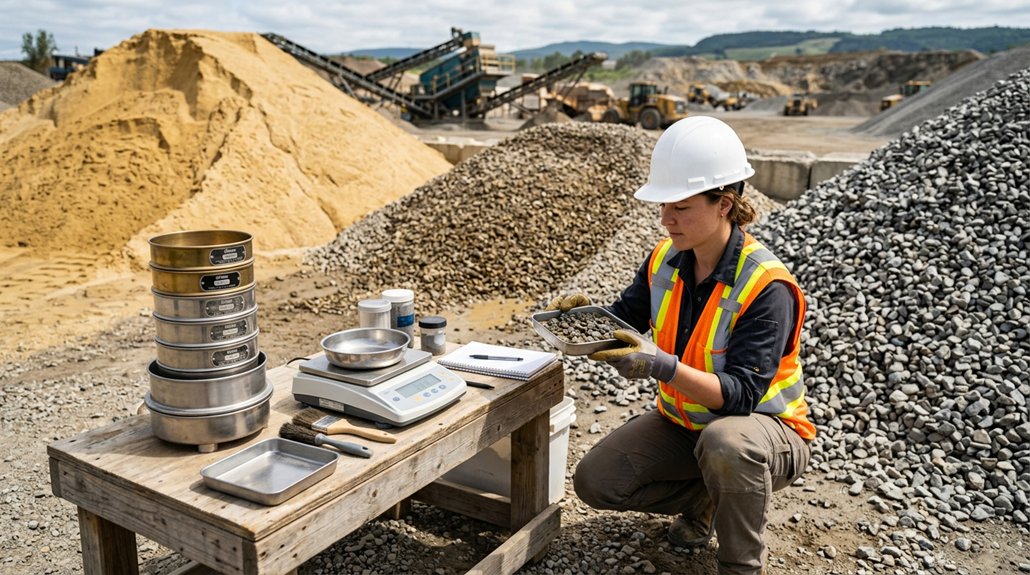
Your aggregate is only as reliable as its weakest link. Start by confirming which project specifications apply, then make sure your suppliers understand them. Check gradation, particle shape, cleanliness, strength, and durability through routine testing, and keep clear records so you can trace results back to the material source and production run. If a test falls outside the required limits, identify the cause and agree on corrective action before delivery. A clear process can help prevent rejected loads and project delays.
Find the Aggregate Specifications That Apply
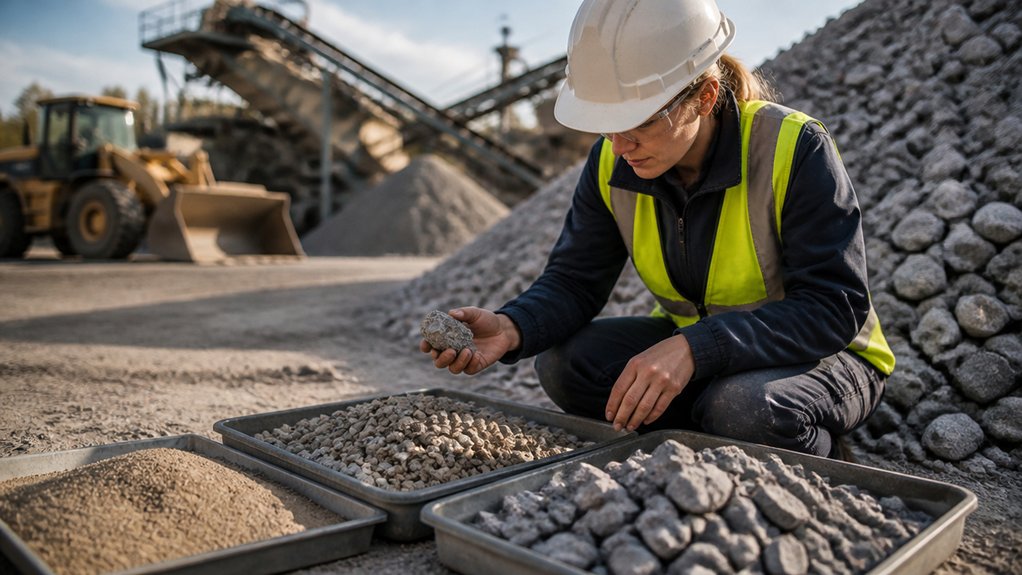
Before you order aggregate, confirm which specifications apply to the job. Check the contract documents, project requirements and standards set by the relevant agency. Requirements can differ by application, location and approving authority, so don’t assume limits from one project carry over to another. Confirm the current editions and any project-specific changes with the owner or engineer.
When requesting material, tell the supplier what it will be used for and identify the governing specification. Put the requirements in the purchase order, and keep them with your quality records. That gives the supplier a clear target and helps you check that delivered material matches the project’s approved requirements.
It also reduces the risk of compliance problems and disputes.
Check Aggregate Gradation, Shape, and Cleanliness
Once you’ve confirmed the governing specification, check gradation, particle shape, and cleanliness against its requirements. Compare sieve results with the specified limits to confirm the blend has the required proportions of each size. If results are out of range, check for issues such as inconsistent feed, screen wear, or poor screening before changing the blend or adjusting the plant.
Assess particle shape using the test methods and limits in the specification. Angularity, flatness, and elongation can affect compaction and mix performance. If results are poor, review the feed material and crushing process; changing the crusher setting alone may not solve the problem.
Check for clay, organic matter, and other contaminants that could weaken bonding or change mix behavior. If the material fails cleanliness requirements, identify the source and correct the problem before delivery.
Record the acceptance criteria and test methods in your quality control procedures so decisions stay consistent across material sources and applications.
Follow site safety procedures when collecting samples or inspecting screens and plant equipment; isolate equipment before any hands-on inspection.
Run Routine Aggregate Quality Checks
Set a regular testing schedule, and test again whenever the source, production settings, or stockpile changes in a way that could affect product quality. Put the schedule in a written plan. Name the sampling locations, test methods, acceptance limits, and staff responsible for collecting samples and reviewing results.
Take representative samples from a moving belt where it can be done safely, or from well-distributed locations in a stockpile. Avoid segregated edges and contaminated surfaces. Follow your site’s safe sampling procedure; never reach into or approach moving equipment to collect a sample. If inspection or maintenance is needed, isolate the equipment and follow lockout procedures before work begins.
Label every sample with its source, date, lot, and relevant operating conditions. Send it for testing promptly so the results reflect the material being produced. Compare each result with the applicable specification limits and recent test trends. A passing result on its own doesn’t show whether quality is drifting.
If a result is outside limits, identify and isolate the affected material. Check for likely causes, such as a source change, worn or misadjusted equipment, or stockpile contamination. Correct the cause, then collect and test another representative sample before releasing the material. Keep complete records of samples, results, corrective actions, and release decisions so the product can be traced and the quality plan reviewed.
Test Aggregate Strength and Durability
Strength and durability testing shows whether aggregate can withstand handling, traffic, weather, and repeated loading without breaking down too quickly. Choose tests based on the material’s intended use and the project specifications.
The Los Angeles abrasion test measures resistance to impact and wear. Soundness testing evaluates how well aggregate withstands repeated cycles of wetting and drying or freezing and thawing. These tests measure different properties, so use the methods required by the applicable specification rather than treating one result as a substitute for another.
Compare test results with the project’s acceptance limits. If results are marginal or inconsistent, check that samples are representative and preparation and test procedures were followed.
Consider how the material will be processed, placed, and exposed in service: aggregate that performs adequately in one application may not suit another.
Account for environmental impacts when selecting test procedures and assessing durability requirements. Also consider testing frequency, sample preparation, and the cost of premature material failure.
Keep clear records of sample sources, test methods, and results so you can track quality over time. When inspecting or preparing samples, follow site procedures and use appropriate personal protective equipment.
Fix Out-of-Spec Aggregate Before Delivery
When an aggregate test result is outside the project limits, hold the affected lot and find the cause before delivery. Check the gradation, moisture content, contamination, sampling method, and test procedure. A poor or unrepresentative sample can point you in the wrong direction, so confirm the result with a properly collected sample before changing the process.
If gradation is out of range, adjust screening or blending and retest. Wash the material when excess fines or contaminants are the problem, then check that the finished product meets the project requirements. If moisture is affecting handling or test results, drain or dry the stockpile and test a representative sample again.
Keep nonconforming material physically separate and clearly marked. Don’t load it for shipment until it has been corrected and verified. Record the lot identification, test results, cause, corrective actions, and release decision so the next shift can follow the status.
Before release, have your quality assurance process confirm that the material meets the applicable project requirements. If inspecting or maintaining screens, wash systems, or other plant equipment, follow site lockout procedures and verify the equipment is isolated before work begins.
Conclusion
Keep aggregate quality on track by checking the project specifications before production and confirming that each load is ready for its intended use. Monitor gradation, particle shape, and cleanliness, then test strength and durability at the intervals required by the governing specifications. Take representative samples and review results promptly; a sample is useful only if it reflects the material being shipped.
If results begin to drift, trace the change through the process. Check feed material, crusher settings, screen condition, and handling practices, then make controlled adjustments and record what changed. Follow site safety procedures and isolate equipment before inspecting or maintaining it. Share test results and corrective actions with suppliers and project teams before shipment. Consistent checks and clear records help prevent approval delays and protect pavement and concrete performance, load after load.