
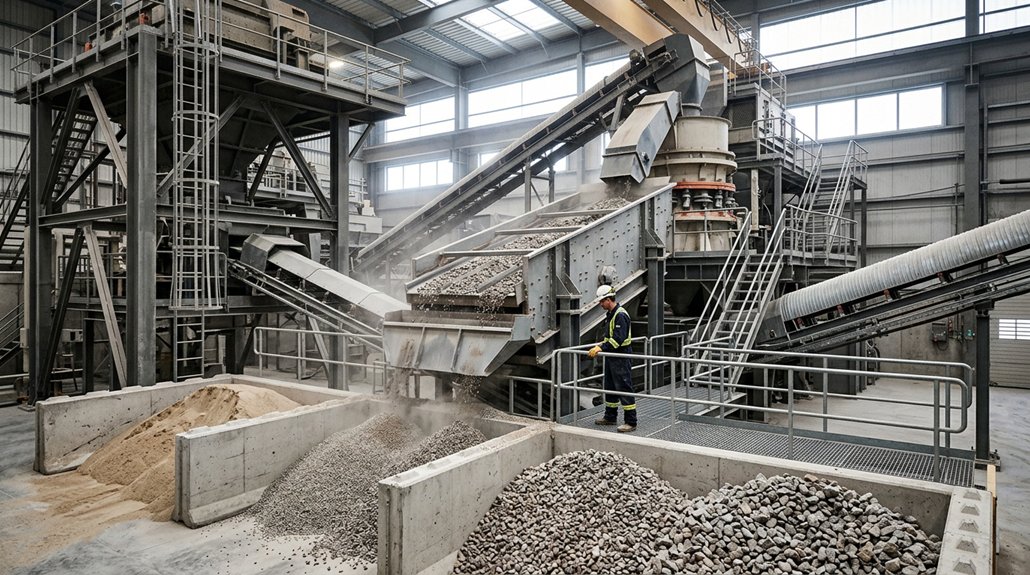
A 1% increase in saleable yield can make a meaningful difference across a large operation. Losses often build up in blasting, processing, and waste streams. Start by matching production to product demand, managing fragmentation, and checking that each stage consistently meets specification. Then look at material already classified as waste. It may contain recoverable product—but confirm its quality and processing costs before changing how you handle it.
Plan the Mine for Saleable Rock
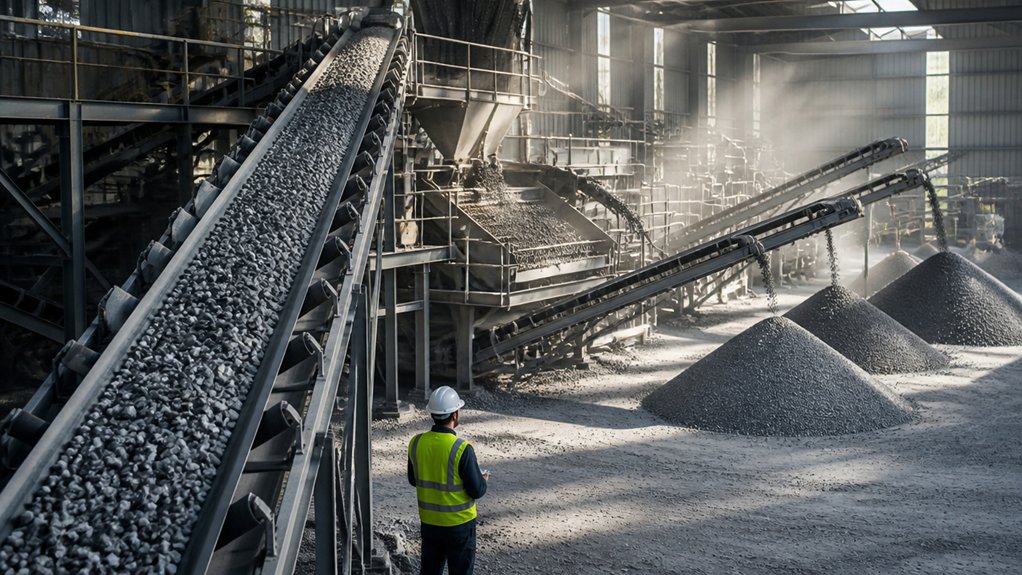
Planning a mine for saleable rock starts with the product, not the excavator. Confirm the required rock types, sizes, quality limits, and expected demand with the plant and sales teams. Then check whether the deposit can supply that mix consistently.
Map the deposit’s shape, rock strength, weathering, fractures, and material variability. Use drilling, sampling, and geological logging to separate zones that will behave differently in the pit and through the crusher. Don’t assume a single face will produce a consistent feed: changes in hardness, moisture, or clay content can affect loading, crushing, screening, and product quality.
Choose open-pit or underground extraction based on the deposit, access, ground conditions, permitting, and operating costs. Lay out benches, ramps, haul roads, stockpiles, and plant access to keep equipment moving safely and avoid unnecessary waste handling. Plan how each rock type will reach the plant, where off-spec material will go, and how stockpiles can help balance changing feed and product demand.
Build the extraction schedule around both the geological model and the plant’s needs. Identify suitable material by zone, estimate expected recovery, and leave room to adjust as new drilling and operating results improve the model. Before committing to the layout, check geotechnical constraints, water management, permit limits, haul distances, and interfaces with crushing and screening equipment.
Keep the plan practical. A layout that looks efficient on a map may create bottlenecks at the face, on the haul road, or at the plant feed point. Review those interfaces with operators and contractors before work starts, and update the plan when conditions change.
Safety reminder: have qualified personnel assess ground conditions and access routes, and follow site procedures before entering or working near active faces, benches, or haul roads.
Control Fragmentation and Product Size
Control fragmentation at the face so the crusher receives material it can handle and the finished product meets specification. Start by matching the blast design to the geology, bench geometry, and required size distribution. Adjust burden, spacing, hole diameter, and charge placement to limit oversize without creating excessive fines.
Accurate drilling and consistent initiation timing help reduce variation from one part of the blast to another. After each shot, assess fragment size and muckpile shape, then compare what you see with crusher feed requirements and plant performance. Use those results to guide the next blast design.
When geology or operating conditions change, review the parameters before the next shot rather than relying on the previous pattern. This practical feedback loop can reduce secondary breaking and rehandling while helping protect throughput and saleable yield.
Screen and Process Rock to Meet Specs
As blasted rock moves through the plant, screen it into consistent size fractions and process each stream to meet product specifications. Set screen openings and feed rates to reduce misplaced material and keep throughput steady.
Match crusher settings to the target size for each fraction, then monitor power draw, circulating load, and product gradation. If those readings shift, check the feed and process settings before making adjustments.
Control water addition and classification to manage fines and moisture. Use ore sorting only when the feed size and material characteristics suit the equipment.
Sample each product regularly, compare results with customer specifications, and correct settings promptly when results drift.
Before inspecting or adjusting equipment, follow site lockout procedures and confirm the plant is safe to access.
Consistent sampling and disciplined process control help turn each stream into a reliable, saleable product.
Recover Saleable Material From Waste
Waste streams can contain rock that meets product requirements after additional processing. Start by sampling fines, oversize, and rejected material. Check particle size, mineral content, and contamination before deciding whether recovery is practical.
Use screening to separate size fractions, washing to remove unwanted fines or contaminants, crushing to reduce oversize, and suitable separation methods to isolate usable material. Confirm the recovered product meets customer requirements, and check it regularly because feed and product quality can change.
Identify likely markets before investing in a recovery circuit. Compare the value and demand for the product with the costs of handling, processing, water, energy, and transport. Make sure the process can manage residues and maintain consistent product quality.
Assess the environmental impact by weighing reduced disposal and demand for virgin material against the resources and emissions needed for recovery.
Before inspecting or maintaining equipment, isolate it, follow site lockout procedures, and verify that stored energy has been released.
Track Yield and Value per Ton
Track yield and value per ton to see how efficiently each stage turns feed into saleable product. Record feed and product mass, product grade, and losses at crushing, separation, and recovery. Calculate saleable yield per ton, then compare results across shifts, ore types, and operating conditions.
Do not judge performance by tonnage alone. Assign value using current market demand, product specifications, and realized prices. Include energy, reagent, and handling costs to see which stages add value and which reduce net returns.
Use calibrated scales and consistent sampling methods so results are comparable. Review trends regularly and investigate unexpected changes. Adjust settings or material routing to improve recovery, but avoid making off-spec product.
Before inspecting or servicing equipment, follow site lockout procedures and confirm the equipment is safely isolated.
Conclusion
Every ton of rock has value, but you only recover it if the mine and plant are set up to make the products your customers need. Start with the product specifications and work backward: consider how mine design and blasting affect feed size, fragmentation and the amount of material that can be sold. Then check how the crusher and screens are handling that feed. Adjustments to feed rate, crusher settings and screen condition can affect product size, quality and yield.
Sample waste streams to find material that may be recoverable, and track saleable yield and value per ton through each stage. Use the results to identify where product is being lost, avoid unnecessary rehandling and make practical changes to improve recovery. When inspecting equipment or carrying out maintenance, follow site procedures, isolate energy sources and use the required protective equipment. Are you capturing every saleable fraction your operation can produce?