

Follow Rock Through the Crushing Stages
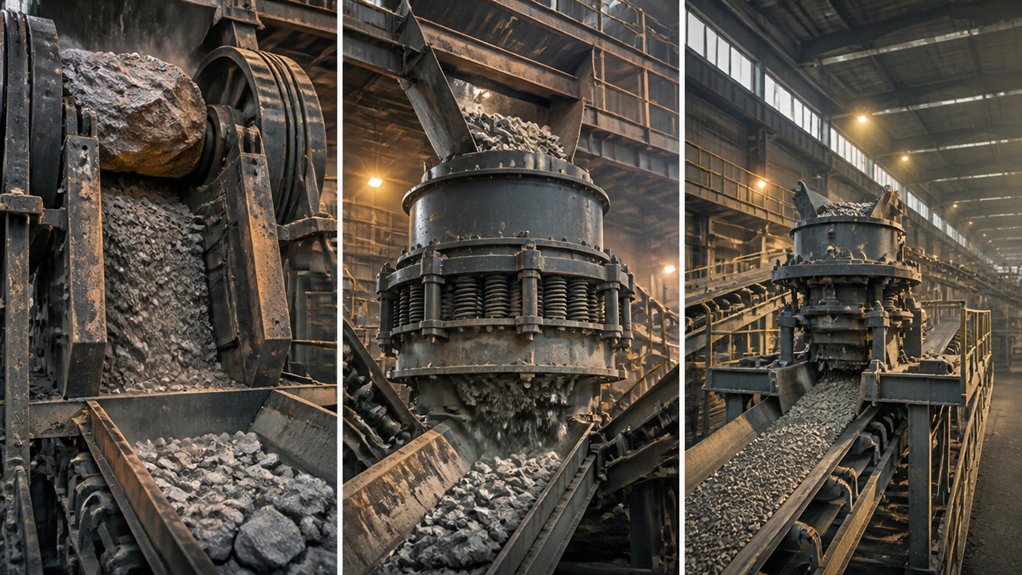
In a crushing plant, each stage reduces rock to a size the next part of the circuit can handle. Primary crushing takes run-of-mine material down to a coarse product. Secondary crushing reduces it further, and tertiary crushing brings it closer to the required product size.
Keep feed steady at each transfer point. Uneven or excessive feed can destabilize the circuit and affect throughput and product sizing. Rock hardness and feed characteristics also change how much energy the plant uses and how quickly wear parts wear. Watch operating data and product size, and adjust the circuit as conditions change.
Include routine checks of crusher settings, wear parts, and operating performance in your maintenance plan. Before inspecting or servicing equipment, follow site lockout procedures and confirm the machine is isolated and safe to work on.
Choose a Primary Crusher for Your Feed
Choose a primary crusher that matches the feed, not just the target tonnage. Check the feed’s top size, hardness, abrasiveness, moisture, and variability, along with the throughput the plant needs to sustain.
Account for how material reaches the crusher: surges, uneven loading, and oversize can all affect performance.
A jaw crusher is often a practical choice for coarse, hard feed and variable operating conditions. A gyratory crusher is generally suited to high, steady throughput in a large operation. Neither choice removes the need to manage sticky or wet material, which can bridge or choke the feed opening.
Abrasive rock also increases wear, so include wear-part use and changeout time in your operating plan.
Check that the crusher can work with the upstream delivery system and that downstream equipment can handle its output. Use feed optimization to keep loading steady, limit interruptions, and reduce unnecessary stress on the plant.
Before inspecting or working on the crusher, follow site lockout procedures and confirm the equipment is safely isolated.
Choose Crushers to Meet Your Target Size
To hit your target size, match each crusher stage to the feed it receives and the product it needs to make.
For secondary crushing, check that the required reduction ratio is within the machine’s proven operating range. Don’t rely on one setting to handle every ore type.
Use the closed-side setting, chamber profile, and feed characteristics to estimate product top size and fines.
For tertiary crushing, choose a machine that can deliver the product your next process needs, whether that’s consistent screen feed or saleable aggregate.
Check test results and manufacturer curves, then confirm performance under normal operating conditions and across the ore variability you actually see in the pit.
Balance the Crushing Circuit to Prevent Bottlenecks
A crushing circuit is balanced when each stage can handle the feed rate and material size coming from the stage before it. If a downstream crusher or screen can’t keep up, it can become a bottleneck, backing up material and forcing upstream equipment to slow down.
If downstream capacity is too large, you may be carrying equipment that the circuit can’t use effectively.
Start by checking how the ore’s hardness, size distribution, moisture, and shape affect each stage. Then review reduction ratios, crusher settings, screen performance, and recirculating load together—not as separate problems. A mismatch can increase circulating material, wear, and energy use without improving final product.
Use operating data and regular process checks to find where capacity is being lost. Adjust feed rates and operating targets to suit the ore and the product requirements, and direct available capacity to the stage that’s limiting the circuit.
Leave practical operating margin for changes in feed conditions; a circuit balanced for one ore blend may not stay balanced when the material changes.
Plan maintenance around the needs and availability of the whole circuit. A single unreliable machine can restrict production across every stage, so address recurring failures before they become a plant-wide constraint.
Before inspecting or servicing equipment, isolate and lock out all energy sources, verify zero energy, and follow site safety procedures.
Use Screening and Monitoring to Improve Circuit Flow
Screens control what moves forward and what returns for further crushing, so their condition has a direct effect on circuit flow. Keep apertures clear, check the screen media for wear or damage, and monitor vibration, stroke, and feed distribution during routine inspections.
Follow site lockout procedures before working on or near a screen, and never inspect moving equipment.
Poor stratification or blinding can let oversize material pass downstream, overload crushers, and increase recirculating load. Use sensor data—such as vibration, motor current, and feed rate—alongside belt-scale readings and product-size checks.
These measurements can help identify capacity limits, changes in ore behavior, and screen wear before throughput drops.
Base adjustments to feed rate, deck setup, or maintenance timing on measured performance. After each change, check that circuit flow improves without allowing product size to drift out of spec.
Conclusion
Build the crushing circuit around the rock, not a standard equipment list. Start by matching the primary crusher to the feed size, hardness, and expected variability. Then choose secondary and tertiary stages to produce the required product, checking that each stage can handle the load passed forward. A bottleneck in one stage can limit the whole plant, even when the other crushers have spare capacity.
Use screens to control material flow and monitor the size and shape of the oversize. If the screen shows a pattern that matches what the crusher settings would produce, treat that as useful evidence—not coincidence. Check the settings and operating conditions, then adjust the circuit based on what the material is telling you. Regular inspection can catch wear or buildup before it affects throughput or product quality. Follow site lockout and isolation procedures before inspecting or maintaining equipment.