Jaw Crusher vs Cone Crusher: What’s the Difference?

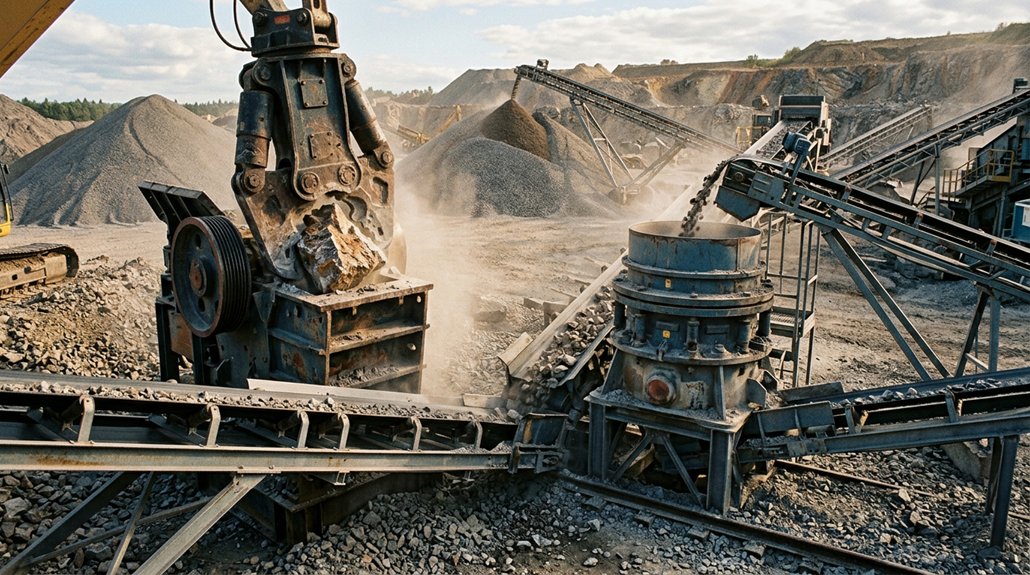
A jaw crusher uses a moving jaw to compress rock against a fixed jaw. It’s commonly used for primary crushing because it can take large, abrasive feed and handle normal variations in feed size.
A cone crusher compresses material between a gyrating mantle and a stationary bowl liner. It’s typically used after primary crushing to produce a more consistent, finer product.
Choose based on the feed and the job, not just the crusher type. Check the feed size, hardness, moisture, required product gradation, throughput, and reduction ratio.
Jaw crushers generally suit coarse, variable feed; cone crushers work best with a steady supply of pre-crushed material within the crusher’s operating range. Excessive fines, wet or sticky material, or uneven feeding can affect performance, so account for those conditions in the circuit design.
Wear patterns and maintenance needs differ. Jaw plates and cone liners wear according to the material, feed conditions, and operating practices.
When comparing options, consider how wear parts are inspected and replaced, how accessible the work area is, and the likely effect of planned maintenance on production.
Before inspecting or servicing either crusher, isolate and lock out all energy sources, follow site procedures, and verify that the equipment can’t start.
Where Does Each Crusher Fit in the Process?
In a typical crushing circuit, the jaw crusher takes the run-of-mine feed and reduces it to a size the next stage can handle. A cone crusher commonly follows the jaw, processing the more consistent feed into smaller material. This primary-to-secondary arrangement helps limit oversize entering the cone and keeps the circuit running steadily.
Screens between stages can control the feed size and return oversize for another pass. Check that the screen openings and crusher settings work together, and watch for changes in feed size, moisture, and rock hardness; these can affect throughput and product consistency.
Match each crusher to the material and its role in the circuit. Plan for safe access when scheduling inspections or maintenance, and follow site lockout and isolation procedures before anyone works on equipment.
Which Crusher Suits Your Rock, Output, and Budget?
To choose between a jaw and cone crusher, start with the rock’s hardness and abrasiveness, the feed size, and the product you need.
A jaw crusher is often the practical choice for large feed and a wide range of materials, including hard, abrasive rock. Its wear-part system is generally straightforward.
A cone crusher is better suited to producing a finer, more consistent product, but it usually needs a steady, controlled feed and can involve higher purchase and maintenance costs.
Compare the required tons per hour and product-size distribution, then consider liner life, energy use, maintenance needs, and the cost of replacement parts.
If the budget is tight, account for downtime as well as purchase price. The cheapest machine up front may not deliver the lowest cost per ton over its working life.
Before inspecting or servicing either crusher, isolate and lock out the equipment, verify it can’t start, and follow the site’s safety procedures.
Which Crusher Fits Your Application Best?
Choose a jaw crusher for primary reduction when you’re handling large, variable feed or hard, abrasive rock. Its wide feed opening and straightforward operation make it a practical choice for run-of-quarry material.
A cone crusher is generally better suited to secondary or tertiary crushing, where the feed is already sized and you need a more controlled, finer product.
Match the crusher to your circuit’s measured feed size, required capacity, and target gradation. A jaw can handle a wider range of feed conditions; a cone performs best with consistent, properly prepared feed.
Before choosing, consider operating hours, wear-part consumption, and access for service. Follow lockout procedures and verify the machine is fully isolated before any inspection or maintenance.
If one machine must accept variable run-of-quarry feed, a jaw is often the practical choice. If steady throughput and tighter product sizing are the priority, consider a cone.
Conclusion
Choose a jaw crusher for large, abrasive feed and dependable primary reduction. It accepts coarse material and breaks it down for the next stage. Choose a cone crusher for controlled secondary crushing, consistent sizing, and a finer product. It works best with a steady, properly sized feed.
Before selecting either machine, consider the rock’s hardness and abrasiveness, the feed size, the required product, and the full operating cost—including wear parts, energy, and downtime. Don’t base the decision on purchase price alone. If your circuit needs both stages, use the jaw to handle the primary break and the cone to refine the material. Match the machines to the feed and keep them properly adjusted to support steady production and manage wear.