
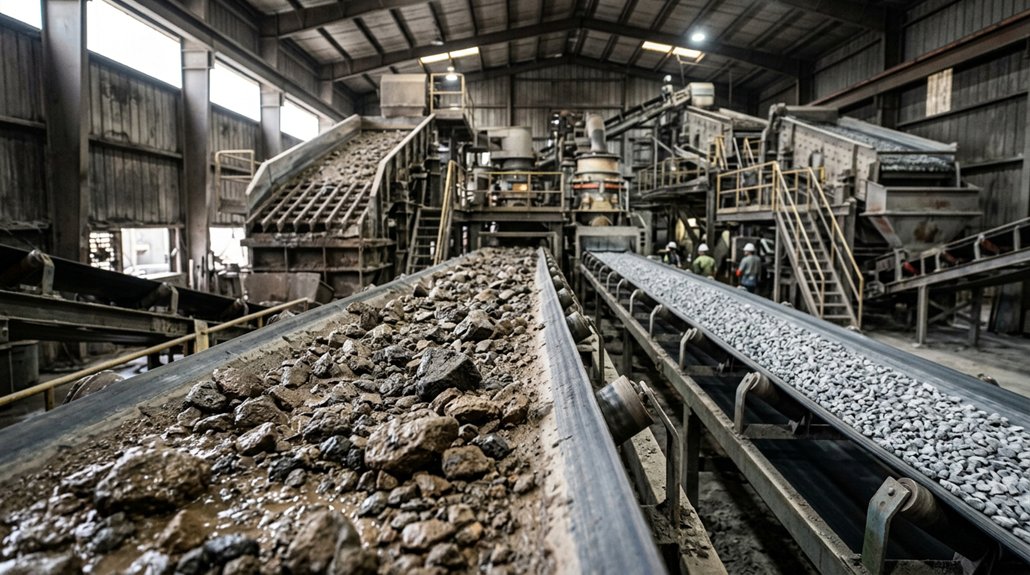
Feed material can affect final aggregate quality before crusher settings come into play. Rock hardness and mineral structure influence how the material breaks, while moisture, clay, and changes in feed size can disrupt screening and increase fines. As a result, gradation and particle shape may shift even when the plant is running steadily. Monitor these feed characteristics and adjust the process as needed to bring the product back into spec. Before inspecting or adjusting equipment, follow site lockout procedures and verify that all moving parts have stopped.
How Does Feed Material Affect Aggregate Quality?
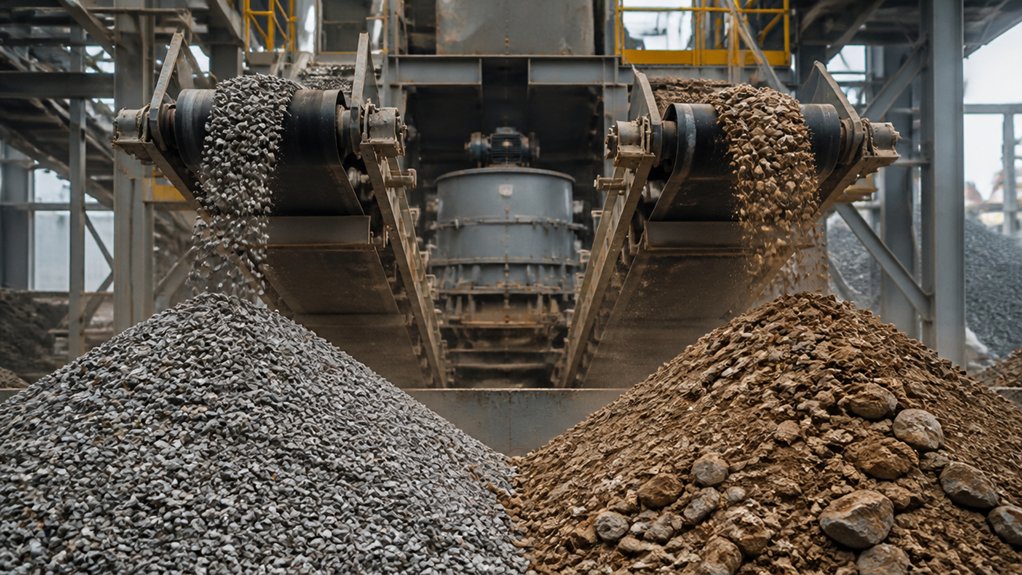
Feed material sets the starting point for aggregate quality. Its mineral composition, hardness, moisture, and particle shape affect how it fractures, how much fines it produces, and how it moves through the plant.
In practice, changes in the feed can alter gradation, screening efficiency, throughput, and product consistency.
Watch for wet or sticky material that blinds screens, and for clay or organic matter that can weaken bonding or push products out of specification. Soil, wood, and metal contamination can also affect product quality and damage equipment.
Keep stockpiles managed to limit segregation, and monitor changes in the feed so you can adjust the process before quality or production suffers.
When inspecting feed or equipment, follow site procedures and isolate machinery before entering hazardous areas or working near moving parts.
Why Do Rock Type and Hardness Matter?
Your feed rock’s type and hardness affect how it breaks under crushing loads. Hard, abrasive material generally increases wear on crusher liners and screen media, while softer or more brittle rock may produce more fines.
Match the crusher, screen media, and operating settings to the material to manage particle shape, gradation, wear, and aggregate quality.
Check wear components regularly, following lockout and site safety procedures before any inspection or maintenance.
Rock Type and Strength
Rock mineral composition and strength affect how material fractures, the energy required to crush it, and the shape and durability of the finished aggregate. Mineral grains, cementing, cleavage, and weak planes all influence breakage, so two rocks from different formations—or even different parts of the same quarry—can behave differently in the plant.
Use the rock’s origin as a guide, not a substitute for testing. Take representative samples across the feed and check how the material breaks under conditions relevant to your circuit. Strong, well-cemented rock may produce durable particles, while layered, weathered, or fractured material may generate more fines and irregular shapes. Watch for changes in feed as the face advances, and adjust the circuit when those changes affect product quality or throughput.
Match the rock’s fracture behavior to your product requirements and circuit design. This helps maintain consistent aggregate quality and avoid running the plant harder than necessary. When inspecting or adjusting equipment, follow site lockout procedures and keep clear of stored energy and moving parts.
Hardness and Wear
Hardness affects how readily rock fractures, while abrasive minerals such as quartz can wear crusher liners, blow bars, and screens faster. Hard, abrasive feed may also require more crushing energy. Mineral composition and grain structure matter: two rocks with similar compressive strength can cause very different wear.
When selecting wear parts, consider the feed alongside machine settings and operating conditions. Track liner profiles, screen condition, and wear rates as feed sources change.
Before inspecting or measuring components, shut down and isolate the equipment, follow site lockout procedures, and use the required protective equipment. Sustained abrasion can shorten service intervals and increase maintenance demands.
Impact on Aggregate Quality
Hardness and rock structure affect the shape and grading of the finished aggregate. Hard, brittle rock often breaks into angular particles. Softer or more ductile material may produce more fines or irregular shapes. These differences can affect gradation, particle shape, and product strength, so set up the crusher and circuit for the deposit rather than relying on one setup for every feed.
Keep the feed as consistent as practical, and watch for clay, mixed rock types, or other contamination. These can interfere with screening and push the product out of specification. Sample the feed and finished product regularly, and check that measuring and control equipment is calibrated.
Use the results to adjust operating settings before off-spec material builds up. Before inspecting or servicing equipment, isolate it and follow the site’s lockout and safety procedures.
How Does Feed Size Affect Aggregate Gradation?
How does feed size affect aggregate gradation?
Feed size affects how consistently a crusher reduces material and separates it into product fractions. A steady feed that fits the crusher’s design helps maintain a predictable reduction and gradation.
Oversized particles may not break down as intended, while a wide mix of feed sizes can shift the balance between coarse and fine output.
Match the feed to the crusher’s maximum feed size and recommended operating range. Keep feed as uniform as practical, and check product samples against the job specification.
If gradation drifts, review feed size and distribution along with crusher settings before making adjustments. Follow lockout procedures and the manufacturer’s instructions before inspecting or adjusting equipment.
What Do Moisture and Fines Do to Screening?
Moisture and fines can reduce screening efficiency by causing smaller particles to stick to larger rock and blind the screen openings. The result is less effective separation, lower capacity, and undersize material reporting with the oversize.
The problem is often more pronounced with damp, clay-rich feed. Sticky material can form clumps, plug apertures, and carry fines across the deck instead of allowing them to pass through. Watch for changes in feed moisture and product sizing, and adjust the feed rate or screening conditions to maintain good material separation.
Washing or drying may help where it suits the operation.
Inspect the decks for buildup and clean them as needed. Before inspection or cleaning, isolate and lock out the equipment, and follow your site’s safety procedures.
How Does Variable Feed Change Aggregate Shape?
When feed gradation changes, particles load the crusher differently, which can shift the balance of cubical and elongated product.
Moisture also affects how material flows through the plant and can change crusher performance, especially when wet feed sticks or packs.
Keep the feed rate and gradation as consistent as practical, and watch for changes in product shape as conditions vary.
If you inspect or adjust equipment, follow lockout procedures and keep clear of moving parts.
Feed Gradation Effects
Changes in feed gradation change how material loads the crusher and how particles break. In a broad size range, smaller particles can cushion larger ones, reducing direct rock-on-rock contact. A narrow size range may lead to more direct impacts. Depending on the crusher type and settings, that can produce more angular particles or excess fines.
Keep the feed blend as consistent as practical to maintain stable chamber loading. If product shape changes, check the feed gradation and sample the finished aggregate before adjusting crusher speed, gap, or feed rate. Changes in flakiness, elongation, or fines can indicate that the blend or operating conditions need attention.
Make one adjustment at a time and verify the result with follow-up samples.
Moisture And Shape
Moisture changes how feed moves through a crusher and how particles break, so it can affect aggregate shape. As moisture rises, fines may stick to coarse particles and change how material contacts the crushing surfaces. Depending on the crusher and its settings, this can reduce effective crushing action and leave more rounded, flaky, or elongated particles.
Dry, brittle feed may break along existing weaknesses, producing angular particles but also inconsistent shapes. Check the effect by sampling product under different moisture conditions and testing it with an appropriate method, such as a flakiness index test or particle shape analysis.
If the product falls outside your shape requirements, review moisture control alongside crusher settings and feed conditions. Change one operating factor at a time and retest so you can identify what’s driving the result.
Before inspecting or adjusting equipment, follow site lockout procedures and verify that the plant is safely isolated.
Consistent Feed Flow
Steady feed flow helps a crusher apply force consistently, supporting uniform particle breakage and aggregate shape. Uneven feeding can overload the crushing chamber during surges, then reduce rock-on-rock interaction when the feed drops off. Those changes affect compression and impact conditions, which can increase variation in particle size and shape.
Elongated or flaky pieces may become more common, particularly when feed gradation changes or the chamber runs below its designed capacity.
Watch belt loading and feeder speed, and keep the chamber consistently full within the crusher’s operating limits. Check for contamination that could interrupt flow, and verify that feed controls are calibrated.
Before inspecting or adjusting equipment, follow site lockout procedures and confirm all moving parts are stopped. Stable operating conditions help you meet product requirements and reduce problems with downstream screening and handling.
What Can You Adjust to Improve Aggregate Quality?
To improve aggregate quality, control the feed, crusher, and screens as a system. Start with feed analysis and check for changes in hardness, moisture, and oversize content. Inconsistent feed can cause unstable crusher loading and uneven product size. Where possible, blend material to keep feed conditions consistent.
Adjust the crusher’s closed-side setting to bring gradation toward target. Review liner profile and condition as well; the right setup can help produce the required particle shape while limiting excess fines. Check screen aperture size, deck condition, and feed distribution to reduce misplaced material.
Use regular gradation and particle-shape tests to confirm the results. Change one setting at a time, allow the circuit to stabilize, and record the outcome. That makes it easier to maintain the specification as feed conditions change.
Before inspecting or servicing equipment, follow site lockout procedures and verify that all energy sources are isolated.
Conclusion
Aggregate quality starts with the feed. Rock type, hardness, feed size, moisture, and contaminants all affect how material fractures, how it screens, and the shape and gradation of the final product. If feed conditions change, finished aggregate can move out of specification.
Track feed composition, size distribution, moisture, and flow rate. When conditions shift, adjust the crusher and screen settings to suit the material, then verify the product gradation. Steady feed control can help limit excess fines, reduce unnecessary equipment wear, and produce more consistent aggregate for its intended use. Before inspecting or adjusting equipment, follow lockout procedures and confirm all components are safely stopped.