
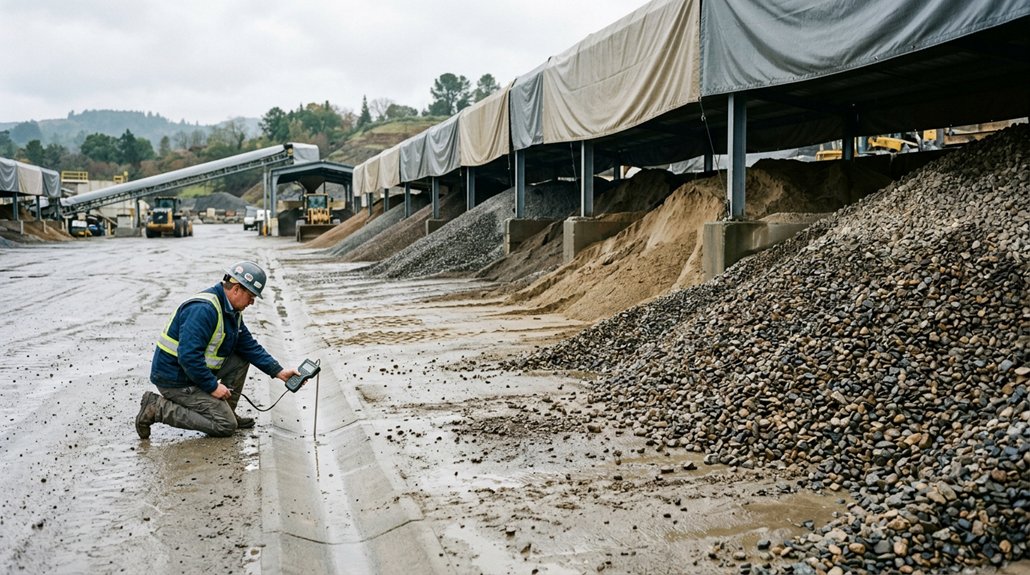
Rain can move through an aggregate stockpile unevenly, changing the moisture content of material sent to the plant. To limit variation, take representative samples from several locations and depths, divert runoff away from the pile, and inspect covers for tears or gaps. Record moisture results and adjust batch water or plant settings as needed. When inspecting stockpiles or covers, stay clear of unstable slopes and moving equipment, and follow site safety procedures. Hidden wet zones can still develop, so where should you check first?
Measure Moisture in Aggregate Stockpiles
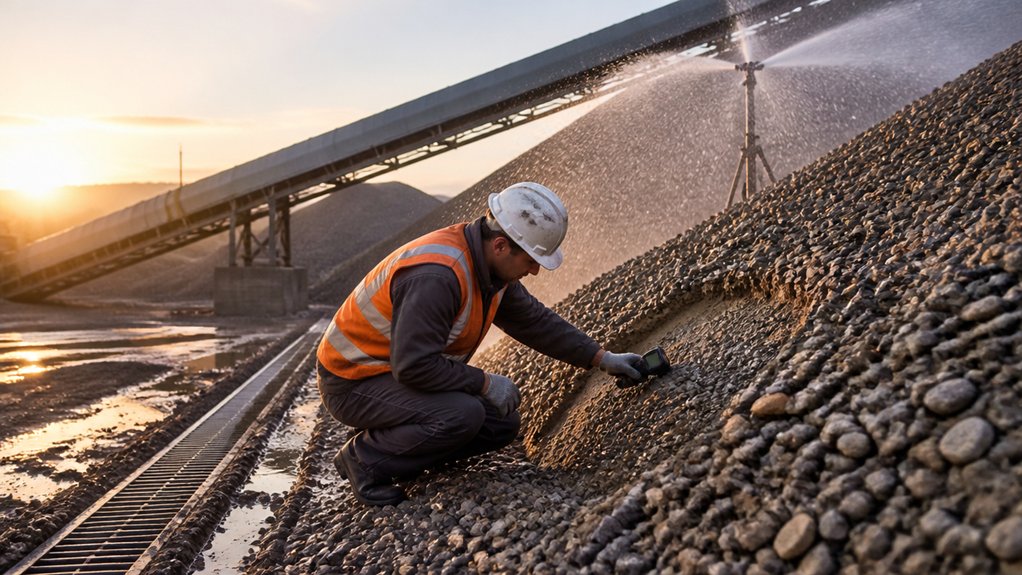
Measure moisture in aggregate stockpiles regularly, using a calibrated moisture meter or an oven-dry test. Sample several representative locations and depths, including near the surface, at mid-depth, and toward the stockpile core. A single grab sample can miss differences between exposed and buried material.
Record each result by material type, stockpile, sampling depth, date, and time. Use the same sampling method from one check to the next so you can compare readings reliably. Retest after rainfall, new deliveries, or changes in production conditions. Moisture can vary across a pile as water drains, evaporates, or moves through the material.
Use the results to adjust batch-water calculations and keep aggregate proportions consistent. Document the test method and any relevant operating conditions so you can spot trends and investigate unexpected readings.
When taking samples, follow site procedures and keep clear of moving equipment and unstable stockpile faces.
Grade Sites to Drain Water Away
Moisture readings show how water varies across a stockpile. Good site grading helps control that variation by directing runoff away from aggregate storage areas. Set a consistent fall across storage pads toward perimeter drains or collection points, and confirm elevations with survey data. Check for low spots where standing water can saturate the base and migrate into the aggregate.
Size drainage systems for local rainfall, the area that drains toward the pad, and the soil’s ability to absorb water. Keep outlets clear, and route discharge away from stockpiles and operating areas. Stabilize cut and fill slopes where erosion could carry sediment onto stored material.
Recheck grades after heavy equipment traffic, settlement, or seasonal storms. Before inspecting or clearing drains, follow site procedures, isolate equipment where required, and stay clear of unstable ground and moving machinery.
Cover Stockpiles to Limit Rain Exposure
When rain can reach a stockpile, a properly secured cover helps limit water infiltration and moisture variation. Choose a waterproof, UV-resistant cover large enough to extend beyond the pile crest and shoulders.
Anchor it to resist wind uplift, using a setup suited to local wind and precipitation conditions.
Prevent ponding: standing water can stretch the material and find weak points in seams or overlaps. After storms, inspect the cover, seams, overlaps, and tie-downs, and repair tears promptly. Keep the cover secure throughout wet periods.
Before inspecting or repairing it, follow site procedures, use appropriate fall protection, and stay clear of unstable piles and moving equipment.
Track rainfall and compare moisture tests from covered and exposed aggregates. Use the results to check whether the cover is working and adjust your protection plan as needed.
Manage Pile Placement and Material Handling
Place aggregate on a firm, well-drained pad, and build the pile in controlled lifts to limit water infiltration and segregation. Keep stockpiles clear of runoff channels, ponding areas, and traffic routes that can carry mud onto the pad. Grade the pad so water drains away from the pile. Where groundwater or lateral seepage could reach the pile base, use a suitable moisture barrier.
Avoid dumping material over the crest. Radial stacking or a conveyor can help limit particle separation, especially when handling coarse or mixed-size material. Keep loaders off the pile where practical; repeated travel can compact the aggregate, trap water, and increase contamination risk.
Maintain separate, clearly marked piles for each size and source. When checking the pad, drainage, or barriers, stay clear of moving equipment and follow site safety procedures.
Monitor Changes and Adjust Production Mixes
Because stockpile moisture changes with rainfall, drainage, and handling, sample each aggregate source on a consistent schedule. Record results by pile and time so you can see how conditions change during a shift. Use aggregate testing to check moisture sensors and establish representative moisture values before production.
Compare measured moisture with the mix design, then calculate wet batch weights using the appropriate moisture and absorption corrections. If readings fall outside your control limits, sample more often. Check for poor drainage, segregation, or changes in the material, and adjust feeder settings before batching.
Follow your site’s safety procedures when inspecting stockpiles or working near feeders and other equipment; isolate equipment before maintenance.
Log each adjustment alongside plant output and test results. Review the records weekly to spot recurring variation, refine sampling intervals, and keep water-cement ratios and finished-product performance consistent.
Conclusion
Control stockpile moisture by sampling several locations and depths; surface readings alone can miss wetter material below. Use a calibrated moisture meter or an oven-dry method, and keep the sampling approach consistent so readings are useful from one shift to the next.
Grade stockpile pads to drain water away, and store aggregate on a firm, well-drained surface. Cover piles to limit rain exposure, secure covers against wind, and repair damage promptly. Before inspecting or repairing covers, follow site access procedures and use appropriate fall protection where required. Keep loader traffic to a minimum to reduce contamination and avoid compacting material in ways that trap water.
Record moisture readings, note weather and stockpile changes, and adjust production mixes as conditions shift. Consistent sampling, effective drainage, sound covers, and timely adjustments help protect aggregate quality and keep batching more consistent.