Check Rock Hardness, Abrasiveness, and Feed Size
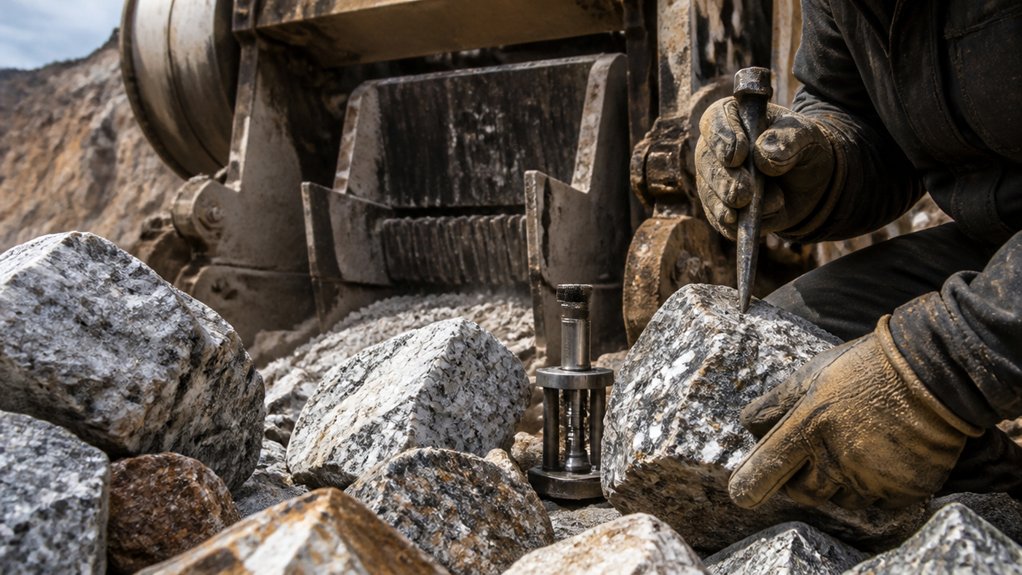
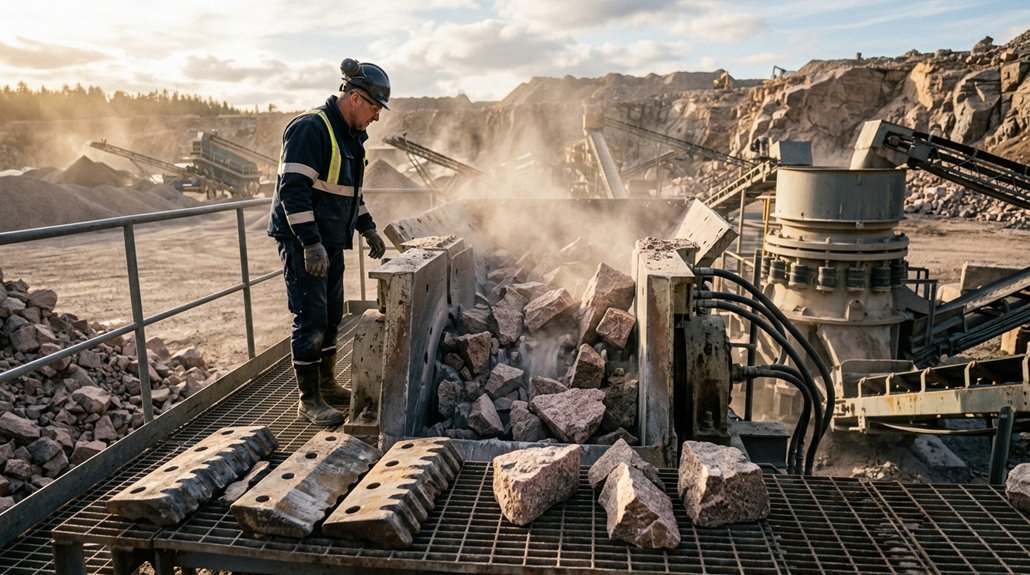
Before selecting a crusher, establish the rock’s hardness, abrasiveness, and maximum feed size. Have a qualified laboratory test representative samples from across the deposit; one sample may not capture changes in the rock that affect wear, throughput, and maintenance. Review geological records and confirm the test methods and sample locations with the lab.
Record moisture, fracture patterns, and the largest expected feed dimension alongside the test results. Compare these findings with the mine plan and the capacity of the loading and feeding equipment. If oversized blocks reach the crusher, they can disrupt production and create a safety hazard. Set practical feed limits and make sure operators know how to manage material that exceeds them.
Use the results to guide equipment selection and operating targets, then check them against actual plant performance as conditions change. Before inspecting or clearing a blockage, follow site lockout procedures and verify that equipment is isolated.
Match Crusher Types to Hard, Abrasive Rock
For hard, abrasive rock, choose a crusher that can handle the feed without putting unnecessary wear on high-impact components. Match the crusher’s duty rating and wear-part design to the rock’s strength and abrasiveness, as well as your target throughput.
In the field, the right setup is the one that maintains a steady feed and product size without burning through liners or driving up downtime.
Check that the crusher can accept your largest expected feed. Oversize material can cause blockages, while a poor chamber or circuit match can increase recirculation and wear. Look for controlled crushing forces and practical access to replaceable liners.
Before any inspection or maintenance, isolate and lock out the equipment, verify it’s safe, and follow site procedures.
Include power demand, dust control, and material handling in your operating assessment. Set inspection intervals based on operating conditions, track liner wear, and confirm spare parts are available before they’re needed.
Where possible, validate the selection with a site trial or reliable operating data from comparable rock and duty.
Compare Jaw, Cone, and Impact Crushers
Jaw, cone, and impact crushers serve different roles. Choose based on feed size, rock hardness and abrasiveness, required product shape, and the job each machine must do.
A jaw crusher is usually the primary unit. It accepts large run-of-mine material and handles hard rock well. Check that the feed opening suits the largest pieces reaching the plant, and keep the feed reasonably consistent to avoid interruptions and uneven wear.
Use a cone crusher for secondary or tertiary reduction, especially with hard, abrasive rock. Its compression action is suited to sustained crushing duty. A steady, well-distributed feed helps maintain consistent production and product size.
An impact crusher is often a better fit for less abrasive material when you need flexible reduction or a more cubical product. Abrasive feed can wear impact parts quickly, so account for wear and operating conditions when comparing options.
For any crusher, check that capacity matches the plant’s required flow and that the available power supports the full circuit. Consider the feed and discharge arrangement, downstream screening, and the product specification—not just the crusher in isolation.
Before inspecting or maintaining a crusher, isolate and lock out the equipment, verify it’s safe to work on, and follow site procedures. Choose the machine that fits your material and operating conditions; that’s the practical route to reliable production and manageable maintenance.
Compare Output, Product Shape, and Wear Costs
Once the crusher type suits your material and duty, compare its effect on plant output, product shape, and wear costs. Check that its rated capacity can meet your throughput target, then assess performance with your actual feed size, rock hardness, and operating conditions. A rating alone doesn’t tell you what the machine will produce in your plant.
Monitor product gradation and particle shape. Better control can reduce recirculation and help downstream equipment run more consistently. Match the crusher’s operating range to the feed and target product rather than relying on nameplate capacity.
Estimate wear-part life based on rock abrasiveness and expected tonnage. Include parts, replacement labor, and downtime in your maintenance-cost comparison. Before inspecting or replacing wear parts, isolate and lock out the equipment and follow the site’s safety procedures.
Compare cost per saleable ton across options, not purchase price alone.
Choose a Crusher Setup for Your Site
Choose a crusher setup that fits your site’s feed, production targets, and operating limits. Start with the primary crusher: its feed opening must handle the largest rocks, and its capacity must match the material you can deliver consistently.
Select secondary and tertiary stages based on the product gradation and shape you need.
For abrasive feed, consider how quickly liners may wear, how easily crews can reach service points, and whether replacement wear parts are available.
Before settling on a layout, check truck and conveyor access, stockpile locations, and room for future changes.
Plan installation around ground conditions, utilities, drainage, and equipment clearances.
Confirm the power supply, permits, and service access before finalizing the configuration and commissioning schedule.
Make safety part of the layout: provide guarded walkways, accessible lockout points, dust suppression, and clear separation between people and mobile equipment.
Before any inspection or maintenance, isolate and lock out the equipment, verify it’s safe to work on, and follow site procedures.
Conclusion
Choose a crusher based on the rock, the required product, and the conditions at your site. Confirm hardness, abrasiveness, and feed size, then check how the machine will handle the material through the full crushing circuit. For hard, abrasive rock, jaw crushers are commonly used for primary crushing, with cone crushers handling further reduction. An impact crusher may produce a useful shape, but abrasive feed can increase wear, so weigh that tradeoff against your product requirements.
Before selecting equipment, review capacity needs, expected liner wear, maintenance access, and downstream screening or conveying. Check the feed for oversize material and plan for consistent operation; poor feed control can reduce performance and accelerate wear. Before any inspection or maintenance, shut down and isolate the equipment, follow site lockout procedures, and verify that stored energy has been released. A crusher matched to the rock and the rest of the plant is more likely to deliver steady production and manageable operating costs.