
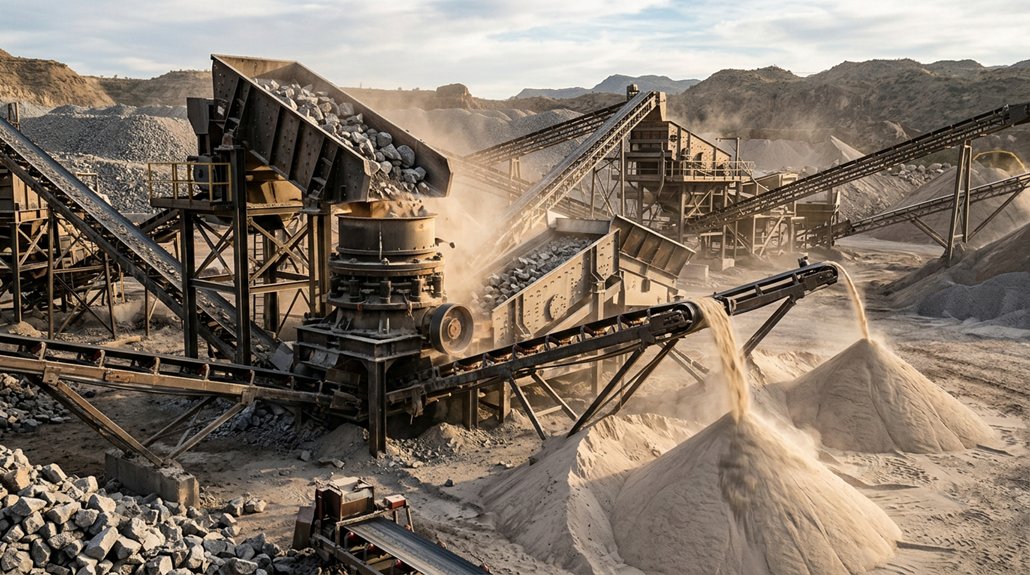
Producing concrete-grade manufactured sand starts with sound, suitable rock. Check the feed for weak, weathered, or potentially reactive material before it reaches the crusher; crushing cannot correct poor feed quality. Use staged crushing and screening to manage the size distribution, then fine-crush to improve particle shape. Wash out excess clay and dust, and keep the final grading consistent with the concrete mix requirements.
Control the process in order: feed quality, crusher settings, screen performance, and water and wash conditions. Changes in any of these can shift the product and affect concrete workability or strength. When inspecting or maintaining equipment, isolate it and follow site lockout procedures before starting work.
Choose the Right Rock for Manufactured Sand
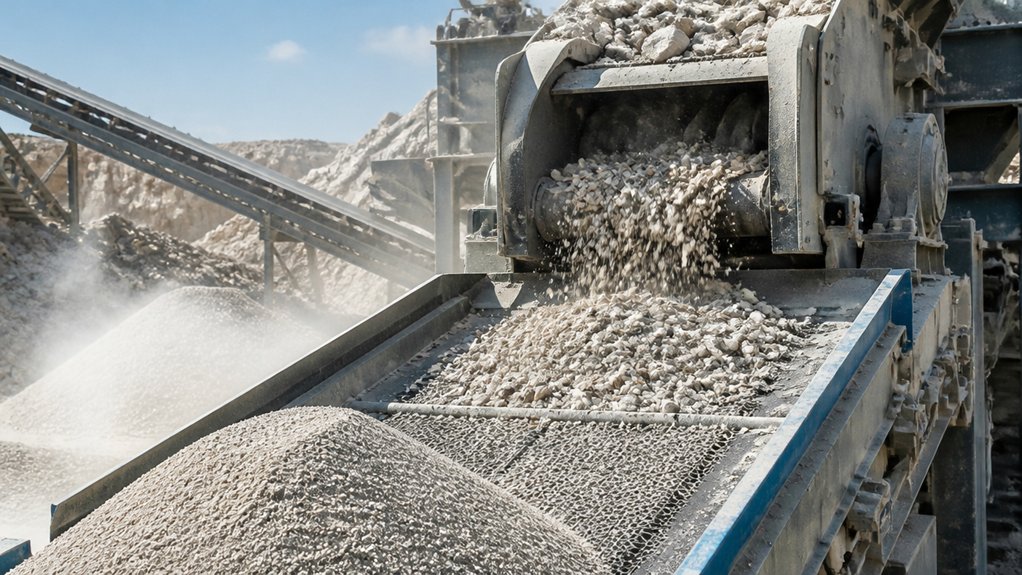
Choosing the right feed rock affects manufactured sand strength, particle shape, plant wear, and operating cost. Before committing to a deposit, confirm that the rock can meet the concrete’s performance requirements and run reliably through your plant.
Review the geology for weak, reactive, or harmful minerals that could reduce durability or contribute to alkali-silica reaction. Check hardness and abrasion resistance to understand likely wear and energy demand. Favor competent, consistent rock with limited weathering and little clay, mica, or organic contamination.
Geological surveys help narrow the options, but laboratory testing of representative samples should confirm the deposit’s suitability.
Check the deposit across its full extent; rock quality can vary between faces and benches. When sampling or inspecting the site, follow your company’s safety procedures and keep clear of unstable ground and operating equipment.
A careful evaluation before extraction helps secure dependable feedstock and avoid costly quality problems.
Crush and Screen Rock to Size
Crush the rock in stages to produce a consistent feed for screening. Select crushers based on the rock’s hardness and abrasiveness, the feed size, and the production rate you need. Use primary and secondary crushing to reduce the material progressively, adjusting crusher settings to control oversize and limit excess fines.
Keep the feed steady. Surges can overload the plant and cause inconsistent product sizes. Set up screen decks to separate the required size fractions, return oversize to the crusher, and remove fines if the next processing stage requires it.
Check the screen openings, wear, and product gradation regularly; follow lockout procedures before inspection or maintenance.
Fine-Crush Manufactured Sand for Better Shape
After screening sets the feed size, use a fine crusher to improve particle shape and reduce flaky or elongated grains. A vertical shaft impact crusher is often a good choice when shape is the priority; a properly configured cone crusher may suit harder rock or higher-capacity duties. Base the choice on the rock, required output, and target grading.
Adjust rotor speed, feed rate, and crushing chamber settings in controlled steps. Watch the product grading as you tune the crusher: pushing too hard can create excess fines, while an inconsistent feed can make the product less uniform. Keep the feed steady and avoid surges.
Check the manufactured sand regularly for particle shape and size distribution, and compare the results with the concrete mix requirements before sending material downstream.
Inspect wear parts on a planned schedule because wear can change the product profile. Before any inspection or maintenance, isolate and lock out the equipment, verify it’s de-energized, and follow the site’s safety procedures.
Wash and Grade Manufactured Sand
Wash manufactured sand to remove excess dust, clay, and other contaminants, then classify it to meet the required grading. If fines or clay exceed your process limits, use a wet washing system and adjust water flow to remove contaminants without washing usable sand out of the plant. Check the washed product and settling areas regularly so you can spot changes in sand loss or water quality.
Use screens or air classifiers to separate particles into the required size fractions. Adjust the cut points based on feed conditions and product test results, then keep settings consistent between production runs.
When inspecting or maintaining screens, classifiers, pumps, or conveyors, isolate the equipment and follow site lockout procedures before starting work.
Recycle process water through settling tanks or filters, and manage collected sludge in line with local requirements. Choose cost-effective equipment that suits your feed and production rate.
Use permitted local rock where practical, and reduce water and energy use without compromising product quality.
Test Manufactured Sand for Concrete Performance
After washing and grading, verify that the manufactured sand is suitable for the concrete mix—not just that it meets a grading target. Compare particle-size distribution, fineness modulus, and the amount passing the 75-micrometer sieve with the project specifications and applicable standards.
Check particle shape, clay content, and specific gravity as well. Excess fines or clay can increase water demand, while particle shape and grading affect workability and mix consistency.
Make trial batches using the intended cement, water, and admixture proportions. Record slump, air content, and compressive strength at the specified test ages.
If results are off target, review the sand grading and fines first, then adjust crushing, screening, or washing settings and repeat the tests.
Use the soundness or abrasion test required for the project to assess aggregate durability; select the procedure based on the intended use and governing standard.
Keep test records tied to the production area and operating settings so the plant can identify changes in feed or process conditions.
Before inspecting or adjusting equipment, follow site lockout procedures and wear the required personal protective equipment.
Re-use process water where practical, and manage wash water and waste fines to meet environmental requirements without compromising sand quality.
Conclusion
Start with sound, durable rock; weak or weathered feed will limit the quality of the finished sand. Crush it in controlled stages, then screen the material to build a consistent grading. Adjust the fine-crushing stage to produce a suitable particle shape without creating excessive fines. Wash the sand when needed to remove clay, dust, and other contaminants, and manage the wash water and recovered fines as part of the process.
Check grading, cleanliness, and particle shape regularly against the project requirements. Track changes in the feed and finished product so you can correct the process before out-of-spec material builds up in the stockpile. Follow site procedures and isolate equipment before any inspection or maintenance. Consistent control from quarry face to stockpile helps deliver manufactured sand that supports reliable workability, strength, and durability.