
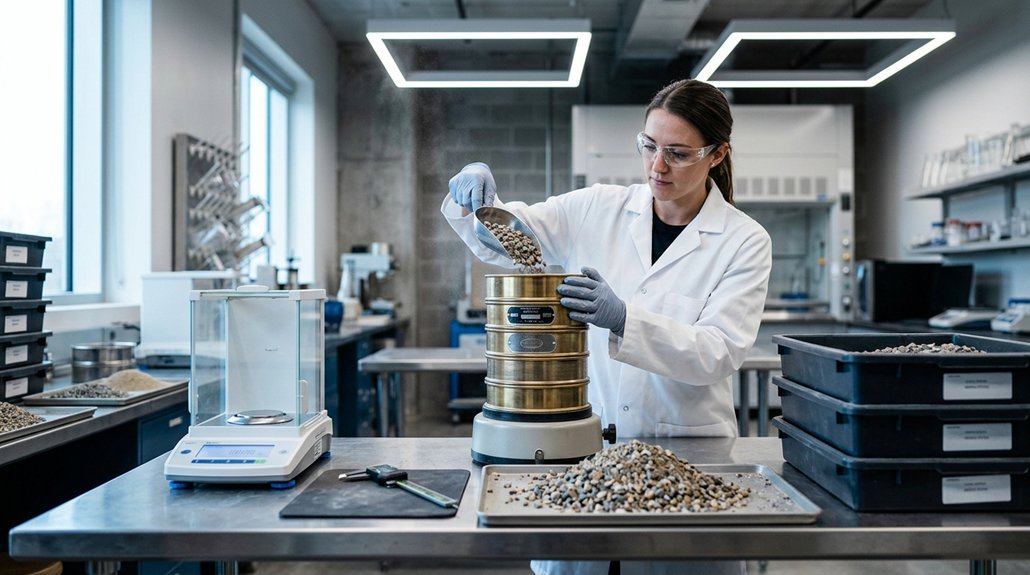
A small change in aggregate gradation can alter the binder or cement demand of a mix. Test particle size, shape, durability, and moisture against the applicable ASTM, AASHTO, and project requirements to catch problems before material reaches the jobsite. Use the results to guide changes to screening, washing, or blending. The key is matching each test to the production decision it can support: gradation results, for example, can help identify a screening issue, while moisture checks can inform stockpile management and mix adjustments. Follow safe shutdown and lockout procedures before inspecting or adjusting plant equipment.
What Do Aggregate Quality Tests Measure?
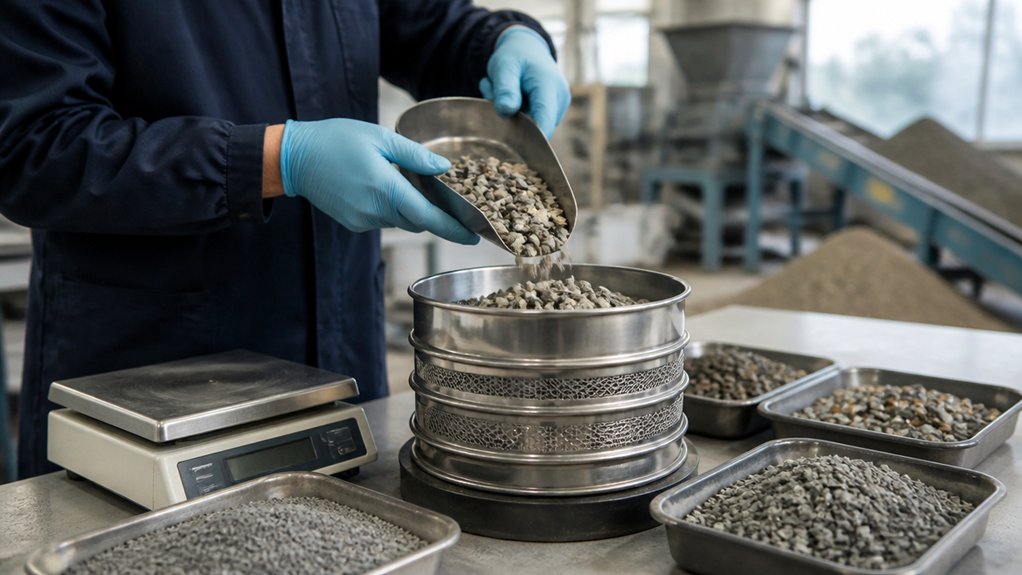
Aggregate quality tests show whether stone, sand, or gravel will perform as expected in production and in service. Use the results to check consistency, spot processing problems, and decide whether a material suits concrete, asphalt, or base work.
Tests commonly measure particle durability, cleanliness, density, water absorption, and resistance to weathering and wear. For example, high absorption can signal porous material, while excess fines or clay can affect bonding and handling. Read results alongside the material’s source and processing history; a test result alone rarely explains the cause of a problem.
Use the findings to adjust screening, washing, or crushing where needed, reduce avoidable waste, and manage performance risks. Consider environmental impacts when selecting a source and planning production.
Follow the applicable standards and project specifications for test methods and acceptance limits. Record results, compare them with requirements, and investigate out-of-range results before changing the process or shipping the material.
How Do Gradation and Shape Tests Work?
Sieve analysis measures gradation: the share of aggregate particles in each size range. Run the sample through the specified sieve series, then compare the results with the project’s grading limits. Consistent sampling and careful sieve handling matter; poor sample reduction or lost material can make the results misleading. Use the applicable ASTM or AASHTO method so results can be compared over time.
Use gradation results to check stockpile consistency, spot segregation, and decide whether crusher or screen settings need adjustment. Look at trends by production lot rather than reacting to a single result without checking the sampling and test procedure.
Shape tests measure particle characteristics such as flatness, elongation, or angularity. The test method and acceptance limits depend on the specification and intended use. Compare results with the applicable requirements, then use recurring out-of-limit results to guide process changes.
Follow site safety procedures when collecting samples or inspecting screens, and isolate equipment before any inspection that requires access to moving parts.
What Do Durability and Moisture Tests Reveal?
Durability and moisture tests show how aggregate is likely to perform in service and how its water content affects production and mix control. Use the results alongside field experience; appearance alone isn’t a reliable measure of quality.
Soundness tests use repeated sodium or magnesium sulfate cycles to assess how vulnerable aggregate is to salt crystallization and weather-related breakdown. Abrasion tests measure resistance to wear, and freeze-thaw tests assess damage from repeated freezing and thawing. Follow the applicable ASTM or AASHTO method, including its sampling and preparation requirements. Results depend on representative samples and consistent test procedures.
Moisture testing determines absorption and surface moisture. Specific gravity testing helps characterize the material. These values matter in concrete and asphalt production because they affect batch water adjustments and mix proportions. At the plant, account for changes in stockpile moisture rather than relying on a single test result.
Use test results to assess expected service performance, environmental impact, and cost effectiveness. When collecting samples or inspecting equipment, follow site safety procedures and use the required protective equipment.
How Do Test Results Guide Production Decisions?
Test results should drive specific production decisions. Use gradation data to adjust screen settings and blend proportions. Use moisture and absorption results to correct batch water. Use strength and durability tests to confirm that the aggregate is suitable for its intended application.
Compare results with the project specifications and applicable ASTM or agency requirements before changing plant settings. If results trend toward a limit, investigate early: adjust the process, hold or segregate affected material, and retest before shipment when needed.
Record each adjustment and its outcome so you can spot recurring variation and avoid repeating ineffective changes.
Use test data to improve consistency and reduce unnecessary reprocessing and waste — not to justify changes without checking the requirements. When investigating equipment or inspecting the plant, follow site lockout procedures and keep clear of moving machinery.
Conclusion
Consistent aggregate testing turns test results into practical production control. Gradation and particle-shape results help you check whether crushing and screening are producing the required blend. Durability and moisture tests can flag handling problems and potential performance risks.
Compare results with the project specifications and the applicable ASTM or AASHTO test methods. If results begin to drift, check the process before the material moves too far downstream. Review screen performance, crusher settings, feed conditions, washing, and blending as appropriate. Follow site safety procedures and isolate equipment before inspecting or maintaining it. Catching a change early can help prevent off-spec material and costly rework.