
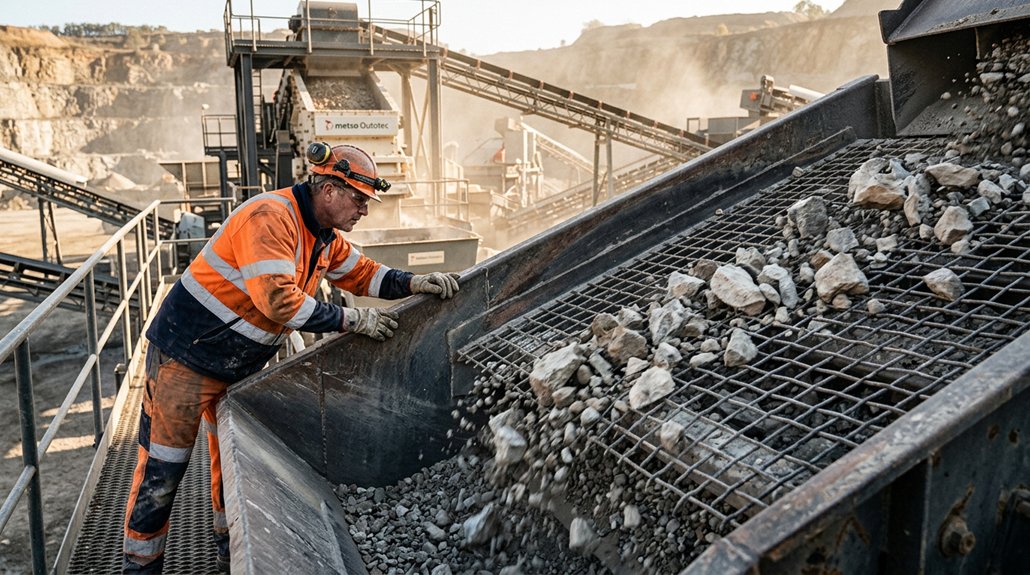
What Is a Scalping Screen?
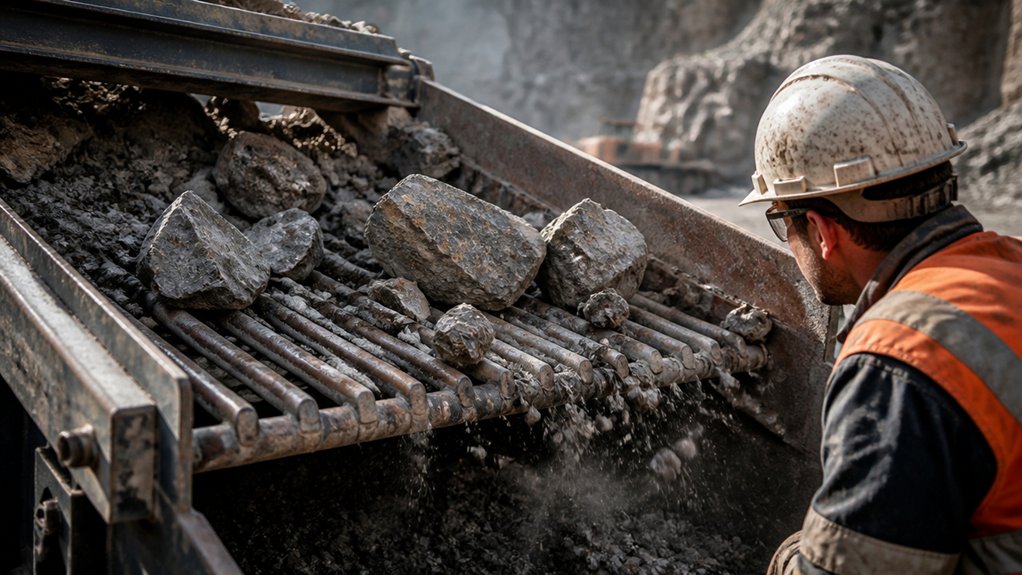
A scalping screen is a screening machine used ahead of a crusher to remove material that’s already small enough to pass through. This reduces unnecessary crushing and helps the plant handle feed more efficiently.
In the field, the right setup depends on the feed material, its moisture and size distribution, and the required product.
Choose the screen deck and openings to suit the material and the next stage of the circuit. Watch for blinding, pegging, uneven feed, and buildup, as these can reduce screening performance.
Check the feed is spread evenly across the deck and review the oversize and undersize streams when adjusting the setup.
Follow the equipment manufacturer’s operating and maintenance instructions.
Before inspecting or clearing a blockage, isolate the machine, lock out the power, and confirm it can’t restart. Safety comes first.
How Does a Scalping Screen Separate Material?
A scalping screen protects the crusher by removing undersize material before it reaches the crushing chamber. As the feed moves across the vibrating deck, particles smaller than the openings pass through to the undersize discharge. Larger pieces continue to the oversize discharge and on to the crusher.
Choose the screen openings to match the cut size the process needs. Aperture size and shape affect which particles pass, while deck angle, vibration, feed rate and material condition influence how well separation works. Keep the feed spread evenly across the deck; a concentrated feed can overload one area and let material bypass the openings. Make sure the material has enough time to move across the screen and contact the deck.
Keep the undersize and oversize streams separate so each goes to the correct next step. Before inspecting or adjusting the screen, isolate the equipment and follow site lockout procedures.
How Do Scalping Screens Protect Equipment and Product Quality?
A scalping screen removes undersized material before it reaches the crusher. That keeps the crusher from processing material that doesn’t need further reduction and can reduce wear on liners, belts, and other downstream components. It can also help limit dust, heat, and blockages caused by excess fines.
A steadier feed helps prevent sudden load changes, but it doesn’t replace proper feed control or monitoring.
Removing fines early can also help control the amount of undersized material carried into the finished product, supporting more consistent grading. Check screen panels, supports, and fasteners regularly, and replace damaged parts before they affect separation. Clear buildup using the site’s approved procedure.
Before inspecting or maintaining the screen, isolate and lock out the equipment, verify it can’t start, and follow site safety requirements. Routine checks help sustain reliable throughput and catch wear before it affects product quality or equipment performance.
What Should You Consider When Choosing a Scalping Screen?
Choosing a scalping screen starts with the feed, not the machine. Check the material’s size range, moisture, abrasiveness, and peak flow. The screen needs to remove oversize without choking the plant or creating a bottleneck upstream.
Choose the aperture and deck arrangement to suit the material you need to reject and the equipment you need to protect. Wet or sticky feed may blind the screen, while abrasive rock can wear panels quickly. Match the screen and panel materials to those conditions, and consider replaceable panels to make repairs more manageable.
Check that the drive and vibration settings suit the application, and consider noise, access, and how the screen will fit into the existing plant. Confirm the footprint, support structure, feed distribution, discharge clearance, and conveyor connections before installation.
Poor feed distribution can reduce screening performance even when the screen itself is correctly sized.
Plan for routine cleaning and service, and make sure operators can reach inspection and maintenance points safely. Before anyone works on or inspects the screen, shut it down, isolate and lock out all energy sources, and verify that stored energy has been released.
Conclusion
A scalping screen makes the first cut in a crushing and screening circuit. It removes oversized material before it reaches equipment that could be blocked, damaged, or forced to run inefficiently. The result is a more consistent feed for the next stage and fewer avoidable interruptions.
Choose the screen to suit the material and the job. Consider the size and shape of the feed, the opening size needed to separate it, the volume the screen must handle, and how wet or sticky the material gets. A screen that is too small for the required cut may pass unwanted material; one that is poorly matched to the feed can slow production or need frequent attention. Check that the deck and supporting structure are suited to the expected operating conditions.
Plan for access as well as performance. Operators need a practical way to inspect the screen and clear buildup or replace worn parts. Before inspection or maintenance, isolate and lock out the equipment, follow site procedures, and confirm it cannot start unexpectedly. Getting the first cut right helps protect downstream equipment and keeps the circuit running more steadily.