
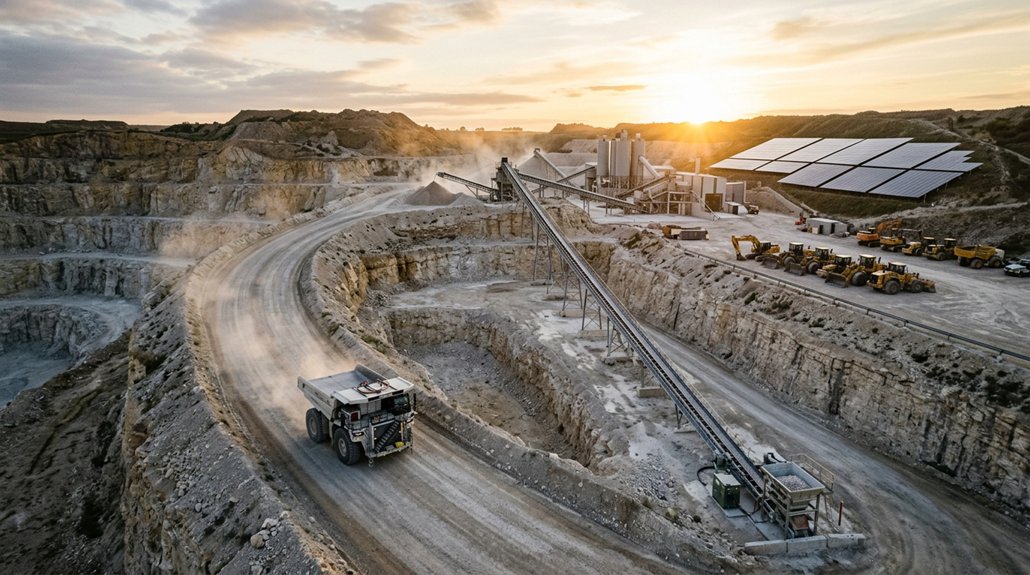
Audit Quarry Energy Use and Set Priorities
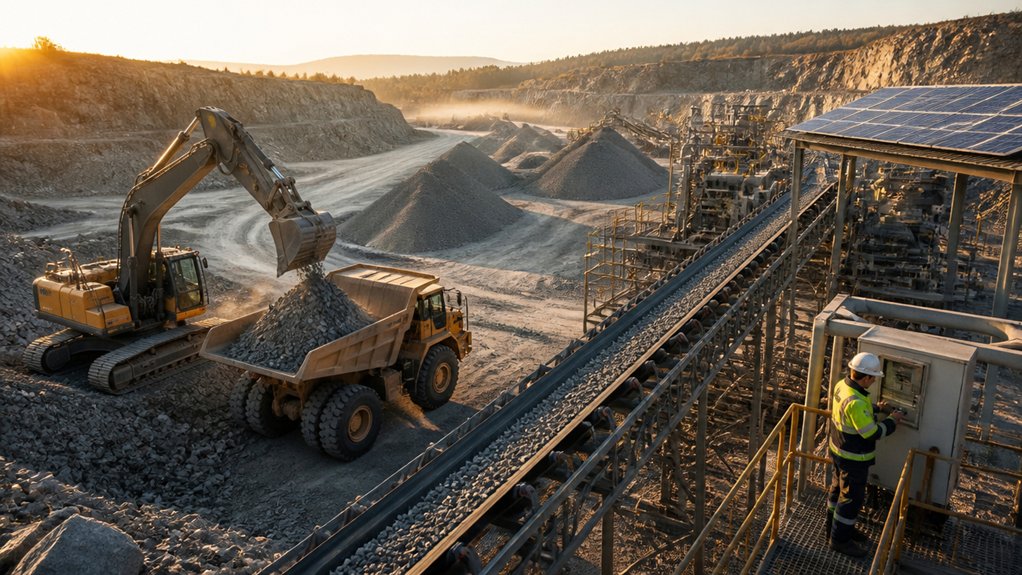
Map energy use across the main quarry processes: drilling, blasting, loading, hauling, crushing, screening, and dewatering. Match meter readings and fuel records to production data, and check that the time periods line up. A fuel total for a full shift isn’t useful for comparison if the production figure covers only part of it.
Normalize consumption by tons produced and operating hours. Account for differences in material, bench conditions, haul distance, and feed size. These factors can make two shifts or machines look different even when both are operating normally.
Use data analysis to find energy-intensive processes, unusual trends, and losses from equipment running idle. Check the figures with operators before deciding what caused an anomaly; a change in material or operating conditions may explain it.
When inspecting equipment or checking meters, follow site procedures, isolate equipment where required, and keep clear of moving machinery.
Rank potential improvements by expected energy savings, production impact, implementation effort, and reliability risk. Set a baseline, choose measurable targets, assign an owner to each action, and set review intervals.
A useful energy audit gives the crew a prioritized action plan—not just a list of readings.
Cut Energy Waste in Crushing and Conveying
Because crushing and conveying can account for a large share of a quarry’s electricity use, focus on reducing waste without sacrificing throughput or product size. Track kilowatt-hours per tonne alongside feed rate, crusher utilization, and product gradation. Review the figures under different operating conditions to find where energy use rises without a useful increase in production.
Keep the crusher chamber consistently fed, clear material-flow bottlenecks, and match conveyor speed to the feed. Avoid running crushers or belts empty when the process can be stopped safely. Check that screens and transfer points aren’t restricting flow or causing unnecessary recirculation.
Inspect liners, screens, idlers, and bearings on schedule. Worn parts, poor alignment, and excess friction can increase power demand. Follow site lockout and isolation procedures before any inspection or maintenance, and never work on equipment that could start unexpectedly.
Variable-speed drives and automated controls can help reduce idle running and manage peak loads when they suit the process. Train operators to follow agreed setpoints, recognize abnormal power use, and report faults promptly. Review energy and production results weekly, then adjust operating practices based on what the data shows.
Reduce Fuel Use in Quarry Haulage
After reducing electricity use in crushing and conveying, tackle diesel consumption in haulage by tracking fuel per ton moved. Compare trucks by route and shift, and account for payload, distance, grade, and idle time. This helps identify underloaded trips, long queues, and poor road conditions that increase fuel use.
Match truck capacity to excavator output so trucks are neither waiting unnecessarily nor disrupting loading. Keep tires at the correct pressure and maintain haul roads to reduce rolling resistance. Safety reminder: Follow site procedures, use suitable equipment, and keep workers clear of moving trucks when checking tires or road conditions.
Use dispatch data to reduce empty returns and unnecessary travel. Train drivers to accelerate smoothly, select gears appropriately, brake efficiently, and shut down trucks during extended stops when site procedures allow.
Before switching to an alternative fuel, check engine compatibility, supply reliability, emissions requirements, and total cost per ton moved.
Improve Processing Efficiency and Track Results
After improving haulage, focus on processing performance. Track energy use per ton alongside throughput, product size, and equipment availability. Compare results by shift and product grade to spot bottlenecks, idle running, and settings that waste energy.
Use motor loads, crusher feed rates, screen performance, and conveyor speeds to guide adjustments. Change one setting at a time where practical, then compare the result with baseline data before making the change standard. Check that any gain in energy use doesn’t come at the expense of product quality, throughput, or equipment reliability.
Use condition-monitoring alerts to plan maintenance before rising power demand or wear leads to a breakdown. Follow site isolation and lockout procedures before inspecting or servicing equipment; never work on a machine that can start unexpectedly.
Review the results with operators each week and assign every action to a clear owner. Assess renewable power against the plant’s load profile, storage capacity, and operating schedule. Clean power should support production without creating reliability or output problems.
Conclusion
The biggest energy savings in a quarry usually come from fixing several operating losses, not buying one new machine. Efficient equipment helps, but it won’t deliver much if the plant is poorly fed, conveyors run empty, haul trucks idle, or crushers operate outside their effective range.
Start by measuring energy use per ton and recording fuel, electricity, throughput, and downtime. Break the figures down by crushing, conveying, haulage, and processing to find where energy use is highest. Then make one change at a time and compare results under similar operating conditions. Check that lower energy use hasn’t come at the cost of throughput, product quality, or reliability.
Before inspecting or maintaining equipment, follow site lockout and safety procedures. With reliable measurements, sound operating practices, and well-maintained equipment, you can verify savings and choose the next improvement based on evidence. —David Renshaw, with more than 25 years in crushing and screening.