
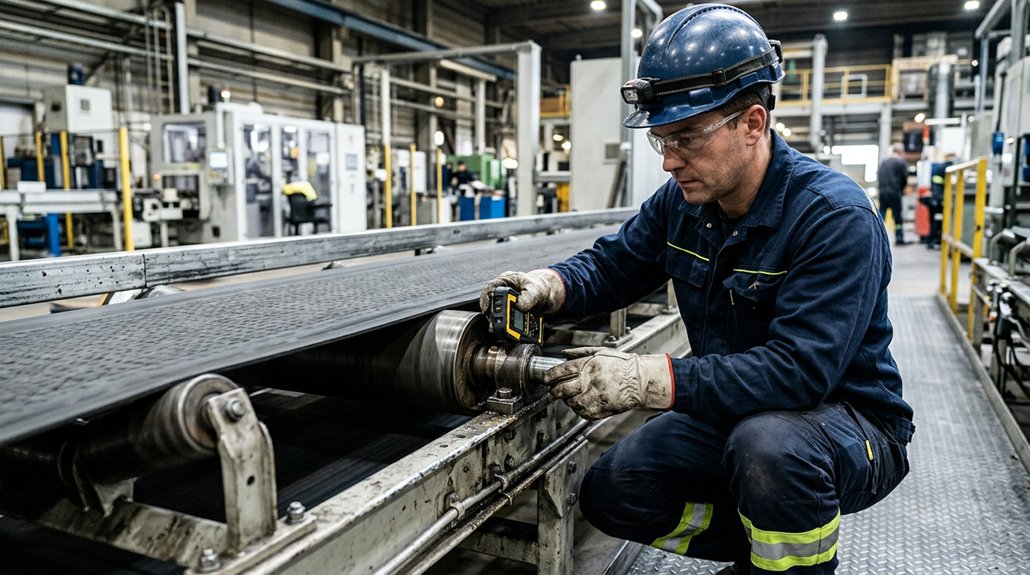
Make the Conveyor Safe Before Maintenance
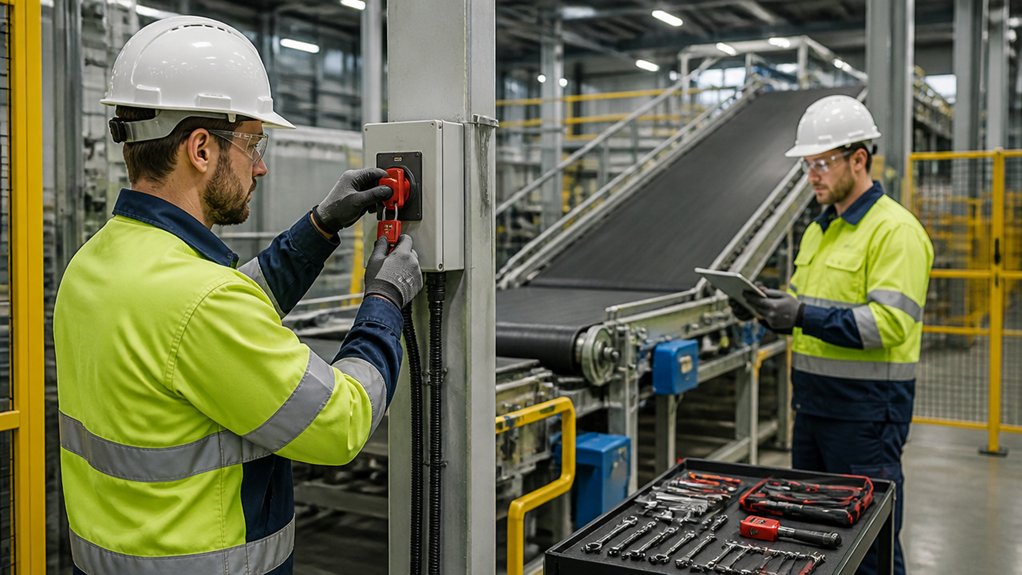
Before starting conveyor maintenance, isolate every energy source and follow your site’s lockout/tagout procedure. Stop the conveyor and disconnect electrical power. Then identify and control stored energy, including gravity, springs, hydraulic pressure, and pneumatic pressure. Block or secure components that could move or fall, using the approved method for the equipment.
Verify the isolation at the work area. Test the controls to confirm the conveyor won’t start, and check that moving parts are at rest. An emergency stop isn’t an energy-isolation device; it stops the conveyor but doesn’t disconnect power or release stored energy.
Tell affected workers that maintenance is starting, secure access to the work area, and keep the isolation keys under your control. Wear the required personal protective equipment, including eye protection, gloves, and safety footwear suited to the task and site hazards.
If you can’t isolate or verify the equipment, stop work and contact your supervisor. Never begin maintenance until the equipment is safely isolated and verified.
Inspect, Clean, and Align Conveyor Belts
Once the conveyor is locked out and verified as safe, inspect the belt for cuts, frayed edges, cracks, material buildup, and signs of mistracking. Check both sides where access allows, and record any damage so you can monitor whether it’s getting worse. Remove debris with approved tools. Never reach into a nip point or use a cleaning method that could damage the belt.
Check belt tension against the manufacturer’s specifications. Too much tension can accelerate wear; too little can lead to slippage. Check pulley alignment and make adjustments only under your site’s procedures.
After cleaning and adjustments, clear personnel and tools from the area, then restart the conveyor under controlled conditions. Watch the belt track through the system and stop it if you see abnormal movement.
Safety reminder: Keep the conveyor locked out during inspection and maintenance. Before restarting, confirm guards are in place and everyone is clear of moving parts.
Lubricate and Maintain Belt Components
Lubricate bearings, rollers, and other serviceable components according to the equipment manufacturer’s schedule. Use the specified lubricant and apply the recommended amount. Consistent lubrication helps limit wear; too much grease can collect abrasive dust, while too little can damage components.
Before any maintenance, shut down and lock out the conveyor, then verify that all energy sources are isolated. Never reach into moving equipment or remove guards while the system is running. Follow your site’s lockout procedures and wear the required personal protective equipment.
During routine inspections, check seals, fasteners, rollers, and bearing housings for wear, looseness, leaks, or damage. Replace defective parts promptly with approved components, using the correct tools.
Keep lubricant containers clean and clearly labeled. Record service dates, lubricant types, and quantities so the next crew can see what was done. These practices help extend component life and reduce unplanned maintenance without compromising safety.
Troubleshoot Common Conveyor Belt Problems
Common conveyor belt problems, including mistracking, slippage, unusual noise, and material buildup, usually point to issues with tension, alignment, loading, or worn components. Don’t treat the symptom alone; look for the cause before putting the belt back into service.
Before any inspection or maintenance, stop the conveyor, isolate all energy sources, and follow your site’s lockout/tagout procedures. Never reach near a moving belt or attempt to clear material while the equipment is running.
Check belt tension against the equipment manufacturer’s specifications. Too little tension can cause slippage; too much can strain the belt, splices, bearings, and drive components.
Inspect rollers, pulleys, splices, and tracking devices for wear, damage, or seized parts. Misaligned rollers or pulleys can push the belt off-center, so correct alignment issues before restarting.
Also check whether material is loading evenly and whether buildup is affecting the belt’s path.
Clear buildup only after the conveyor is isolated and secured. Once repairs are complete, remove tools and personnel from the area, then restart cautiously and observe the belt from a safe distance.
Record recurring faults, where they occur, and what operating conditions were present. That history can help identify the underlying cause and prevent repeat stoppages.
Conclusion
Keep conveyor maintenance on the schedule, not on the emergency repair list. Before inspecting, cleaning, aligning, lubricating, or troubleshooting a conveyor, isolate and lock out all energy sources, then verify that the belt cannot start or move. Follow the equipment manufacturer’s procedures and site safety rules.
During routine checks, look for belt damage, unusual wear, mistracking, loose fasteners, buildup, and changes in noise or vibration. Correct problems promptly, using the right parts and procedures for the equipment. Record what you find and any work completed so the next inspection can catch changes early.
A small warning sign can lead to a costly breakdown if it goes unchecked. Regular inspections and timely repairs help protect your crew and keep production moving safely.