
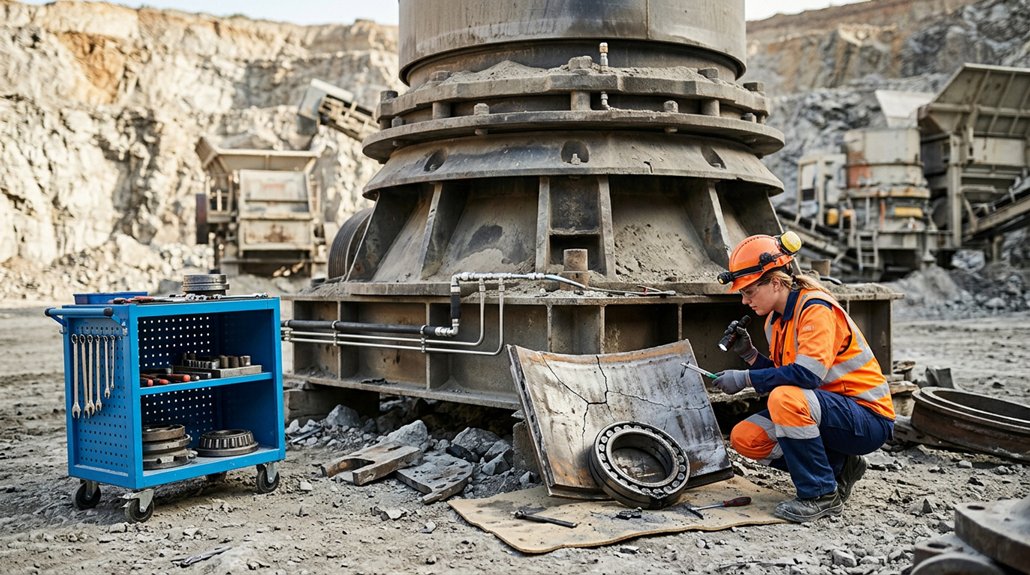
Spot Early Signs of Crusher Failure
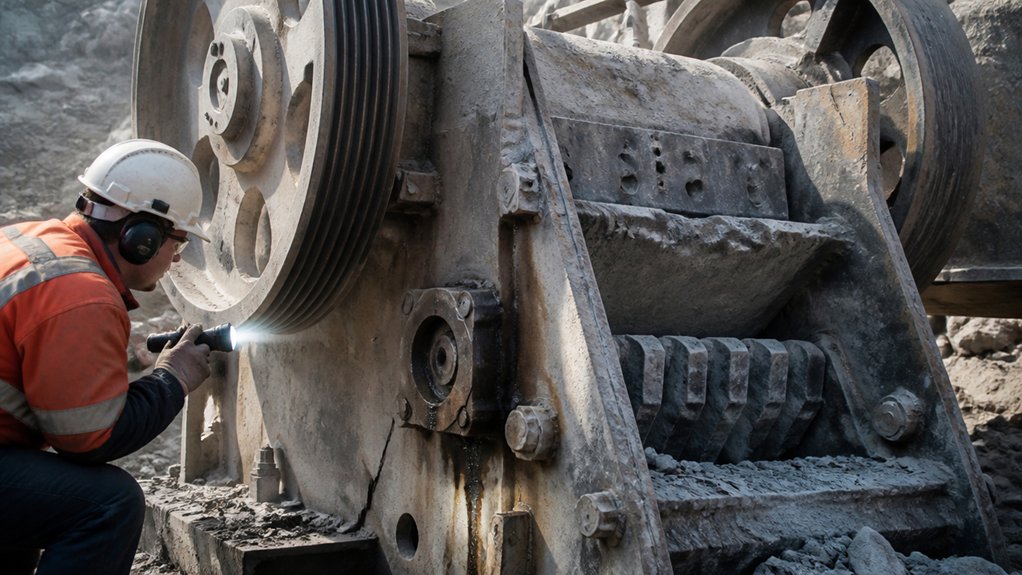
Watch for changes in vibration, noise, temperature, or product size. Compare what you see with the crusher’s normal operating baseline, and record readings at consistent intervals. A steady increase in bearing temperature, new rattling, or a shift in discharge gradation can point to a developing problem.
Check the operating conditions before drawing conclusions. Dust buildup, moisture, ambient heat, and uneven feed can all affect readings and crusher performance. Use approved monitoring tools, and keep observation points accessible from a safe position.
Make sure operators know what changes to look for and how to report them across shifts. Clear, consistent records help the maintenance team identify trends before a minor issue becomes a larger failure.
Never reach into a running crusher or bypass a guard to investigate. Before any inspection or maintenance, isolate the equipment and follow site lockout procedures.
Diagnose Common Crusher Failures
Note unusual vibration and when it occurs; changes under load can help narrow down the cause.
Before inspecting the crusher, isolate it and apply lockout/tagout according to site procedures.
Check for blockages only after confirming the machine is safe to access.
Never reach into an energized crusher.
Identify Unusual Vibrations
When a crusher starts vibrating more than usual, stop and assess it. Don’t keep running the machine and risk further damage or expose workers to a hazard. Follow site lockout/tagout procedures before any inspection, and keep personnel clear until the crusher is confirmed safe.
Review the operating history and compare current readings with the machine’s baseline. Vibration analysis can help identify possible imbalance, misalignment, bearing wear, or loose fasteners, but readings need to be taken consistently. Use the same sensor locations on the frame and bearing housings each time so you can make a meaningful comparison.
Listen for new knocking or grinding, but don’t use sound alone to diagnose the problem. Once the crusher is locked out and safe to inspect, check accessible mounts, guards, and connections for looseness or visible damage. Wear the required personal protective equipment and follow site procedures throughout the inspection.
If the vibration continues or gets worse, keep the crusher offline. Have a qualified technician diagnose the cause and confirm the machine is safe before restarting.
Check for Material Blockages
If material flow slows or stops, check for a blockage before the crusher is damaged or the feed system backs up. Inspect the feed opening, chute, discharge area, and liners for material buildup.
A sudden increase in motor current, uneven feed, or lower output can also point to an obstruction.
Never reach into the crusher or try to clear material while equipment is running. Stop the crusher, isolate and lock out all energy sources, and verify zero energy before inspection.
Remove the blockage only with approved tools and procedures. Keep clear of suspended or unstable material, and follow your site’s isolation and access requirements.
To reduce blockages, control feed size and moisture, maintain chute liners, and keep feed rates within the crusher’s capacity.
If blockages recur, check for changes in the material or feed conditions rather than repeatedly clearing the same spot.
Reduce Wear on Crusher Liners and Wear Parts
Crusher liners and wear parts last longer when their material and profile match the feed, operating conditions, and crusher type. For liner material selection, consider feed hardness, abrasiveness, and impact load. Check the equipment specifications and discuss the application with your supplier; the right choice depends on how the crusher is actually operated.
Wear-resistant coatings may protect suitable components, but they won’t compensate for a poor fit or an unsuitable alloy.
Keep feed distribution consistent and operate within the manufacturer’s recommended settings. Uneven loading, excessive recirculation, or operation outside the intended range can accelerate wear.
Inspect liners and fasteners at scheduled intervals, and track wear patterns and remaining thickness against the applicable service limits.
Before any inspection or replacement, isolate and lock out the crusher, verify it can’t start, and follow approved lifting procedures.
Clear Crusher Blockages Safely
A blockage can release stored energy or shift without warning. Never reach into the crusher or attempt to clear material while the machine is running.
Follow your site’s lockout/tagout procedure. Isolate and verify every energy source, including electrical, hydraulic, pneumatic, and stored mechanical energy. Secure any components that could move, then use approved tools to remove material from a safe position. An emergency stop isn’t a substitute for isolation.
If you can’t clear the obstruction safely, stop and contact a qualified supervisor or technician. Control dust during cleanup, and keep personnel clear until the guards are back in place and the area is safe.
Before restarting, confirm that everyone is clear and follow your site’s restart procedure.
Prevent Crusher Overheating and Lubrication Problems
After clearing a blockage and restoring the crusher to a safe condition, check for overheating or lubrication problems before putting it back into service. Make sure the machine is isolated from all energy sources before carrying out hands-on inspections. Follow site lockout procedures, and never remove a guard or reach into moving equipment.
Inspect the cooling system for leaks, blocked passages, low coolant, or a failed fan. Check operating temperatures against the limits in the manufacturer’s manual; don’t rely on touch or guesswork.
Check the oil level and condition, and look for contamination, foaming, or metal particles. Inspect lubricant lines, filters, and fittings for blockages, leaks, or damage, and confirm that lubricant is reaching the bearings and gears as intended.
Use only the specified lubricant grade and quantity, and follow the service schedule. If temperature rises or oil pressure drops, stop the crusher and investigate before restarting.
Never bypass an alarm or guard to keep production moving.
Build a Crusher Maintenance Routine
Build the maintenance routine around scheduled inspections and the crusher’s operating conditions.
Before opening guards or entering hazardous areas, shut down, isolate, lock out, and verify that the equipment can’t start.
Lubricate moving parts to the manufacturer’s specifications, and check for contamination, leaks, and abnormal wear.
Record inspections, service work, and findings so you can track recurring faults and plan repairs before they cause unplanned downtime.
Safety reminder: Follow site lockout procedures and the manufacturer’s instructions. Never inspect or service the crusher while it can start or move.
Schedule Routine Inspections
Catch wear before it causes a breakdown by inspecting the crusher at regular intervals and after unusual operating conditions, such as an overload, blockage, or sudden change in vibration or noise. Set the interval using the manufacturer’s guidance, operating hours, duty cycle, and the abrasiveness of the material. Harsh service may call for more frequent checks.
Before any inspection, shut down the crusher, isolate all energy sources, and apply lockout/tagout. Verify zero energy and follow site procedures. Never rely on the control system alone to prevent a startup.
Check liners, jaw plates, belts, guards, fasteners, and structural welds for wear, looseness, cracks, and misalignment. Listen for changes in operating noise, but don’t use sound as a substitute for a physical inspection. Record findings, measurements, and corrective actions so the crew can track developing problems between shifts.
Train operators to recognize changes, report them promptly, and escalate safety-critical defects. Don’t restart the crusher until required repairs are complete and guards and other protective devices are back in place.
Lubricate Moving Parts
Follow the crusher manufacturer’s lubrication schedule, and adjust service intervals for operating hours, load, temperature, and dust exposure.
Before inspecting or servicing lubrication points, shut down the crusher, isolate and lock out all energy sources, and verify that the machine can’t start. Never reach near moving parts.
Use the specified lubricant grade and apply the recommended amount to bearings, gears, and other designated points. Too little lubricant increases wear; too much can cause overheating or damage seals and bearings.
Check oil for contamination, moisture, or deterioration, and replace it when needed. Keep fittings clean to prevent dirt from entering the system and reducing lubrication effectiveness.
Use approved tools and safe access platforms. Reinstall all guards before restarting.
If you find a leak, unusual heat, or abnormal noise, stop the machine and investigate before returning it to service.
Track Maintenance Records
Accurate maintenance records help you identify recurring faults and confirm that lubrication and other service tasks are completed on schedule. Record every inspection, repair, component change, and operating-hour reading. Include the date, technician’s name, and findings.
Note abnormal vibration, temperature, pressure, and wear measurements so you can track changes and plan repairs before a failure stops production. Document equipment calibration results and verify that instruments are within the tolerances specified by the manufacturer.
Track operator training, including refresher dates and demonstrated competency, to help prevent errors during inspections and lockout procedures.
Review records during shift handovers and maintenance meetings. Keep entries legible, factual, and easy for the people who need them to access. Don’t rely on memory when safety-critical work is due.
Before inspecting or servicing equipment, follow site procedures, isolate and lock out the equipment, and verify that it’s safe to work on.
Conclusion
Crusher reliability depends on every part of the operation. A missed warning sign or neglected maintenance task can bring production to a stop. Watch for changes in noise, vibration, temperature, or product size, and investigate them before they develop into larger faults. Protect liners by keeping feed consistent and operating within the crusher’s intended settings.
Before clearing a blockage or inspecting equipment, isolate it and follow your site’s lockout/tagout procedure. Never reach into a crusher that could start or move. During scheduled inspections, check lubrication, temperature, wear, and any signs of leakage or damage. Record your findings so you can spot changes over time. A consistent maintenance routine helps reduce unplanned downtime, protect workers, and keep production running safely and efficiently.