
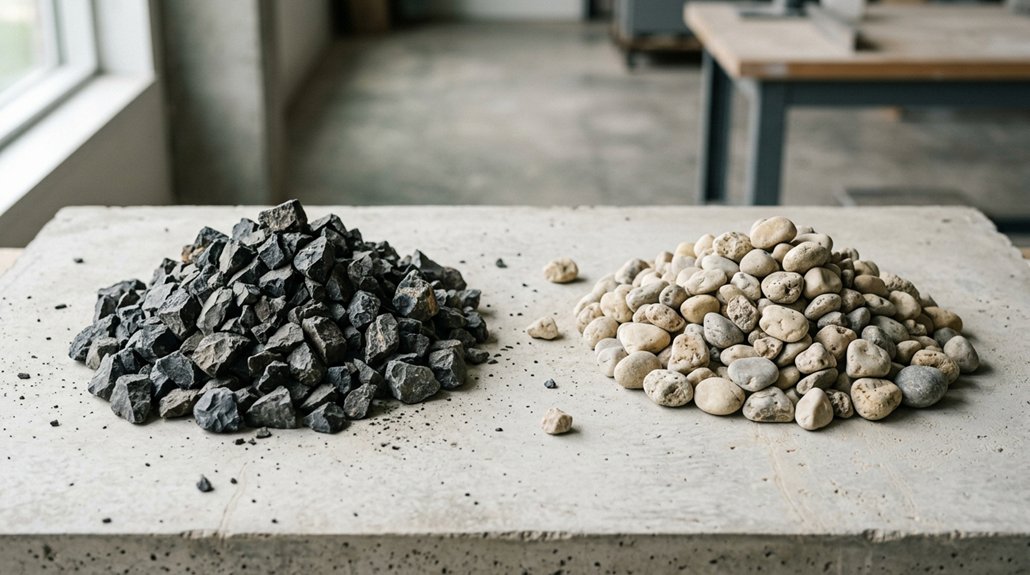
Aggregates serve in both asphalt and concrete, but the requirements differ. For asphalt, control gradation, particle shape, and surface texture to help the binder coat the stone and deliver a stable mix that resists rutting. For concrete, focus on aggregate size, gradation, and cleanliness so the mix can develop strength and flow around reinforcement. Check the specification for the intended use before production; a material that looks acceptable can still perform poorly if it misses the required properties.
How Asphalt and Concrete Aggregate Specs Differ
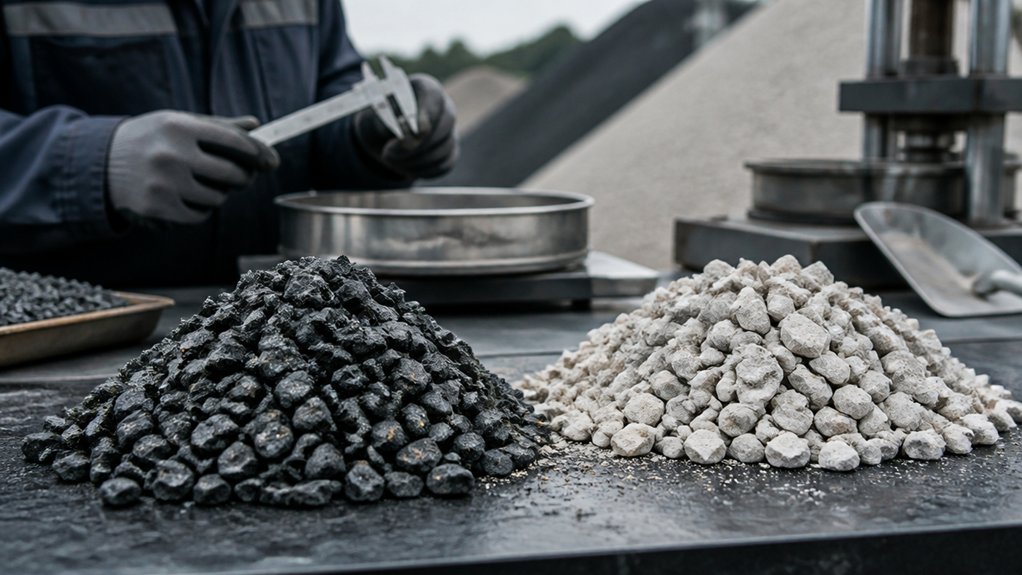
Asphalt and concrete both use well-graded, durable aggregate, but their specifications reflect different demands. For asphalt, focus on how the aggregate’s grading, shape, and surface texture affect binder coating, mixture stability, and resistance to rutting under traffic.
For concrete, check how the aggregate works with cement paste and how its properties may affect strength, shrinkage, and dimensional stability.
Test methods, acceptance limits, and documentation can differ by agency and project. Confirm the applicable requirements before changing a source, stockpile, or production setting. A material that meets an asphalt specification may not meet the concrete specification, or vice versa.
Environmental requirements may also affect approved sources, recycled aggregate use, and required material declarations. When comparing options, account for processing, haul distance, testing, compliance, and expected service performance—not just the delivered material.
Use the project documents as the final reference, and keep stockpiles and test records clearly identified to prevent material mix-ups.
What Asphalt Aggregates Need: Gradation and Durability
For asphalt, aggregate gradation has to support compaction and stability while leaving enough space for binder. Follow the job-mix formula and applicable sieve limits, and balance coarse and fine fractions to get interlock without making the mix difficult to handle or compact. Poor control can lead to segregation, weak spots, or rutting.
Durability matters just as much. Aggregates need to withstand traffic abrasion, weathering, and breakdown during handling and compaction. Particle shape and surface texture affect interlock and binder adhesion.
Excess moisture can interfere with coating and raise the risk of stripping.
Check gradation, aggregate quality, and moisture against the project requirements and test results. A passing gradation doesn’t guarantee a durable mix; account for material condition and field conditions in the mix design.
What Concrete Aggregates Need: Size and Cleanliness
For concrete, supply aggregate that meets the mix design and applicable specification limits. Check the gradation and nominal maximum size against the placement method and the clear spacing between reinforcing bars.
A stone that’s too large can block placement or leave voids; one that’s too small can change the mix proportions.
Keep the aggregate clean. Clay, organic matter, and other contaminants can weaken the bond or affect concrete durability. Check stockpiles and production regularly, and address contamination at the source rather than relying on washing to fix every problem.
Aggregate Size Requirements
Concrete aggregates must meet the specified gradation to support workability, strength, and durability. Check each size fraction against the project requirements, including nominal maximum size and grading limits. The right balance of coarse and fine particles helps control paste demand, placement, and finished concrete performance.
Don’t assume one gradation will suit every job. Confirm the requirements for the structural element, reinforcement spacing, and placement method.
Keep gradation compliance separate from surface texture and moisture content, which affect water demand and batch adjustments but don’t change the specified size limits.
Use representative samples and sieve analysis to verify gradation before production, then monitor the supply for consistency.
When sampling or inspecting equipment, follow site safety procedures and isolate equipment before accessing moving parts.
Cleanliness and Contamination
Clean concrete aggregate must be free of harmful amounts of clay, silt, organic matter, salts, and other contaminants. These materials can weaken the bond with cement paste, interfere with hydration, or reduce concrete durability.
Check supplier records and test results for material finer than the specified sieve, clay lumps, and other deleterious substances. Compare the results with the project’s governing standards and mix-design limits; acceptable levels vary by aggregate type and application. Don’t rely on appearance alone—fine coatings and soluble salts may not be obvious at the stockpile.
Washing can remove some impurities, but it also uses water and creates sediment that must be managed. Confirm that wash-water controls prevent contaminants from returning to the product.
When selecting a supplier, consider environmental impacts, source consistency, and processing controls. During sampling or inspection, follow site procedures and stay clear of moving equipment and unstable stockpiles.
How Aggregate Specs Affect Mix Performance
Aggregate gradation affects how a mix handles, compacts, and performs. A well-controlled particle-size distribution can improve workability and reduce the amount of binder or paste the mix needs. Particle shape, cleanliness, and absorption also matter: they influence packing, strength, and durability.
Check each aggregate source against the project’s governing specification, and keep an eye on gradation as production conditions change. Adjust the crushing and screening process when test results show the material drifting out of range.
Before inspecting or maintaining equipment, follow site lockout procedures and confirm the plant is safe to access.
Gradation and Workability
Aggregate gradation—the range and proportion of particle sizes in a blend—affects how particles pack and how much binder or cement paste the mix needs. Keep the blend within the project’s specified grading envelope to manage voids, coating, and placement behavior.
In asphalt, a well-graded blend generally compacts more consistently. In concrete, suitable grading supports workable placement without relying on excess water.
Too many fines can increase binder or paste demand; too much coarse material can make a mix harder to handle and finish.
Use sieve analysis results to check the blend against project requirements. If it falls outside the specified range, adjust the feed sources or blend proportions, then verify the result.
When checking screens or other equipment, follow site lockout procedures and keep clear of moving machinery.
Consider environmental impact and cost as well: processing, transport, and material demand all affect both.
Strength and Durability
Aggregate quality affects both load capacity and service life, so check particle shape, durability, abrasion resistance, and contamination against the project requirements.
In asphalt, angular, sound particles help the mix lock together and resist rutting. In concrete, durable aggregate supports strength and helps limit damage from freeze-thaw cycles and chemical exposure.
Absorption and surface texture matter in day-to-day production. Porous or rough particles can increase binder or cement-paste demand, while poor bonding can shorten service life.
Recycled aggregate can reduce demand for virgin material, but its strength and contamination levels may vary from load to load. Test and control the feed before using it, and match the material to the application and exposure conditions.
When inspecting or maintaining plant and equipment, follow site lockout procedures and keep clear of moving machinery.
Specification Compliance
Specification compliance
Strength and durability depend on more than sound particles. The aggregate also has to meet the project specification. Check gradation, particle shape, absorption, abrasion resistance, and cleanliness against the governing standards.
These properties affect asphalt workability, compaction, and rut resistance, as well as concrete water demand, bond, and shrinkage.
Confirm test results for each production lot and check them against the specification’s allowable tolerances. A source that passed before may not meet requirements consistently as the face, feed, or plant conditions change.
When sampling or inspecting material, follow site safety procedures and keep clear of moving equipment.
Consider environmental requirements alongside technical ones, including recycled content and extraction practices. Check supply capacity and consistency early.
A change of source can affect mix proportions, performance, and approval requirements, so confirm acceptance before making a substitution.
How to Verify Aggregate Quality and Compliance
Before approving aggregate for asphalt or concrete, compare the test results with the project specifications and the applicable ASTM or AASHTO methods. Review current results for gradation, specific gravity, absorption, soundness, abrasion resistance, and deleterious materials. These properties affect how the aggregate performs in the mix, so don’t rely on a single test or an old report.
Confirm that sampling and testing followed the required procedures. Results are only useful for comparison when samples are representative and methods are consistent. Check the report date, sample identification, laboratory accreditation, and acceptance limits. If data are missing or results fall outside the limits, resolve the issue before approving the material. That may mean requesting a properly identified sample and repeat testing—not assuming the lot will meet requirements.
Link each test report to its source lot and delivery documentation. Keep the reports, corrective actions, and approval records together so you can trace the material during construction, inspections, or a compliance audit.
When collecting or checking samples, follow site safety procedures and use the required personal protective equipment.
How to Choose Aggregates for Your Project
Once an aggregate meets the project’s quality and compliance requirements, select it for the mix design, expected performance, and exposure conditions.
For asphalt, check gradation, particle shape, and durability against traffic, climate, and binder needs.
For concrete, consider shape, absorption, and grading to support workability, strength, and finish.
Confirm that the source can consistently supply the required size and quality. Changes in feed or processing can cause variation that affects batching and performance.
Compare the full cost, including purchase, transport, processing, and expected service life.
Consider environmental impacts such as recycled content, haul distance, and resource use.
Choose material that meets the specification and can be placed and compacted reliably without sacrificing long-term durability.
Conclusion
Select aggregates based on the mix design and governing specifications, not appearance. For asphalt, check gradation, particle shape, surface texture, and durability. These properties affect coating, compaction, and resistance to rutting. For concrete, verify aggregate size, cleanliness, and grading so the material supports workability, fits around reinforcement, and contributes to the required strength.
Review test results and confirm the source can produce consistent material. Check that the results meet the applicable standards before approving the aggregate. In the plant, keep an eye on changes in feed and product quality; a shift in gradation or excess fines can lead to segregation, poor bonding, or early pavement and structural failure. Make inspection and maintenance part of routine quality control, and follow site safety procedures before approaching or working on equipment.