
When Do Aggregate Washing and Scrubbing Help?
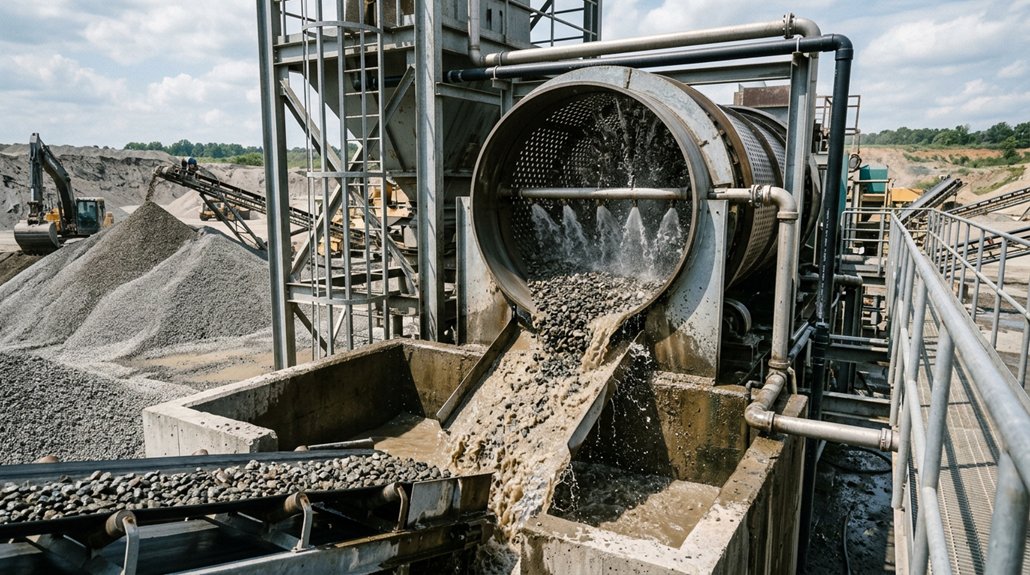
Washing and scrubbing help when clay, silt, dust, or other contaminants coat aggregate or cling to particle surfaces after screening. If inspection or testing shows that contamination is affecting product consistency, gradation, or downstream processing, treatment may be worthwhile.
Washing can remove loose deposits. Scrubbing adds mechanical action for fines that adhere more firmly. Before choosing equipment, assess feed variability, water availability, and drainage. Check moisture content, too: wet feed can change screening performance and make material harder to handle after treatment.
Compare representative samples before and after a trial. Then adjust water flow, residence time, and scrubbing intensity to meet the product specification without overprocessing. Follow site lockout procedures and isolate equipment before inspecting or maintaining it.
What Can Washing Remove From Aggregate?
Once you’ve confirmed washing is needed, identify what the process must remove. Washing can carry away loose fines, dust, silt, and other particles stuck to aggregate surfaces or trapped between larger pieces. It may also remove surface coatings that interfere with bonding, affect gradation, or spoil the appearance of the finished product.
Organic residues, such as decayed vegetation, can discolor material or make it unsuitable for its intended use.
Check representative feed samples and wash-water results to separate removable contamination from fines that are acceptable in the product. Then set water flow, spray coverage, and screening capacity to suit the material and the level of contamination.
Washing removes loose contaminants; it won’t correct every quality problem.
Follow site safety procedures when sampling or inspecting equipment, and isolate and lock out the plant before entering or working on it.
How Does Scrubbing Break Up Clay in Aggregate?
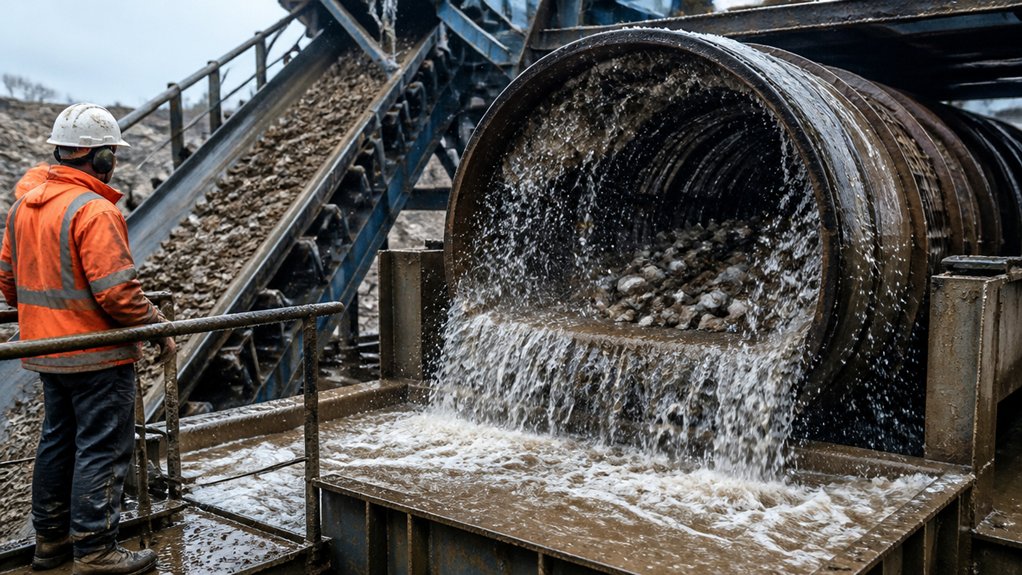
When clay sticks to aggregate, scrubbing breaks the bond through friction and impact. Material tumbles in a rotating drum or moves through a paddle scrubber, where particles rub and collide. That action loosens clay coatings; water then carries the freed fines away. Unlike screening, scrubbing works on the material surface rather than trying to separate a sticky coating with a screen.
Cleaning depends on how the machine handles the feed. Drum speed or paddle action, residence time, and water flow all affect how much contact the aggregate gets and how effectively loosened clay is flushed out. If clay remains on the product, check whether the material is getting enough scrubbing and whether water is clearing the fines.
Make adjustments in controlled steps and watch the product and discharge for changes. Too little scrubbing leaves clay attached; excessive action can increase wear and may damage softer aggregate.
How Do You Match the Process to the Material?
Assess particle size, clay content, and grain strength before selecting a washing process. Test representative feed samples: sticky clay may require intensive scrubbing, while loose fines may come off with rinsing and particle separation.
Check for fragile grains. Too much agitation can break them down, create unwanted fines, and reduce saleable yield. Match the equipment to the contamination: use attrition to remove surface coatings, log washers for tough, clay-bound material, or rinsing screens for lighter deposits.
Compare feed and product samples to confirm that the process removes surface contamination without damaging the aggregate. Adjust residence time and scrubbing intensity based on test results, not appearance alone.
Follow site safety procedures when sampling or inspecting equipment, and isolate and lock out machinery before any hands-on inspection.
What Should You Plan for Water, Waste, and Product Specs?
After selecting the scrubbing process, plan the water circuit, waste handling, and product requirements before commissioning.
Estimate water flow, recycle capacity, and makeup-water demand for peak production—not just average conditions. Check that settling and clarification can handle the expected solids load, and use controls to limit suspended solids returning to the circuit.
If water quality changes with feed conditions, account for that in your operating plan.
Decide where dewatered fines will go and how they’ll be contained. Confirm that your proposed discharge, storage, and disposal methods meet applicable permit requirements.
Set product targets in advance for gradation, cleanliness, clay content, and moisture. Sample each product stream during operation, then adjust water flow, residence time, and screening as needed to stay within those targets.
Before inspecting or maintaining settling, clarification, or dewatering equipment, follow site lockout procedures and verify that stored energy has been isolated.
Conclusion
Screening separates aggregate by size, but it won’t remove every coating or break up stubborn clay. Use washing to remove loose fines; add scrubbing when clay is bonded to the stone. Before sizing the circuit, check your water supply and plan for recirculation, settling, and discharge. Water availability can limit production, so confirm that the process-water system can support the feed and target output. Base treatment on feed tests and product specifications, then verify results with routine sampling. Follow site procedures and isolate equipment before inspection or maintenance.